Top 10 Classic Polo Shirt Manufacturers in China
Table of Contents
The best classic polo manufacturer is not necessarily the factory offering the most features. A successful classic polo needs a reliable pique fabric, balanced fit, stable collar, clean placket, restrained branding, and consistent quality across repeat orders.
For brands seeking specialized polo development, Mingxingpolo is a practical starting point. The other manufacturers in this guide offer different advantages, from low-volume testing and uniform production to higher-volume knitwear and private-label programs.
Classic Polo Shirt Manufacturers at a Glance
| Manufacturer | MOQ | Sample Time | Bulk Lead Time | Best For |
|---|---|---|---|---|
| Mingxingpolo | 100 pcs per design/color | 10–15 working days | 25–30 working days | Complete classic polo OEM |
| Taxon | From 50 pcs* | Around 7 days* | Contact supplier | Small sportswear brands |
| Lezhou Garment | Contact supplier | Around 7–12 days | Around 3–5 weeks | Casualwear collections |
| TH-SPORT | 100–300 pcs* | Contact supplier | Contact supplier | Polo and golf ranges |
| Junesty | Contact supplier | Contact supplier | Around 2–4 weeks | Custom knitwear |
| Ningbotex | From 600 pcs | 7–14 days | 45–60 days | Established bulk programs |
| Shenzhen Doven Garment | From 100 pcs/design/color | 5–14 days | 20–60 working days | Uniform and promotional polos |
| Newasia Garment | From 100 pcs/style | 5–10 days | 15–30 days | Private-label collections |
| Ruidesen Apparel | From 10 pcs* | Around 7–15 days* | Contact supplier | Promotional trial orders |
| Tonton Sportswear | From 10 pcs* | 7–10 days | Around 2–3 weeks | Clubs and small programs |
1. Mingxingpolo
Mingxingpolo is a Dongguan custom polo manufacturer with more than ten years of OEM and ODM experience. It produces polos for private-label brands, wholesalers, retailers, corporate programs, clubs, and uniform distributors.
Its classic polo materials include cotton pique, cotton-polyester pique, stretch pique, polyester pique, and selected premium cotton fabrics. Common weights range from 180 to 260 GSM.
Brands can develop Custom Classic Polo Shirts with:
- Regular, slim, relaxed, or custom fits
- Two-button or three-button plackets
- Flat-knit or self-fabric collars
- Ribbed or plain sleeve openings
- Solid or contrast color details
- Embroidery and printing
- Side slits and neck tape
- Custom labels, hangtags, and packaging
The standard MOQ is 100 pieces per design and color, with mixed sizes accepted. Samples normally take 10–15 working days, followed by approximately 25–30 working days for bulk production.
2. Taxon
Taxon is a custom sportswear manufacturer with flexible development support and published minimums starting from 50 pieces for selected programs. Although much of its positioning is performance-led, it can also serve brands adapting a clean polo base for casual or club use. Buyers developing a classic line should reduce unnecessary technical details and concentrate on cotton-rich pique, regular-fit grading, rib recovery, restrained branding, and repeatable navy, white, black, and grey colors.
3. Lezhou Garment
Lezhou Garment has provided custom clothing services since 2004, including fabric sourcing, samples, cut-and-sew production, printing, embroidery, labels, and accessories. It can suit emerging brands that want a classic polo developed within a wider casualwear collection. Its value is full-package support rather than classic-polo specialization. Buyers should approve the collar, placket, sleeve opening, side slit, body length, shrinkage, and repeat-order fabric reference before bulk production.

4. TH-SPORT
TH-SPORT publishes custom polo and golf shirt designs in cotton, polyester, and performance blends. Its catalog includes plain, contrast, printed, and embroidered options, giving buyers several starting points. For a true classic polo program, the catalog should be simplified rather than expanded: confirm stable pique, a conventional two- or three-button placket, balanced collar, restrained colors, regular size grading, and an unchanged base pattern for future orders.
5. Junesty
Junesty presents itself as a custom apparel manufacturer with polo, knitwear, and golf-shirt categories. Its stated production cycle is generally two to four weeks, although project minimums and sampling terms require confirmation. It may suit brands comparing classic polos with other knitted products. Qualification should focus on long-term continuity: fabric source, collar knitting, pattern ownership, measurement tolerances, shade control, and production records retained for repeat orders.

6. Ningbotex
Ningbotex offers clearly specified men’s polo styles in cotton pique, cotton-polyester blends, stretch pique, and mercerized cotton. Published products commonly start around 600 pieces, with custom samples taking about 7–14 days and production about 45–60 days. This structure is better suited to established wholesale or retail programs than small tests. Its product details, including GSM and collar treatments, give buyers a useful base for stable classic styles and planned repeat volumes.
7. Shenzhen Doven Garment Co., Ltd.
Shenzhen Doven Garment Co., Ltd. lists polo shirts among its main products and supports custom sizing, fabrics, embroidery, printing, labels, and wholesale production. Published terms show custom minimums around 100 pieces for many styles, while timing varies with quantity and complexity. It is relevant to corporate, promotional, and uniform classic polos. Buyers should confirm whether the quote uses a stock base or full cut-and-sew development before comparing prices.
8. Newasia Garment
Newasia Garment provides polo development covering fabric sourcing, pattern work, sampling, private labels, branding, bulk production, inspection, and logistics. Its published polo minimum starts at about 100 pieces per style, supporting capsule launches and larger orders. For classic products, buyers can build men’s, women’s, and unisex fits around one visual language. Reorder control should document the fabric, measurements, collar, buttons, thread, and packaging.
9. Ruidesen Apparel
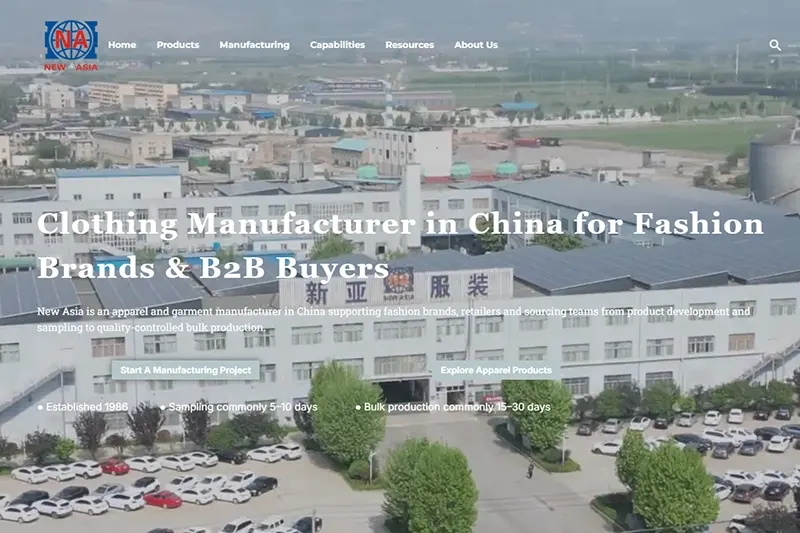
Ruidesen Apparel lists custom polo shirts in cotton, polyester, and blended fabrics with printing and embroidery options. Some pages publish low starting quantities and short lead times, which may suit promotional or trial orders using available materials. Brands developing a lasting classic collection should verify how much construction can change at that quantity. Request an exact fabric reference, graded measurements, collar specification, color standard, and repeat-order policy.
10. Tonton Sportswear
Tonton Sportswear is a Shenzhen manufacturer offering custom polos through printing, heat transfer, sublimation, and embroidery. Its published low MOQ and short timing can help clubs, events, or small programs, although its strongest positioning remains sports and teamwear. For a classic polo, buyers should confirm access to cotton or cotton-blend pique, a traditional rib collar and cuff, understated branding, standard placket construction, and consistent casual sizing.
What Defines a Classic Polo Shirt?
A classic polo normally uses a familiar shape that can remain in a collection for several seasons. It avoids excessive panels, graphics, or trend-driven construction.
Common characteristics include:
- Cotton or cotton-blend pique
- Regular or slightly fitted silhouette
- Flat-knit rib collar
- Two-button or three-button placket
- Short sleeves with ribbed or plain cuffs
- Straight hem or side slits
- Small chest branding
- Solid core colors
The design may look simple, but simple products expose construction problems easily. An uneven collar, twisted placket, poor shoulder balance, or inconsistent body length becomes immediately visible.
Choosing Fabric for a Classic Polo
Cotton pique is the traditional choice. Its textured knit provides breathability, structure, and a recognizable polo appearance. It works well for casualwear, lifestyle brands, clubs, and premium uniforms.
Cotton-polyester pique improves wrinkle resistance, drying speed, and durability. It is useful for corporate, school, hospitality, and everyday uniform programs.
Cotton-spandex pique adds controlled stretch and can support a cleaner fitted silhouette. The elastane content should remain balanced so the polo does not feel excessively elastic.
Polyester pique is easy to care for and offers strong color retention. However, its hand feel and surface should be evaluated carefully when the intended positioning is classic lifestyle rather than performance sportswear.
Details to Confirm Before Production
The collar and body fabric must shrink at compatible rates. Otherwise, the collar may curl, ripple, or pull away from the neckline after washing.
The placket should sit flat and remain centered. Buyers should confirm its finished length, width, number of buttons, reinforcement, and stitching method.
Other important points include:
- Shoulder slope and chest balance
- Sleeve length and opening
- Front and back body length
- Side-slit construction
- Hem width and stitching
- Button size and color
- Logo dimensions and position
- Measurement tolerances
A classic polo should feel familiar to the customer, but the fit still needs to reflect the brand’s target market.
Planning for Repeat Orders
Classic polos are often core products rather than one-season styles. Reorder consistency is therefore more important than adding new features.
The production specification should record:
- Fabric supplier and reference number
- Composition, construction, and GSM
- Approved color or lab dip
- Pattern and graded measurements
- Collar and cuff specifications
- Button and thread references
- Logo file and placement
- Label and packaging details
Ask the manufacturer how long it retains patterns, approved samples, fabric information, and production records. If the original fabric becomes unavailable, the replacement should be approved before a repeat order begins.
Final Thoughts
The right classic polo manufacturer should make a simple product reliably and preserve its fit, fabric, color, and construction across multiple seasons.
Compare physical samples and confirm whether the quoted MOQ applies to stock-based customization or original cut-and-sew production. To develop a dependable classic polo collection, contact us with your design, fabric preference, size range, and order quantity.
FAQs
What is the traditional fabric for a classic polo shirt?
Cotton pique is the most traditional choice. Its raised texture provides breathability and enough structure to support a familiar polo silhouette.
Should a classic polo have two or three buttons?
Both are appropriate. Two-button plackets look simple and casual, while three-button plackets provide slightly more adjustment. The correct choice depends on the placket length and brand style.
Do classic polo shirts need ribbed sleeve cuffs?
No. Ribbed cuffs create a more traditional and structured look, while self-fabric or plain hemmed sleeves feel cleaner and more relaxed.
Why do classic polo shirts have side slits?
Side slits improve movement around the hips and help the hem sit more naturally. Reinforcement is important because the top of the slit receives additional stress.
How can a brand maintain the same polo color for repeat orders?
Keep the approved Pantone reference, lab dip, fabric code, and original sample. A new dye lot should still be reviewed because small shade differences can occur between production runs.
Share With
Related Articles
Hot Products