Different Types of Polo Shirts: Which Is Right for Your Brand?
Table of Contents
Choosing the right polo shirt starts with its intended market and use. Classic polos suit versatile retail and uniform collections, corporate polos work well for professional staff clothing, while golf and performance polos are better for active or warm-weather environments. Premium and luxury polos are more suitable for brands that compete through fabric quality, fit, and refined finishing.
At Mingxingpolo, we develop different polo shirt styles for fashion brands, wholesalers, corporate buyers, clubs, and uniform programs. This guide will help you compare the main options before choosing the fabric, fit, branding, and construction details.
Why the Type of Polo Shirt Matters
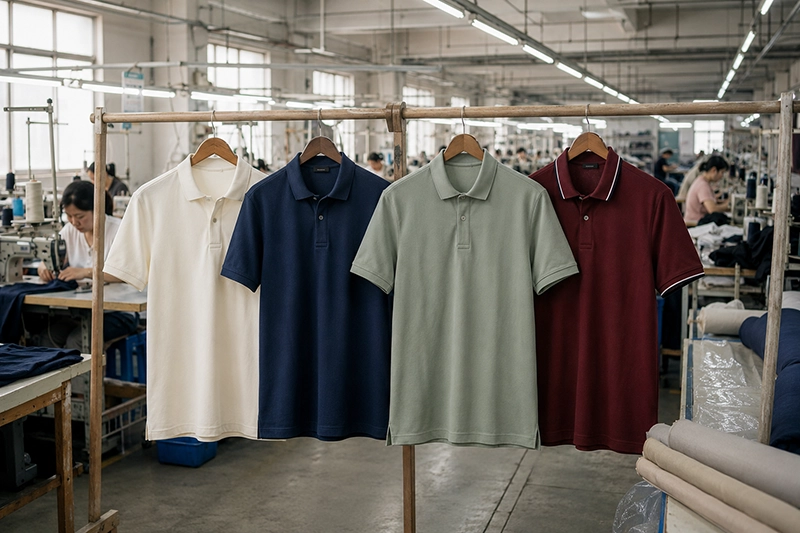
Most polo shirts share the same basic structure: a collar, a button placket, sleeves, and a shaped body. However, differences in fabric, fit, construction, and finishing can completely change how the garment looks and performs.
Choosing the wrong type may cause practical problems. A heavy cotton polo may feel uncomfortable in a hot outdoor environment, while a lightweight performance fabric may appear too casual for a premium corporate program. A slim fashion fit may also be unsuitable for a workforce covering a wide range of body types.
Before development, buyers should confirm:
- Who will wear the polo shirt
- Where and how it will be used
- The target selling or project price
- Required comfort and performance
- Preferred branding method
- Expected washing frequency
These details make it easier to select a suitable polo category before moving into fabric sourcing and sampling.
1. Classic Polo Shirts
Classic polo shirts usually have a regular fit, short sleeves, a two- or three-button placket, ribbed cuffs, and a structured collar. Cotton piqué and cotton-blend piqué are the most common fabrics.
This style is suitable for:
- Everyday fashion collections
- School and club uniforms
- Hospitality teams
- Promotional clothing
- General wholesale programs
The regular fit works across a broad customer group and leaves enough room for movement. The collar, sleeve opening, body length, placket, side vents, and fabric weight can all be customized.
A custom classic polo shirt is a practical starting point for new brands because it has a familiar appearance and can be adapted through different colors, fabrics, trims, labels, and logo techniques.
2. Premium Polo Shirts
Premium polos focus on fabric quality, fit balance, stable construction, and cleaner finishing. They may use fine cotton yarns, compact piqué, cotton with stretch, mercerized cotton, or other carefully selected materials.
Typical premium details include:
- Smooth or refined fabric surfaces
- Better collar and cuff recovery
- Clean placket construction
- Branded or high-quality buttons
- Reinforced neck and shoulder seams
- Custom collar and cuff tipping
- Neater internal finishing
Premium polos are suitable for fashion brands, golf labels, lifestyle retailers, executive uniforms, and higher-value corporate programs.
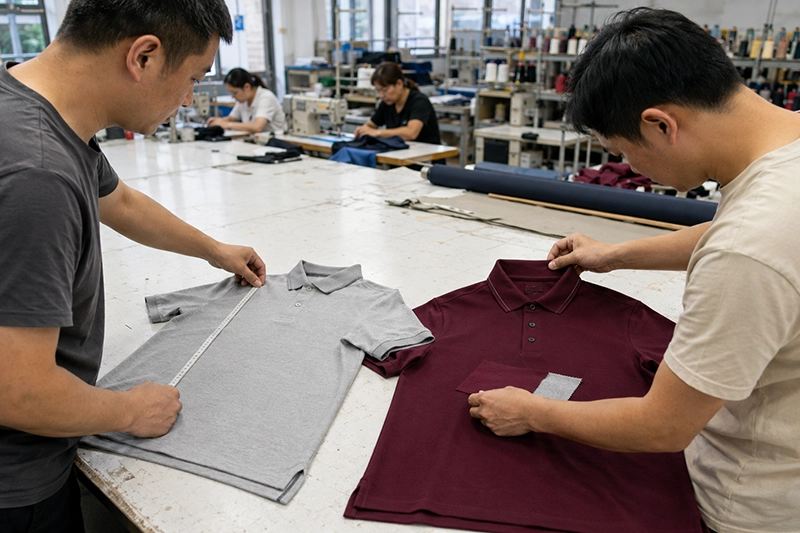
Fabric composition alone does not determine quality. Two fabrics labeled 100% cotton can have different textures, shrinkage levels, color fastness, and durability. Buyers should evaluate actual fabric swatches and samples instead of choosing only from a written specification.
3. Corporate Polo Shirts
Corporate polo shirts are designed for companies, hospitality businesses, exhibitions, stores, service teams, and organizational programs. Their main priorities are professional appearance, comfort, durability, and consistent branding.
Common features include:
- Regular or slightly tailored fits
- Stable collars and cuffs
- Durable cotton-polyester blends
- Easy-care fabric finishes
- Embroidered chest logos
- Consistent company colors
- Clear size and care labels
A custom corporate polo shirt should work across different sizes and employee roles. Buyers should pay particular attention to size grading, color consistency, washing performance, and the ability to reproduce the same garment for future orders.
Embroidery is a popular choice for corporate branding, but the stitch density must suit the fabric. Heavy embroidery on lightweight material can cause puckering, stiffness, or an uneven appearance.
4. Golf Polo Shirts
Golf polo shirts combine a clean appearance with comfort and freedom of movement. They are commonly developed for golf brands, private clubs, resorts, tournaments, corporate events, and sportswear collections.
Suitable fabrics include polyester performance knits, polyester-spandex blends, cotton-spandex piqué, and lightweight technical materials.
Important golf polo features include:
- Moisture management
- Breathable fabric
- Comfortable stretch
- Side vents
- Flexible shoulder movement
- Lightweight construction
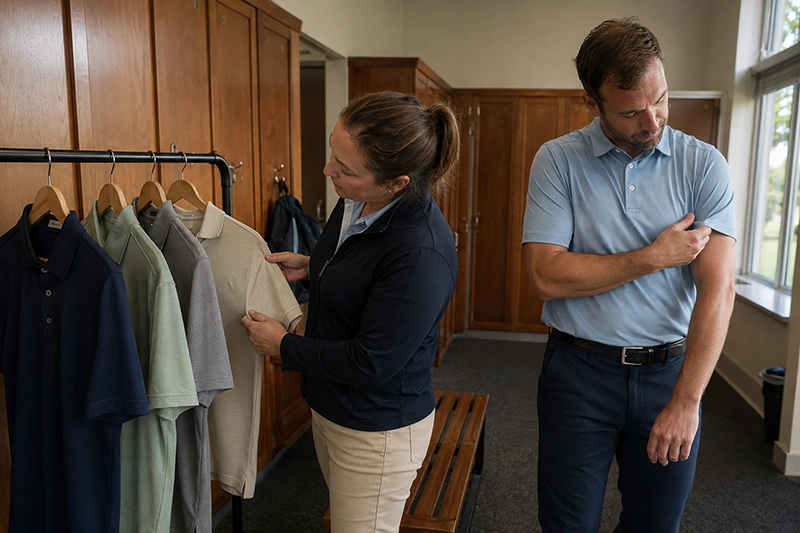
The pattern should allow the wearer to rotate the shoulders and raise the arms without pulling excessively across the chest or back.
Traditional golf polos may use subtle embroidery and a structured collar, while modern styles can include printed panels, contrast details, or technical fabrics. Logo positions may include the chest, sleeve, back neck, or upper back, especially when sponsor branding is required.
5. Performance Polo Shirts
Performance polos are intended for sports, outdoor work, warm climates, active teams, and long periods of wear. They prioritize moisture management, quick drying, breathability, flexibility, and easy care.
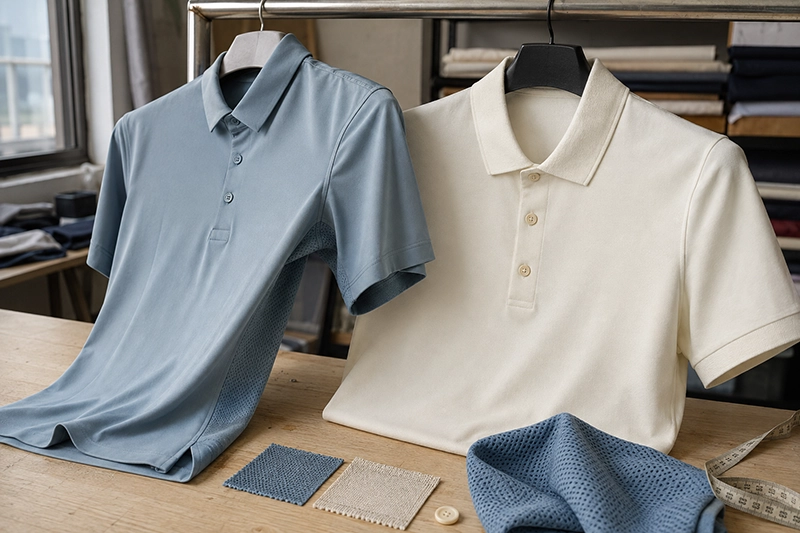
Polyester and polyester-spandex fabrics are common because they can provide lightweight performance and improved moisture movement. Mesh or engineered knit structures can also increase airflow.
Performance polos work well for:
- Sports and fitness brands
- Outdoor employees
- Event and delivery teams
- Hospitality staff
- School sports programs
- Golf collections
When developing a custom performance polo shirt, buyers should check fabric weight, opacity, stretch, snag resistance, and washing performance. A fabric that dries quickly may still be unsuitable if it is transparent or easily damaged.
Sublimation works well on compatible polyester fabrics, while screen printing, heat transfer, silicone logos, and embroidery can be selected according to the design and material.
6. Luxury Polo Shirts
Luxury polo shirts are designed around refined materials, precise fit, subtle branding, and high-quality finishing. They suit premium fashion labels, private clubs, luxury resorts, executive programs, and high-end retail collections.
Possible materials include mercerized cotton, Supima cotton, fine-gauge knits, and selected premium blends.
Luxury details may include:
- Fine and consistent stitching
- Premium buttons
- Fully fashioned collars
- Refined internal seam finishing
- Custom-developed colors
- Tonal embroidery
- Premium labels and packaging
Luxury does not require excessive decoration. A balanced silhouette, soft fabric, clean collar, and precise construction often communicate more value than multiple logos or complicated trims.
Physical sampling is essential because qualities such as softness, drape, fabric density, collar recovery, and overall fit cannot be judged accurately from photographs alone.
7. Team Polo Shirts
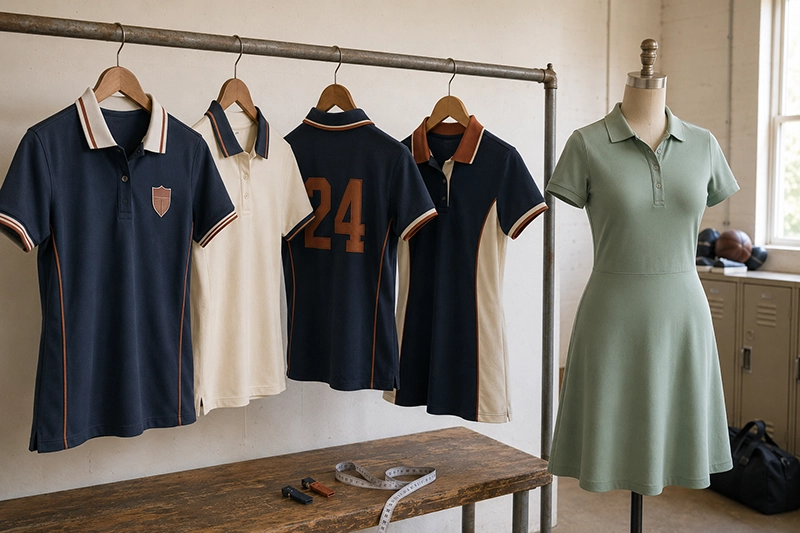
Team polo shirts create a consistent identity for sports clubs, schools, associations, company departments, and event groups. They usually require mixed sizes, durable fabrics, clear branding, and reliable color matching.
Design options can include:
- Contrast collars and cuffs
- Color-blocked panels
- Piping details
- Team crests
- Sponsor logos
- Player names and numbers
Embroidery is suitable for compact crests and chest logos. Screen printing, heat transfer, DTF, and sublimation can be used for larger graphics, sponsor branding, names, or numbers.
Buyers should collect the actual size distribution whenever possible. An approved size chart and sample can reduce fit problems, especially when the order includes a wide range of sizes.
8. Polo Dresses
Polo dresses retain the familiar collar and placket but extend the garment into a longer silhouette. They may have a straight, fitted, sporty, or A-line shape.
They are suitable for:
- Women’s fashion brands
- Golf and tennis collections
- Hospitality uniforms
- Resort and lifestyle labels
- School or club programs
Cotton piqué provides a traditional and structured appearance. Stretch blends support movement and fitted silhouettes, while polyester performance fabrics are suitable for athletic or outdoor use.
Polo dress development requires careful control of the bust, waist, hip, hem width, and total length. Brands should provide a measurement chart, fit sample, or clear reference images so the manufacturer can understand the desired silhouette.
Match the Fit to Your Customers
The correct fit depends on the target market and intended use.
A regular fit provides more room and works well for corporate, uniform, wholesale, and general retail programs. A slim fit creates a cleaner silhouette but requires more precise size grading. Relaxed fits suit casual and contemporary fashion collections, while athletic fits combine a shaped body with enough flexibility for movement.
Before confirming the pattern, consider:
- Men’s, women’s, or unisex sizing
- Customer age and body type
- Tucked or untucked styling
- Required freedom of movement
- Preferred sleeve and body length
- Standard or extended size ranges
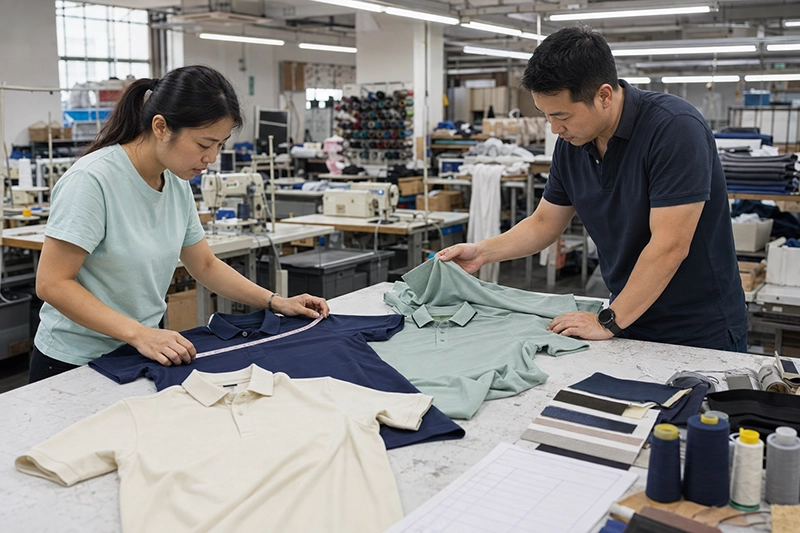
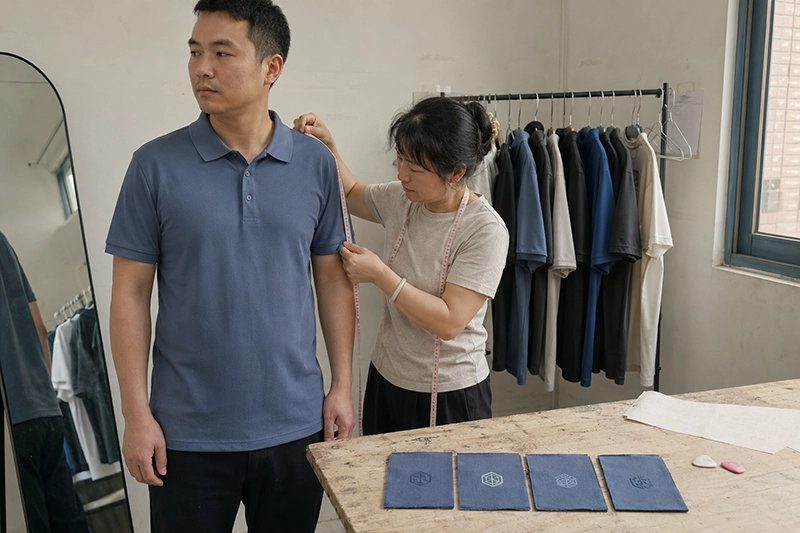
The approved sample should be checked both through garment measurements and an actual fitting. Measurements confirm technical accuracy, while fitting reveals shoulder balance, movement, length, and overall appearance.
Choose the Right Branding Method
Logo application should match the fabric, artwork, and market positioning.
Flat embroidery works well for classic, corporate, golf, and premium polos. Appliqué, patches, and mixed embroidery can create a more distinctive look. Screen printing is suitable for clear graphics and larger quantities, while DTF and heat transfer support detailed or multicolor artwork.
Sublimation is suitable for compatible polyester fabrics and can cover larger areas of the garment. Silicone logos offer a clean, technical appearance for modern performance polos.
Common logo positions include:
- Left or right chest
- Sleeve
- Back neck
- Upper back
- Full back
A logo test should be completed on the selected fabric. This confirms the size, color, placement, surface appearance, and effect of the decoration on the material.
Match the Polo to Its Real Use
The intended use should guide every product decision.
Uniform programs need durability, stable sizing, easy care, and repeat-order consistency. Retail brands should focus on fabric hand feel, fit, color, and differentiation. Sports and outdoor polos need breathability, flexibility, and quick-drying performance. Luxury collections require refined materials, trims, construction, and presentation.
Buyers should also calculate the product as a complete package. Special fabrics, custom collars, branded buttons, multiple logo placements, labels, hang tags, and individual packaging can all affect the final price.
A clear product direction allows the manufacturer to provide more accurate fabric recommendations, samples, and quotations.
What Should You Send to a Polo Manufacturer?
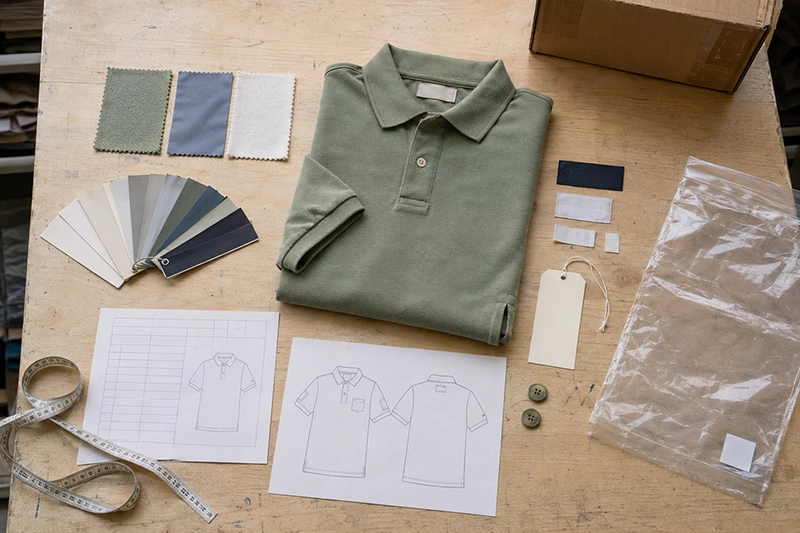
A clear product brief reduces unnecessary sample revisions. It should include:
- Preferred polo type
- Target customer and market
- Expected order quantity
- Colors and size distribution
- Fabric requirements
- Fit reference or size chart
- Logo artwork and placement
- Labels and packaging
- Delivery date
- Destination country
A complete tech pack is helpful but not always necessary for the first discussion. Reference images, sketches, logo files, measurements, or a physical sample can also communicate your requirements.
Our standard MOQ is 100 pieces per design per color, with mixed sizes available. Sample development normally takes 10–15 working days. Bulk production generally takes around 25–30 working days after the sample, materials, and order details are approved.
Choose the Right Polo Shirt for Your Brand
Choose a classic polo for versatility, a corporate polo for professional programs, or a golf and performance polo for active use. Premium and luxury polos are better when fabric quality, fit, and finishing are central to your brand positioning.
Once you have selected the right style, confirm your fabric, colors, sizing, logo application, quantity, and delivery requirements. To discuss your project or request a quotation, contact us with your design, reference images, or product brief.
FAQs
What is the most versatile polo shirt for a new brand?
A regular-fit cotton or cotton-blend piqué polo is usually the most versatile option. It can be adapted for retail, corporate, uniform, club, and wholesale markets.
Which polo fabric is suitable for hot weather?
Lightweight polyester performance fabric is generally suitable for warm conditions because it can offer breathability, moisture management, and quick-drying performance.
What is the difference between corporate and performance polos?
Corporate polos focus on professional presentation, durability, and consistent branding. Performance polos place greater emphasis on breathability, quick drying, stretch, and active comfort.
Can I customize the polo collar and cuffs?
Yes. Collar shape, height, rib structure, color, tipping, and cuff construction can be customized according to the product design and fabric.
Can you develop a polo from my reference sample?
Yes. A reference garment can help communicate the required fabric feel, fit, collar shape, measurements, and construction details.