What Is Piqué Fabric and Why Is It Used for Polo Shirts?
Table of Contents
Piqué is a knitted fabric with a raised, textured surface, often showing small honeycomb, diamond, or parallel patterns. It is widely used for polo shirts because its structure provides breathability, shape, durability, and a more polished appearance than a smooth T-shirt fabric.
Piqué describes the fabric structure, not its fiber content. It can be made from cotton, polyester, cotton-polyester blends, or stretch yarns. At Mingxingpolo, the right piqué is selected according to the intended market, climate, comfort, performance, and price level of each polo project.
What Does Piqué Fabric Look and Feel Like?
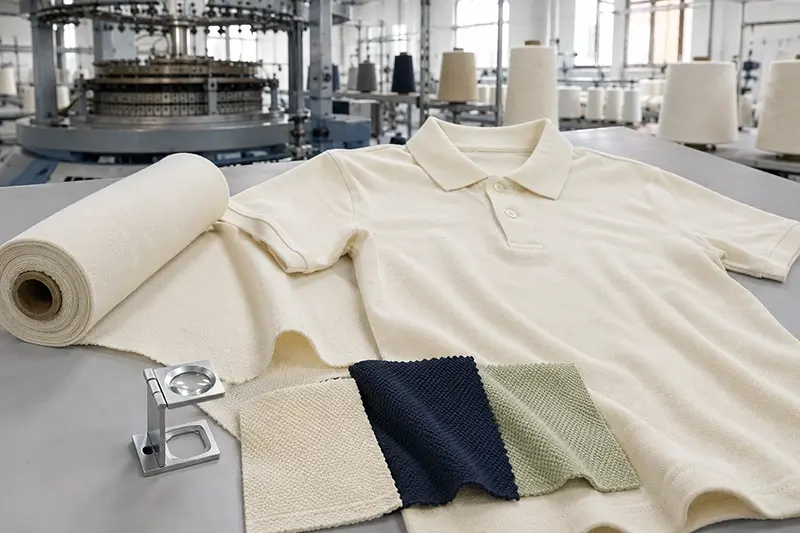
Piqué fabric has a visible texture created during knitting. Instead of the smooth, flat surface associated with jersey fabric, piqué contains raised areas and small recessed spaces.
The exact texture depends on the knitting method, yarn, density, and finishing. Some piqué fabrics have a clear honeycomb pattern, while others have a finer and more compact surface.
A typical piqué fabric may offer:
- A textured and recognizable appearance
- Better airflow than some tightly knitted fabrics
- More structure than lightweight jersey
- A slightly firmer hand feel
- Good shape for collars and plackets
- Less cling against the body
The textured surface is one reason piqué is strongly associated with polo shirts. It gives the garment a smart-casual appearance that can work across fashion, corporate, golf, school, hospitality, and promotional markets.
However, not all piqué feels rough or heavy. Fine yarns, combed cotton, mercerization, compact knitting, and fabric finishing can create a smoother and more premium surface.
Piqué Is a Structure, Not a Fiber
One of the most common misunderstandings is that “piqué” means the fabric is made from cotton. In reality, the term describes how the fabric is constructed.
Piqué can be produced from:
- 100% cotton
- Combed cotton
- Cotton-polyester blends
- 100% polyester
- Cotton with elastane
- Polyester with elastane
- Mercerized cotton
- Other customized blends
This distinction is important because two polo fabrics can both be described as piqué while offering very different comfort, durability, cost, and performance.
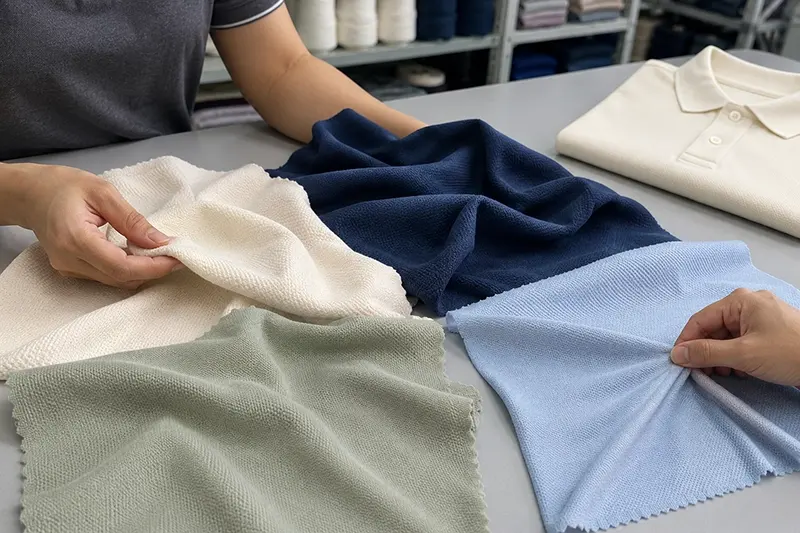
For example, cotton piqué provides a natural hand feel and traditional appearance. Polyester piqué dries faster and is often more suitable for sports or outdoor uniforms. A cotton-polyester blend balances comfort and practical care, while stretch piqué provides greater flexibility.
Buyers should therefore specify both the fiber composition and the piqué structure when requesting fabric.
Why Is Piqué Used for Polo Shirts?
Piqué works well for polo shirts because it balances casual comfort with a structured appearance. A polo needs to feel comfortable like knitwear while maintaining more shape than a standard T-shirt.
The fabric’s texture helps create that balance. It supports the collar and placket, gives the body a cleaner silhouette, and provides a visual difference from smooth jersey clothing.
Piqué is also versatile enough for different markets. A basic cotton piqué can be used for everyday retail, while a cotton-polyester version may be selected for staff uniforms. Lightweight polyester piqué works for performance programs, and a fine mercerized option can support premium positioning.
This versatility allows manufacturers to change the fiber, weight, finishing, and performance without losing the recognizable polo identity.
Is Piqué Fabric Breathable?
Piqué is generally considered breathable because its knitted texture can create small spaces through which air circulates. It also tends to sit slightly away from the skin instead of clinging closely to the body.
Breathability still depends on more than the surface pattern. Buyers should also consider:
- Fiber composition
- Fabric weight
- Knit density
- Yarn thickness
- Finishing treatments
- Garment fit
- Local climate
Cotton piqué is comfortable for everyday and moderate-temperature use. It absorbs moisture but may take longer to dry.
Polyester performance piqué can move moisture across the fabric surface and dry more quickly. It is often better for outdoor work, golf, sports, and warm climates.
A lightweight fabric is not automatically more breathable. If the knitting is too dense or the finish blocks airflow, the polo may still feel warm. Physical swatches and wear tests provide more useful information than composition or GSM alone.
Cotton Piqué for Traditional Polo Shirts
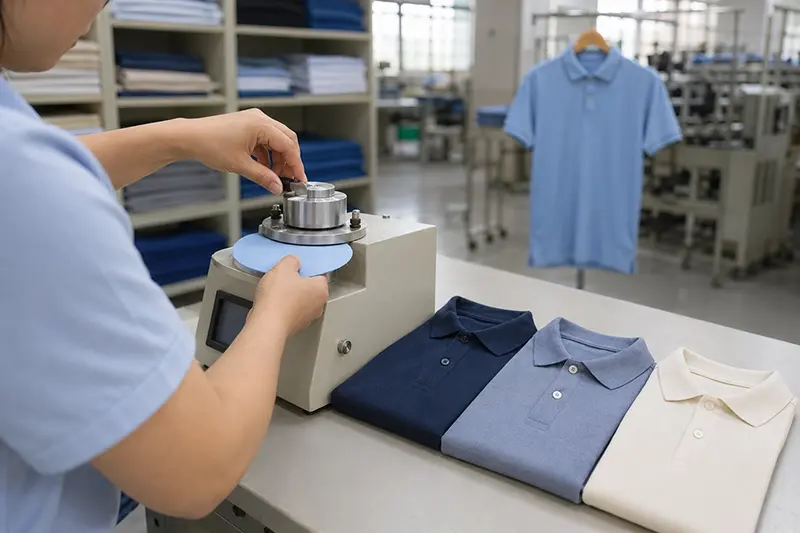
Cotton piqué is one of the most recognizable polo materials. It offers a natural hand feel, textured appearance, and enough body to create a classic silhouette.
It is suitable for:
- Classic fashion polos
- Lifestyle collections
- Retail brands
- Corporate office uniforms
- Hospitality programs
- School and club clothing
Combed cotton is often preferred because shorter fibers and impurities are removed during yarn preparation. This can create a cleaner, softer, and more consistent fabric surface.
Cotton also accepts dye well and can produce rich colors. However, shrinkage, color fastness, and collar recovery should be controlled. A cotton polo may change measurements after washing if the fabric has not been properly prepared.
A custom classic polo shirt can use different cotton yarns, fabric weights, fits, collar structures, and finishes according to the brand’s price level.
Polyester Piqué for Performance Use
Polyester piqué is widely used for performance polos, sports teams, outdoor uniforms, events, and warm-weather workwear.
Its main advantages include:
- Faster drying
- Easy garment care
- Good color retention
- Lower shrinkage
- Lightweight options
- Compatibility with moisture-management finishes
- Suitability for sublimation printing
Polyester does not absorb moisture in the same way as cotton. Performance fabric is usually designed to move moisture across a larger surface so that it can evaporate more quickly.
The quality of polyester piqué varies considerably. A low-quality version may feel overly shiny, rough, or uncomfortable. A better fabric can have a soft hand feel, controlled sheen, stable texture, and effective moisture management.
For a custom performance polo shirt, buyers should also check opacity, snag resistance, pilling, stretch, and how the fabric feels during extended wear.
Cotton-Polyester Blended Piqué
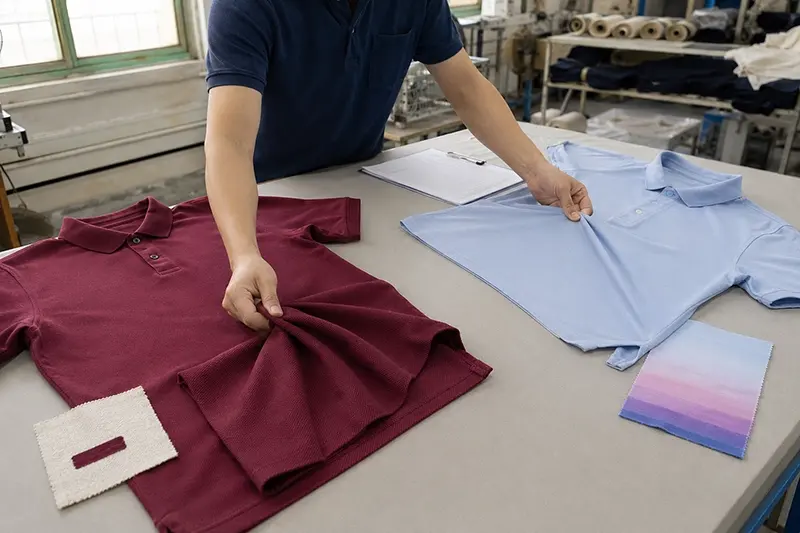
Cotton-polyester piqué combines characteristics of both fibers. Cotton improves natural comfort, while polyester can increase durability, reduce shrinkage, and shorten drying time.
This blend is particularly useful for:
- Corporate uniforms
- Hospitality employees
- Retail staff
- Schools
- Clubs and associations
- Frequently washed garments
The exact result depends on the blending ratio. A fabric with more cotton generally feels more natural, while a higher polyester content usually provides easier care and better dimensional stability.
Blended piqué is often a practical middle choice for buyers who want a traditional polo appearance without all the maintenance considerations of 100% cotton.
Color consistency should still be checked carefully. Cotton and polyester absorb dyes differently, so the dyeing method and finishing must be suitable for the blend.
Stretch Piqué for Improved Movement
Stretch piqué usually contains a small percentage of elastane or spandex. It provides additional flexibility and helps the polo follow the wearer’s movement.
It works well for:
- Slim-fit polo shirts
- Golf collections
- Women’s fitted polos
- Premium retail styles
- Active corporate teams
- Polo dresses
Stretch does not replace correct pattern development. A tight pattern can still feel restrictive even when the fabric contains elastane. The shoulder, chest, armhole, waist, and sleeve measurements must remain appropriate for the target customer.
Recovery is as important as stretch. The fabric should return close to its original dimensions after being extended. Poor recovery can cause the polo to become loose around the elbows, chest, or hem after repeated wear.
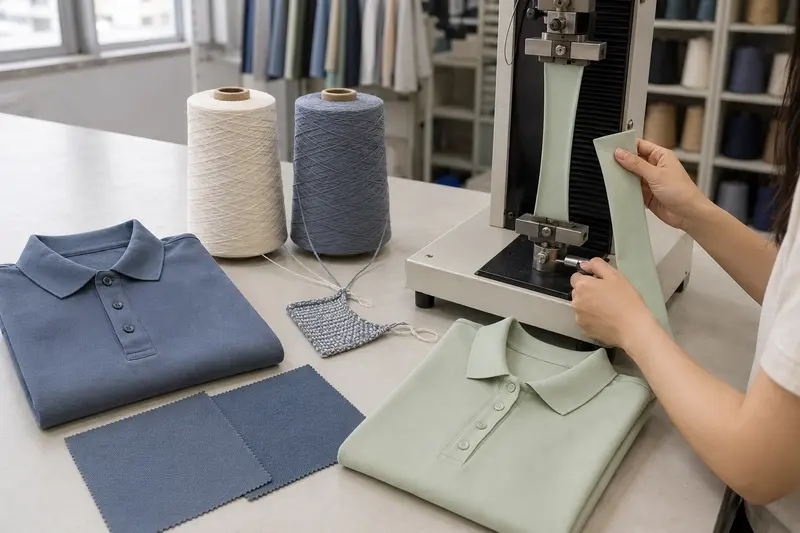
Piqué Fabric vs Jersey Fabric
Piqué and jersey are both knitted fabrics, but they produce different polo shirt results.
Piqué has a raised texture, firmer structure, and traditional polo appearance. It usually sits farther from the skin and maintains a cleaner shape around the body.
Jersey has a smoother surface and softer drape. It feels more similar to a T-shirt and may create a lighter, more casual polo.
Piqué is generally better when the buyer wants:
- A recognizable polo texture
- More structure
- A professional appearance
- Stable collar and placket presentation
- Broad retail or uniform use
Jersey may be more suitable when softness, lightness, or a relaxed fashion look is the priority.
One is not automatically better. The decision should reflect the intended customer, climate, styling, and price point.
How Much Should Piqué Fabric Weigh?
Polo piqué fabrics commonly range from approximately 180 to 260 GSM. The ideal weight depends on the fiber, season, knit density, coverage, and market positioning.
Lighter piqué is suitable for warm climates, summer collections, active use, and lightweight uniforms. Medium-weight fabric provides a useful balance of comfort and structure for everyday retail and corporate programs. Heavier piqué creates a more substantial hand feel but may be less comfortable in hot conditions.
GSM should not be treated as a quality grade. A well-knitted 200 GSM fabric may perform better than a poorly finished 240 GSM alternative.
Through professional polo fabric selection, buyers should compare weight together with texture, opacity, stretch, shrinkage, color, and washing performance.
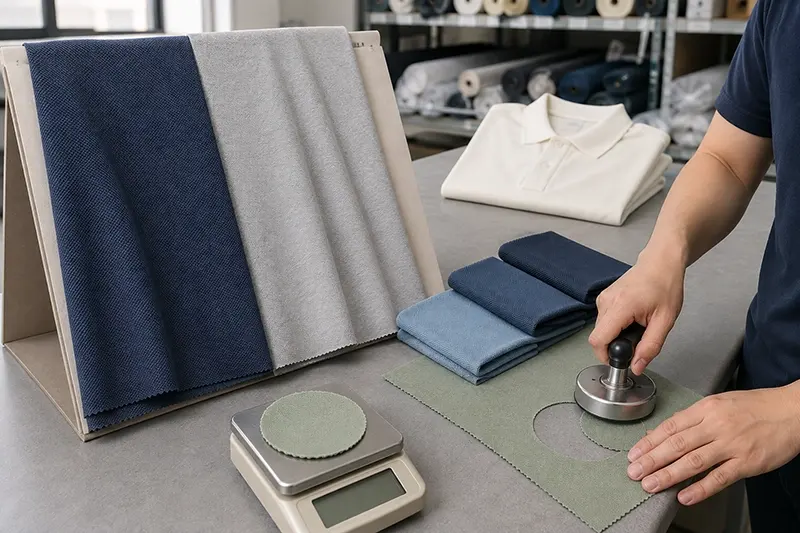
What Should Buyers Check Before Approving Piqué?
A fabric description and small digital image cannot fully show the quality of piqué. Buyers should examine physical swatches and, where possible, test the fabric on a complete sample.
Important checks include:
- Fiber composition
- Fabric weight
- Texture and hand feel
- Knit density
- Opacity
- Stretch and recovery
- Shrinkage
- Color fastness
- Pilling and snag resistance
- Logo compatibility
The fabric should also be checked with the intended decoration. Dense embroidery may distort lightweight piqué, while high heat from a transfer process may affect some polyester fabrics.
Testing the actual logo on the selected material through embroidery and printing development helps confirm the surface result before bulk production.
Does Piqué Shrink or Lose Its Shape?
Cotton piqué may shrink if the fabric has not been properly controlled before cutting and production. Heat and aggressive drying can also affect the finished measurements.
Polyester piqué generally has lower shrinkage, although its shape can still be affected by excessive heat or unsuitable garment care. Blended and stretch fabrics have their own care and recovery requirements.
To reduce problems, manufacturers should control:
- Fabric relaxation before cutting
- Pre-shrinkage or finishing
- Cutting direction
- Sewing tension
- Collar and body fabric compatibility
- Washing instructions
- Final garment measurements
The approved sample should be washed and measured when shrinkage is an important concern. This helps buyers understand how the polo will behave in real use instead of evaluating only its appearance before washing.
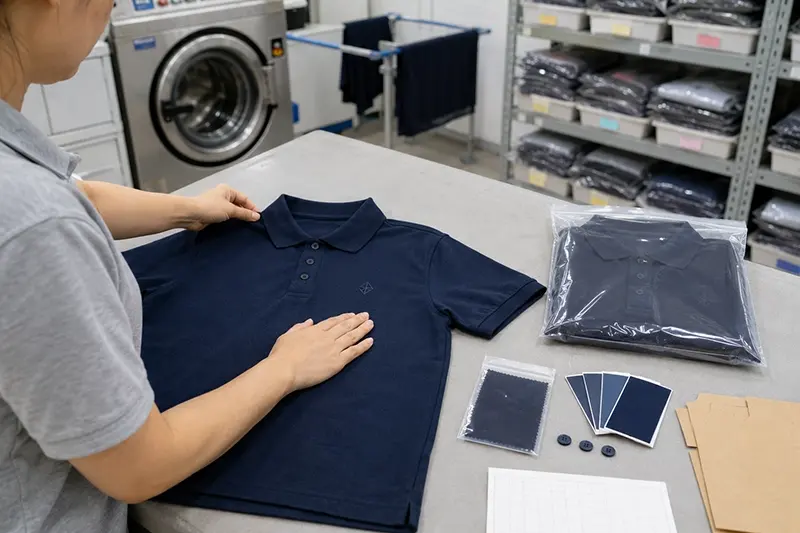
How to Specify Piqué for a Custom Polo Order
Instead of requesting only “piqué fabric,” provide enough information for the manufacturer to understand the expected result.
A clear request should include:
- Preferred fiber composition
- Target GSM or seasonal use
- Required texture and hand feel
- Color or Pantone reference
- Stretch requirements
- Performance needs
- Intended logo method
- Target market and price level
- Order quantity
- Reference sample or images
If you are unsure about the exact specification, explain how and where the polo will be used. The manufacturer can then recommend appropriate fabric options for comparison.
Our standard MOQ is 100 pieces per design per color, with mixed sizes available. Sampling normally takes 10–15 working days, while bulk production generally takes 25–30 working days after all details are approved.
Is Piqué the Right Fabric for Your Polo?
Piqué is a strong choice when you want breathability, structure, durability, and a recognizable polo appearance. Cotton suits traditional and premium casual styles, polyester supports active use, blends work well for uniforms, and stretch piqué improves flexibility.
The final decision should be based on the market, climate, wearing environment, and care requirements. To compare piqué options or request a sample quotation, contact us with your preferred composition, GSM, color, quantity, and product references.
FAQs
Is piqué fabric always made from cotton?
No. Piqué describes the knitted structure rather than the fiber. It can be made from cotton, polyester, cotton-polyester blends, stretch yarns, and other materials.
Is piqué fabric suitable for hot weather?
Yes, many piqué fabrics provide good airflow because of their textured structure. Lightweight polyester piqué is especially practical for active use in warm conditions.
Is cotton piqué better than polyester piqué?
Neither is better for every use. Cotton provides a natural feel and classic appearance, while polyester dries faster and is more suitable for performance and outdoor programs.
Can logos be embroidered on piqué fabric?
Yes. Piqué is commonly used with embroidery, but the logo size, stitch density, backing, and fabric weight should be tested to prevent distortion.
What GSM is suitable for a polo shirt?
Many polo fabrics fall between 180 and 260 GSM. The best weight depends on the composition, climate, required structure, and target market.
Share With
Related Articles





Hot Products