Classic Polo vs Performance Polo: Which Should You Choose?
Table of Contents
Choose a classic polo when you want a traditional appearance, natural hand feel, and broad use across retail, corporate, school, and hospitality markets. Choose a performance polo when breathability, quick drying, stretch, and active comfort are more important.
At Mingxingpolo, we develop both styles for brands, wholesalers, corporate buyers, clubs, and uniform programs. The best option depends on where the polo will be worn, how often it will be washed, and what customers expect from the finished garment.
What Is a Classic Polo?
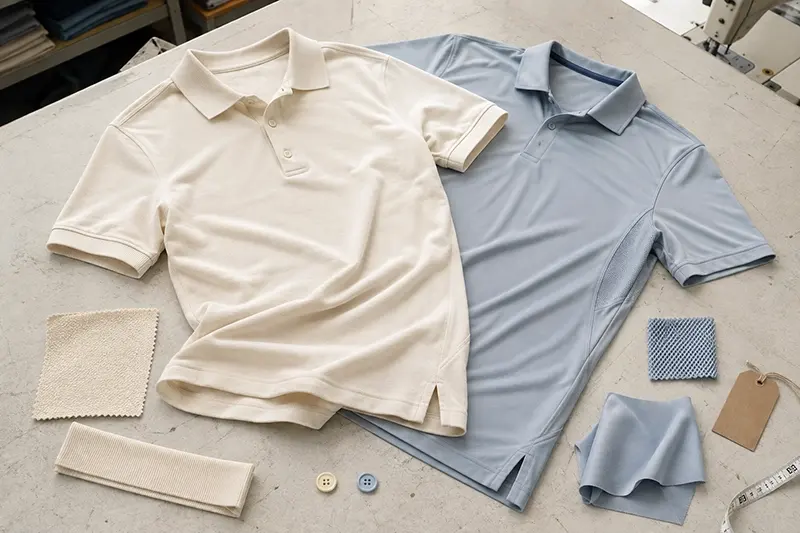
A classic polo is the traditional version most customers recognize. It usually features a structured collar, two- or three-button placket, short sleeves, side vents, and a regular or slightly tailored fit.
Cotton piqué is the most familiar fabric for this style. Its textured knitted surface provides a clean appearance while remaining comfortable for everyday wear. Cotton-polyester piqué and stretch cotton are also available when buyers need better shape retention, durability, or flexibility.
Classic polos are commonly used for:
- Fashion and lifestyle collections
- Corporate and staff uniforms
- Hospitality teams
- Schools and clubs
- Promotional clothing
- Wholesale programs
- Everyday casual wear
A custom classic polo shirt is a flexible choice because the fabric, fit, collar, cuffs, placket, colors, labels, and logo application can all be adjusted without losing the traditional polo identity.
What Is a Performance Polo?
A performance polo maintains the basic polo structure but adds features for active use, warm weather, and long periods of wear. It usually uses polyester, polyester-spandex, technical piqué, mesh, or other functional fabrics.
The main priorities are:
- Moisture management
- Quick drying
- Breathability
- Stretch and recovery
- Lightweight comfort
- Ease of movement
- Easy garment care
Performance polos are suitable for sports brands, outdoor workers, golf programs, active corporate teams, resorts, delivery staff, event crews, and warm-climate uniforms.
A custom performance polo shirt can also include ventilation panels, laser-cut holes, flatlock seams, lightweight collars, moisture-control neck tape, or performance cuffs. These details should be selected according to actual use rather than added only for appearance.
The Main Difference Is the Fabric
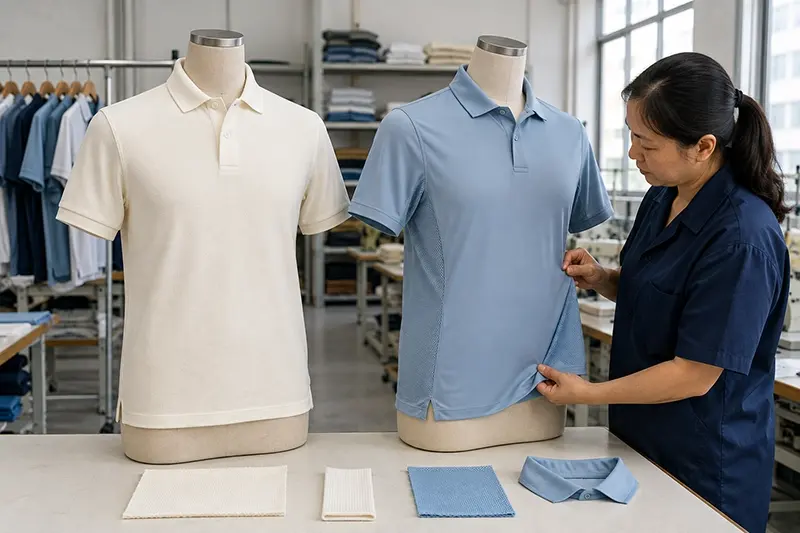
Fabric creates the clearest difference between classic and performance polos.
Classic polos commonly use cotton piqué, cotton-polyester piqué, cotton jersey, or cotton with elastane. These materials provide a natural hand feel and a familiar polo appearance. Cotton piqué also has enough structure to support a defined collar and clean body shape.
Performance polos usually use polyester or polyester-spandex fabrics. These materials can be engineered to move moisture, dry quickly, stretch during movement, and remain lightweight.
The correct option depends on the product’s purpose:
- Choose cotton piqué for natural comfort and traditional styling.
- Choose a cotton-polyester blend for durability and easy care.
- Choose stretch cotton for a classic look with added flexibility.
- Choose polyester performance fabric for active or warm environments.
- Choose polyester-spandex when stretch and recovery are priorities.
Polo fabrics generally range from approximately 180 to 260 GSM, but weight alone does not determine comfort or quality. Knit structure, yarn, finishing, stretch, and airflow also affect the result.
Appearance and Brand Positioning
A classic polo has a more traditional and structured appearance. Its textured piqué surface, ribbed collar, and familiar construction suit brands that want to communicate reliability, heritage, professionalism, or everyday quality.
It works particularly well for:
- Classic fashion brands
- Corporate offices
- Premium hospitality programs
- Schools and private clubs
- Retailers serving a broad market
A performance polo normally has a cleaner, lighter, and more technical appearance. The fabric may have a smooth surface, fine mesh texture, subtle sheen, or engineered pattern. It is more suitable for sportswear, golf, outdoor, travel, and modern active-lifestyle collections.
However, performance does not always mean highly athletic. A technical fabric can be combined with a structured collar, solid color, and subtle embroidery to create a professional uniform. Likewise, a classic polo can use stretch cotton and a modern fit to become more active without looking like sportswear.
Comfort in Different Environments
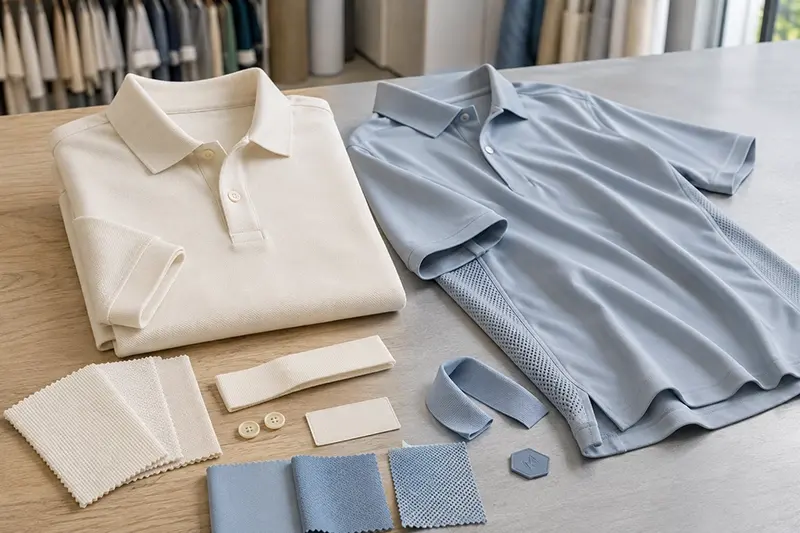
Classic cotton polos are comfortable in indoor, moderate-temperature, and everyday environments. Cotton has a soft, natural feel and absorbs moisture, making it pleasant against the skin.
The limitation is that cotton can hold moisture and take longer to dry. A heavier cotton polo may become uncomfortable during intensive activity or in hot, humid conditions.
Performance polos are designed to manage these situations more effectively. Moisture-wicking fabric moves perspiration across the fabric surface, where it can evaporate faster. Lightweight construction and ventilation can also improve airflow.
Choose a performance polo when the wearer will:
- Work outdoors
- Move frequently
- Play sports
- Spend long hours in warm conditions
- Travel or attend outdoor events
- Need a quick-drying uniform
For office employees, retail teams, or casual customers, the natural feel and appearance of a classic polo may be more important than technical performance.
Fit and Freedom of Movement
Classic polos are available in regular, slim, relaxed, women’s, and unisex fits. A regular fit offers the broadest size coverage and is often selected for corporate or wholesale programs.
Performance polos usually need more freedom through the shoulders, chest, upper back, and armholes. Added stretch can support movement without requiring an excessively loose fit.
Important performance fit details include:
- Balanced shoulder width
- Flexible armhole construction
- Comfortable sleeve openings
- Enough room across the upper back
- Side vents or shaped hems
- Suitable body length during movement
A garment can use performance fabric and still feel restrictive if the pattern is incorrect. For that reason, fit development should be reviewed together with fabric stretch and intended activity.
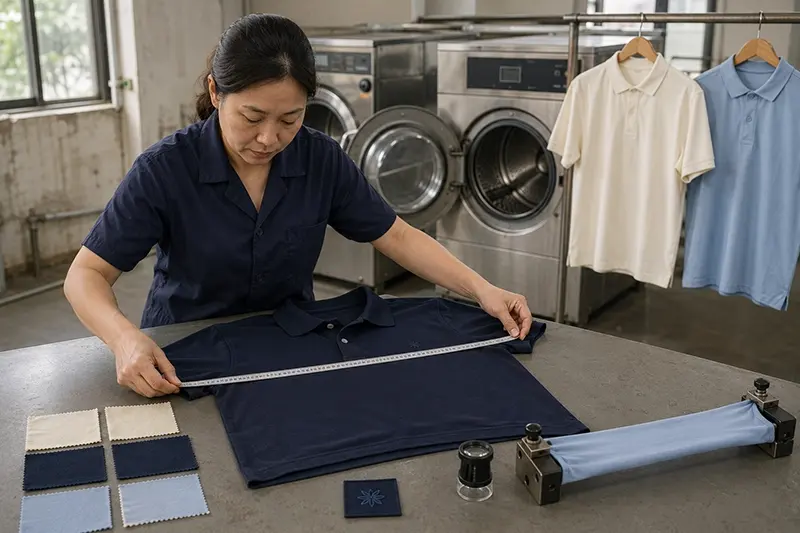
The sample should be measured and tested on a suitable fit model. Measurements confirm sizing accuracy, while physical fitting shows whether the polo pulls, twists, restricts movement, or rises during activity.
Collar and Cuff Construction
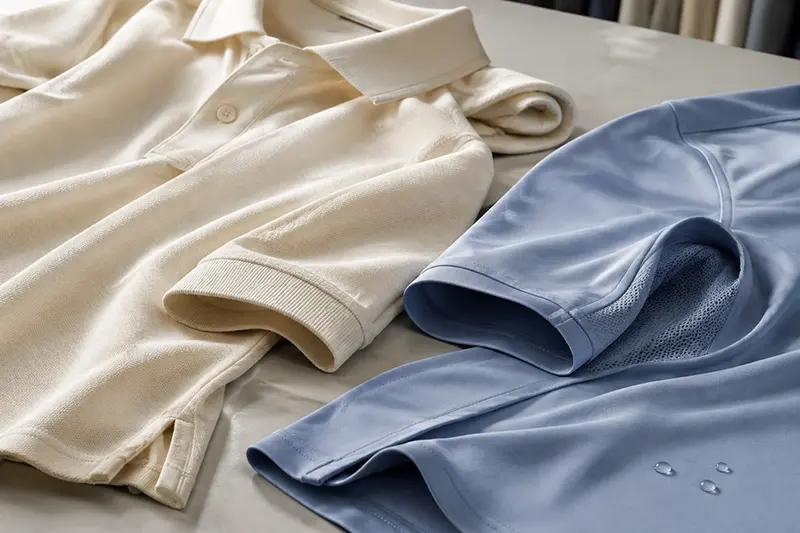
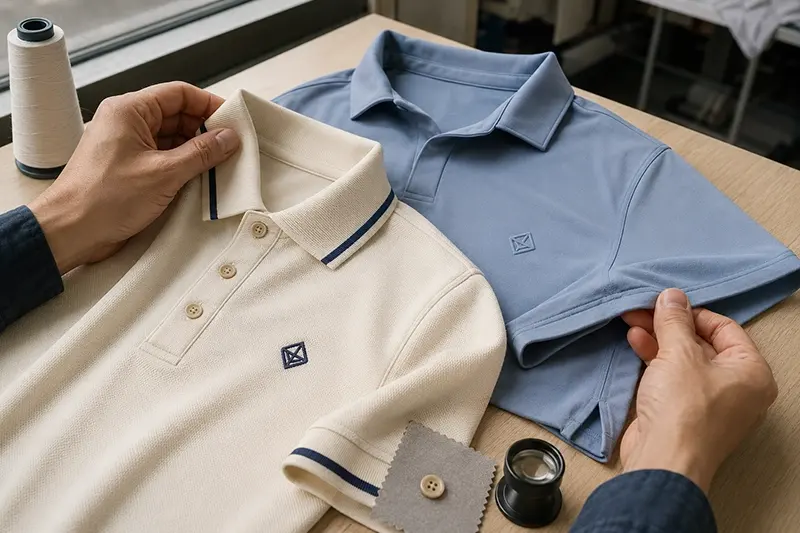
Classic polos commonly use ribbed collars and cuffs. These elements create a structured appearance and help customers recognize the garment as a traditional polo.
Buyers can customize:
- Collar height and shape
- Rib structure
- Contrast tipping
- Cuff width
- Placket length
- Button type and color
Performance polos may use lightweight rib, self-fabric, bonded, or low-profile collars. Sleeves can have open hems, flexible cuffs, or technical finishing that reduces weight and restriction.
The collar must match the fabric. A heavy collar can overpower a lightweight performance body, while a collar that is too soft may not provide the professional appearance required for a corporate program.
Collar recovery should also be checked after washing. Poor construction can cause curling, stretching, or an uneven shape, even when the main fabric performs well.
Branding and Logo Application
Both classic and performance polos can use embroidery, screen printing, DTF, heat transfer, patches, and silicone logos. The most suitable method depends on the fabric and artwork.
Embroidery is widely used on classic polos because cotton piqué usually provides a stable base. It works well for corporate logos, club crests, fashion branding, and small chest designs.
Lightweight performance fabric requires more careful embroidery control. A dense or oversized logo may cause puckering or stiffness. Adjusting the stitch count, backing, size, and placement can improve the result.
Printing is often a good option for performance polos. Heat transfer, silicone logos, and sublimation can create a lightweight result that moves more easily with the fabric. Sublimation is available for compatible polyester materials and works well for multicolor or all-over graphics.
Before bulk production, an embroidery and printing sample should be reviewed for logo size, color, placement, surface quality, and its effect on the fabric.
Durability and Washing Performance
Both styles can be durable, but their strengths are different.
A quality classic polo should maintain its measurements, color, collar shape, and surface after washing. Cotton may shrink if the fabric has not been properly controlled, while dark colors may require additional attention to color fastness.
Cotton-polyester blends can provide a practical balance for uniforms because they usually dry faster and retain their shape better than 100% cotton.
Performance polyester is generally quick drying and dimensionally stable. However, lightweight fabrics may be vulnerable to snagging or surface damage. Stretch materials also need reliable recovery to prevent the garment from becoming loose over time.
Depending on the program, buyers may need to evaluate:
- Shrinkage
- Color fastness
- Pilling resistance
- Snag resistance
- Stretch recovery
- Collar stability
- Logo durability
- Measurement consistency
Uniforms worn and washed frequently may need more extensive testing than a seasonal fashion collection.
Which Is Better for Corporate Uniforms?
A classic polo is often the safer option for indoor corporate uniforms. It offers a familiar professional appearance and works across office, retail, hospitality, and customer-service environments.
Cotton-polyester piqué is especially practical when buyers need comfort, durability, color stability, and easier washing.
A performance polo may be more suitable for:
- Outdoor employees
- Warm-climate workplaces
- Logistics and delivery teams
- Active service roles
- Corporate sports events
- Resort and travel programs
Some corporate buyers combine both styles. They may order classic polos for office employees and performance polos for outdoor or active staff while keeping the same company colors and logo placement.
This approach creates consistency without forcing every department to use a garment that does not match its working environment.
Which Is Better for a Retail Collection?
Classic polos are well suited to heritage, casual, preppy, lifestyle, and premium everyday collections. Brands can differentiate them through fit, fabric quality, collar tipping, buttons, embroidery, labels, and color direction.
Performance polos are better for activewear, golf, outdoor, athleisure, and travel collections. Technical fabrics and functional details help communicate movement, comfort, and modern performance.
The decision should reflect the customer rather than current trends alone. Consider whether the buyer values natural fibers and traditional styling or prefers easy-care garments that support active use.
Before sampling, professional polo fabric selection can help you compare hand feel, texture, stretch, weight, opacity, and performance. The fabric should support both the product function and expected selling price.

Cost and Order Planning
Neither style is automatically more expensive.
A standard polyester performance polo may cost less than a premium combed or mercerized cotton polo. However, stretch fibers, moisture-management finishes, technical panels, bonded details, or complex printing can increase the performance polo’s cost.
Classic polo costs can increase when the design includes premium cotton, custom-developed rib, special buttons, multiple embroidery positions, private labels, or high-end packaging.
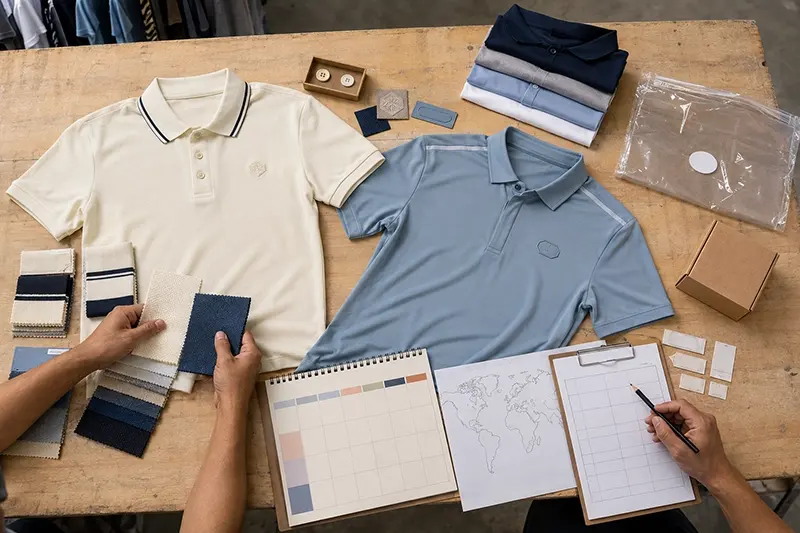
For an accurate quotation, provide:
- Preferred polo style
- Fabric requirements
- Order quantity
- Colors and size distribution
- Fit or measurement chart
- Logo artwork and placement
- Labels and packaging
- Target delivery date
- Destination country
Our standard MOQ is 100 pieces per design per color, with mixed sizes available. Sampling normally takes 10–15 working days, while bulk production generally takes 25–30 working days after approval.
Classic or Performance: Which Should You Choose?
Choose a classic polo for traditional styling, natural comfort, and broad use across retail and professional markets. Choose a performance polo for warm weather, active movement, quick drying, and easier moisture management.
If your program includes different wearing environments, you can develop both types with consistent colors and branding. To discuss the most suitable option for your market or request a quotation, contact us with your product details and reference images.
FAQs
Can a performance polo still look professional?
Yes. A solid technical fabric, structured collar, balanced fit, and subtle embroidery can create a professional performance polo for corporate or hospitality programs.
Is cotton piqué suitable for warm weather?
Cotton piqué can be breathable and comfortable, especially in lighter weights. However, it absorbs moisture and normally dries more slowly than performance polyester.
Can embroidery be applied to performance fabric?
Yes, but the stitch density, backing, logo size, and fabric stability must be considered. A logo test helps prevent puckering or excessive stiffness.
Can classic and performance polos use the same company colors?
Yes. Colors can be matched closely through available fabric colors or custom dyeing, although slight differences may occur between cotton and polyester materials.
Can you develop both styles for one uniform program?
Yes. Classic polos can be used for indoor or customer-facing staff, while performance polos can be developed for outdoor and active teams with coordinated branding.
Share With
Related Articles


Hot Products