How to Choose Polo Shirts for Corporate Uniforms?
Table of Contents
The best corporate polo shirt should look professional, remain comfortable throughout the working day, and maintain consistent color, fit, and branding after repeated washing. Cotton-polyester piqué is a practical choice for general staff uniforms, while lightweight polyester works better for outdoor or warm-weather teams.
At Mingxingpolo, we develop corporate polos for offices, retail stores, hospitality teams, events, clubs, and service businesses. Before ordering, buyers should consider the working environment, fabric, fit, logo method, size range, and repeat-order requirements.
Start With the Working Environment
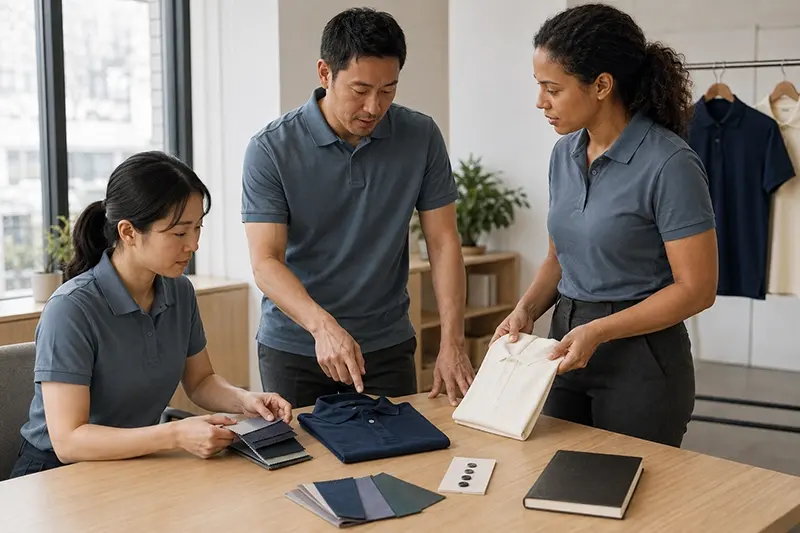
The right corporate polo depends on where and how employees will wear it. A polo designed for office staff may not provide enough breathability for an outdoor team, while a lightweight sports polo may look too casual for a premium hotel or showroom.
Before choosing a style, consider:
- Indoor or outdoor use
- Local climate and temperature
- Level of physical activity
- Length of each working shift
- Washing frequency
- Customer-facing or operational roles
- Formality of the company image
Office, retail, and reception employees usually need a structured polo with a stable collar and clean fit. Outdoor, logistics, delivery, and event teams may benefit more from quick-drying fabric, stretch, and ventilation.
Some companies use two coordinated polo styles. A classic cotton-blend version can be supplied to office staff, while a performance version is provided to active teams. Matching colors and logo placement can keep the company identity consistent.
Choose the Right Fabric
Fabric affects comfort, appearance, durability, washing performance, and cost. The most suitable material depends on the employee’s job and wearing environment.
Cotton piqué offers a natural hand feel and traditional appearance. It is comfortable for indoor offices, retail environments, and hospitality teams. However, it may shrink or dry slowly if the fabric is not properly controlled.
Cotton-polyester piqué combines natural comfort with improved durability, shape retention, and drying speed. It is often the most practical choice for general corporate uniforms.
Polyester piqué is lightweight, easy to care for, and suitable for frequent washing. Performance polyester can also offer moisture management and quick-drying properties for active or outdoor teams.
Stretch piqué contains elastane or spandex to improve flexibility. It works well for tailored uniforms and roles requiring more movement.
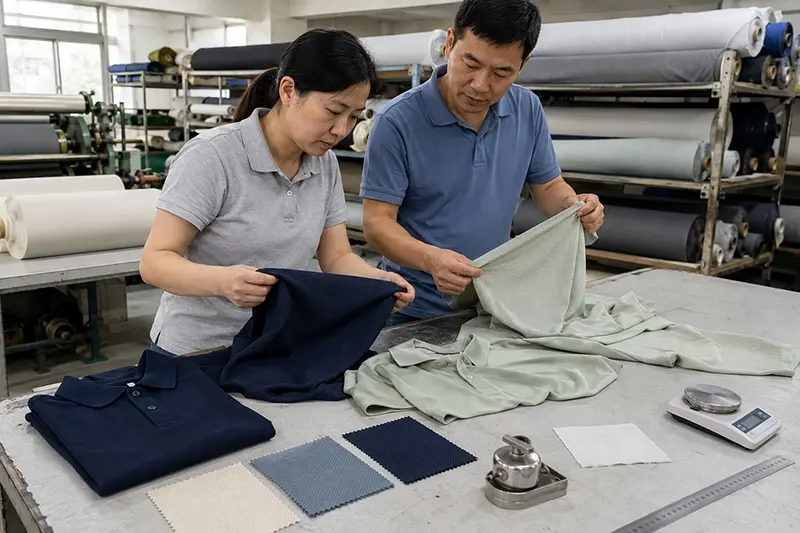
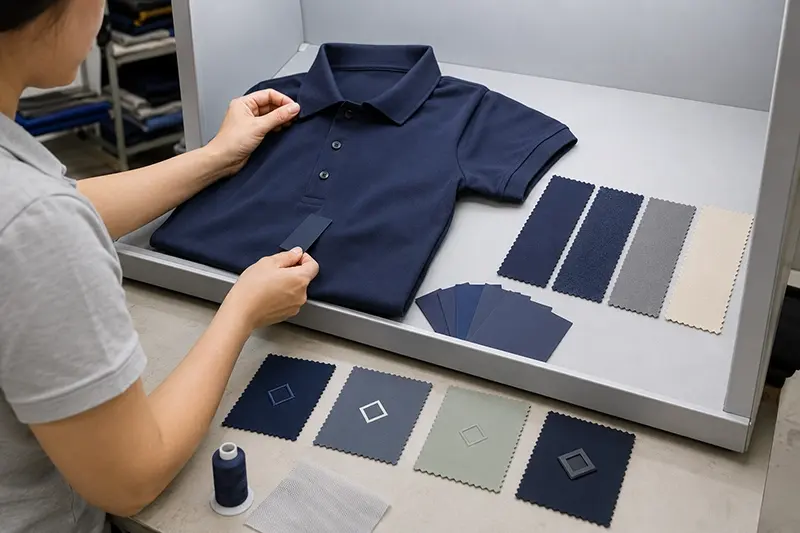
Through professional polo fabric selection, buyers can compare fabric weight, texture, color, stretch, shrinkage, and washing performance before approving the material.
Select a Suitable Fabric Weight
Polo shirt fabrics commonly range from approximately 180 to 260 GSM. The correct weight depends on the climate, fabric composition, required coverage, and desired appearance.
Lighter fabrics are useful for:
- Warm climates
- Outdoor work
- Active employees
- Summer uniform programs
- Lightweight layering
Medium-weight fabrics provide more structure and coverage. They work well for offices, hospitality, retail stores, and year-round indoor use.
A heavier fabric is not automatically better. It may look more structured but can become uncomfortable during long shifts or in warm conditions. A fabric that is too light may appear transparent, cling to the body, or provide insufficient stability for embroidery.
Buyers should evaluate physical swatches instead of relying on GSM alone. Knit structure, yarn quality, finishing, and composition also affect the fabric’s final appearance and performance.
Choose a Professional Fit
A corporate polo should look clean while accommodating different body types. For most uniform programs, a regular or slightly tailored fit provides the best balance.
The polo should:
- Sit correctly across the shoulders
- Allow comfortable chest movement
- Lie flat around the placket
- Provide enough room at the waist
- Have comfortable sleeve openings
- Cover the waistband when moving
- Remain suitable when tucked or untucked
A fit that is too slim can restrict movement and may not suit every employee. A polo that is too loose can look untidy and cause the company logo to sit incorrectly.
A custom corporate polo shirt can be developed in men’s, women’s, and unisex fits. Separate men’s and women’s patterns usually provide a more tailored appearance, while unisex sizing simplifies inventory for large teams, events, and temporary programs.
Plan the Size Range Carefully
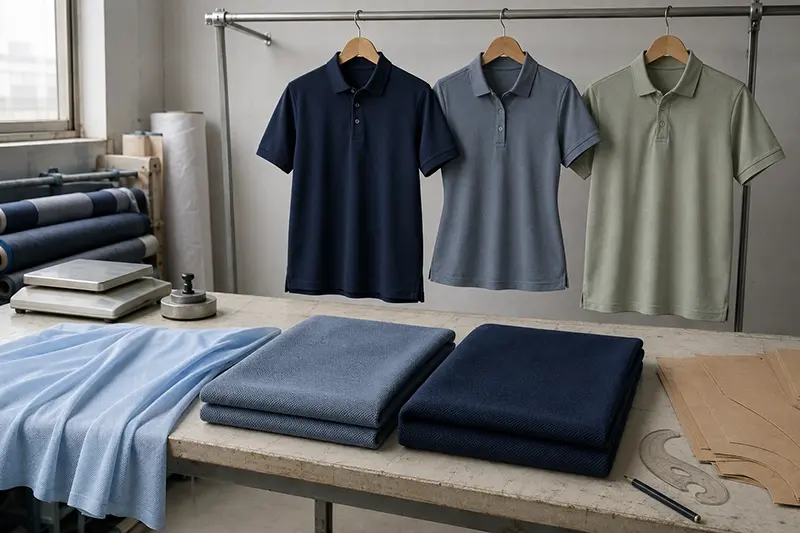
Uniform orders often include employees with different body types, so size planning is more complex than ordering for a focused fashion collection.
The size chart should include key finished-garment measurements such as:
- Shoulder width
- Chest width
- Bottom width
- Body length
- Sleeve length
- Sleeve opening
- Armhole
- Neck opening
Collecting actual employee size information is more reliable than ordering equal quantities of every size. Buyers should also keep a small quantity of commonly requested sizes for new employees or replacements when practical.
The approved sample should be checked on a suitable fit model before bulk production. For long-term programs, retaining the same size chart and approved patterns makes future orders more consistent.
Keep the Collar and Placket Stable
The collar is one of the most visible areas of a corporate polo. A curling, stretched, or uneven collar can make the uniform look worn even when the rest of the garment remains in good condition.
A quality corporate collar should:
- Sit evenly around the neckline
- Recover after washing
- Match the weight of the body fabric
- Keep a stable shape during wear
- Remain comfortable throughout the day
Ribbed collars provide a traditional and structured appearance. Self-fabric collars can create a cleaner and more modern result, particularly on performance polos.
The placket should sit flat and remain centered. Buyers can select two- or three-button plackets, concealed buttons, contrast internal details, or custom buttons. The construction should support the company image without becoming unnecessarily complicated.
Match the Color to Your Brand
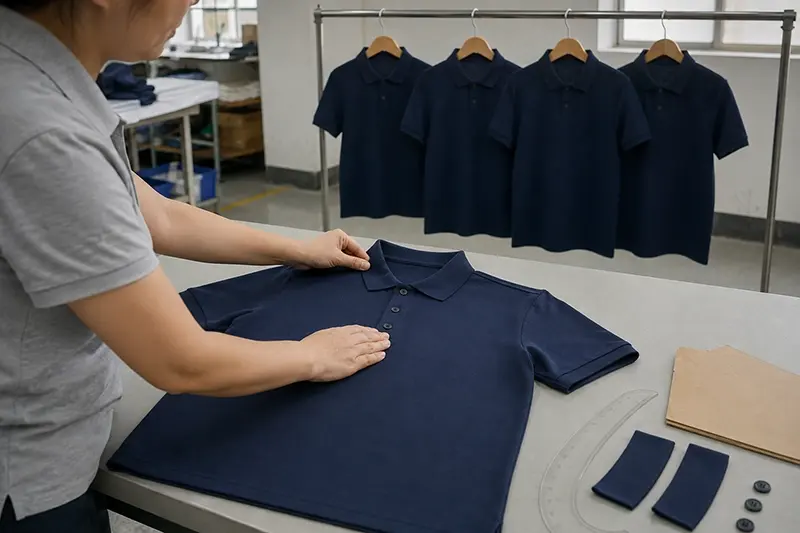
Corporate colors should be selected carefully because fabric composition affects how a color appears. The same Pantone reference may look slightly different on cotton and polyester due to different dyeing methods and surface textures.
Dark navy, black, white, gray, and neutral colors are common because they are professional and easy to coordinate. Strong brand colors can also work well when they remain consistent across different departments and repeat orders.
Buyers should review:
- Fabric color under natural and indoor light
- Color matching between the body, collar, and cuffs
- Logo thread or print color
- Color fastness after washing
- Availability for future orders
For programs that require long-term reordering, it is important to record the approved fabric, color reference, and supplier information. Changing the fabric source can create visible differences between the original and replacement uniforms.
Choose the Right Logo Application
Embroidery is the most common branding method for corporate polos. It creates a durable, professional appearance and works well for company names, compact logos, and club crests.
Flat embroidery is suitable for most corporate designs. Three-dimensional embroidery, patches, appliqué, or mixed techniques may be used when the brand needs a more distinctive result, but they are not necessary for every uniform.
Printing may be more suitable for:
- Large back designs
- Detailed multicolor artwork
- Staff roles or department names
- Event information
- Lightweight performance fabrics
Screen printing, DTF, heat transfer, silicone logos, and sublimation are available depending on the material and artwork.
During embroidery and printing development, buyers should check the logo size, color, location, stitch density, and backing. Heavy embroidery on lightweight fabric may cause puckering, so the decoration must be tested on the selected material.
Decide Where to Place the Logo
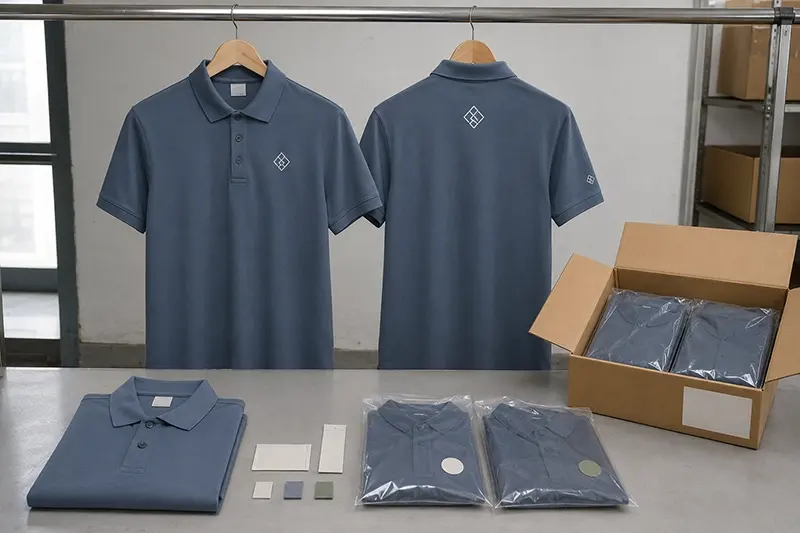
The left chest is the most common position because it is visible without dominating the uniform. Other options include the right chest, sleeves, back neck, upper back, and full back.
Logo placement should reflect the employee’s role. Customer-facing staff may only need a small chest logo, while event or delivery teams may require larger back branding for visibility.
If the polo includes company, department, and sponsor logos, all placements should be planned together. Too many large logos can make a professional uniform look promotional.
Logo position should also be approved on different garment sizes. A fixed placement that looks correct on a medium sample may appear too close to the armhole or placket on smaller sizes.
Consider Labels and Packaging
Corporate uniforms may require more than the main company logo. Buyers should also plan the internal branding and garment identification.
Available options include:
- Woven brand labels
- Printed neck labels
- Care and composition labels
- Size labels
- Employee name identification
- Department labels
- Individual garment bags
- Size stickers
- Carton marks
Clear size identification makes distribution easier, especially when uniforms are sent to several offices, stores, or regional teams.
Through custom labels and packaging, polos can be prepared according to the company’s distribution process rather than packed like ordinary retail products.
Check Durability and Washing Performance
Corporate polos may be worn several times each week, so they must maintain their appearance after repeated washing.
Important quality points include:
- Fabric shrinkage
- Color fastness
- Pilling resistance
- Collar and cuff recovery
- Seam strength
- Measurement stability
- Logo durability
- Button attachment
Care instructions should match how employees will actually wash the garments. If the uniform requires special handling that employees are unlikely to follow, a more practical fabric may be a better choice.
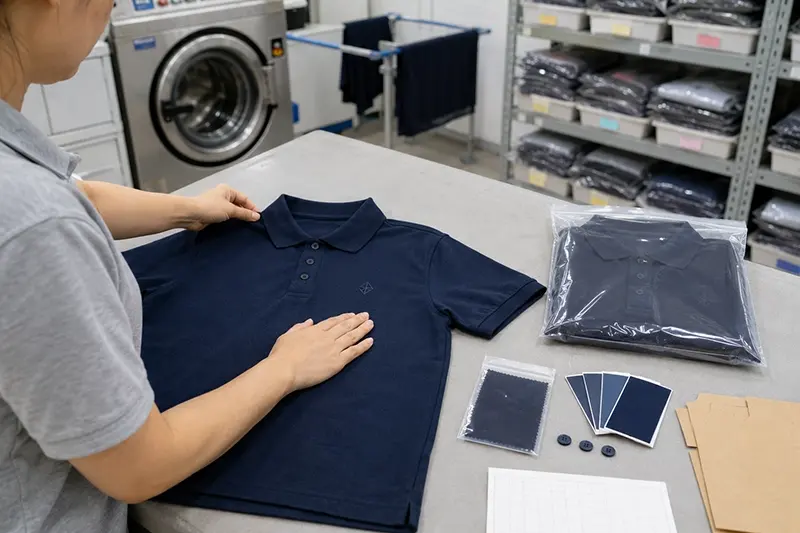
A pre-production or approved sample can be washed before bulk production to evaluate shrinkage, color, collar shape, and logo performance.
Plan for Repeat Orders
Repeat-order consistency is important for long-term uniform programs. New employees and replacement requirements may create additional orders months after the original production.
The manufacturer should retain:
- Approved patterns
- Graded size charts
- Fabric specifications
- Pantone or color references
- Logo files and positions
- Thread or printing colors
- Labels and packaging details
- Approved sample records
Even with clear records, fabric lots may show small color variations. When exact matching is important, buyers should plan quantities carefully or confirm material availability before placing a repeat order.
A stable specification makes it easier to reproduce the same appearance instead of redeveloping the uniform every time.
What Information Should You Send for a Quotation?
Providing complete project information helps the manufacturer recommend the right fabric and calculate an accurate quotation.
Your request should include:
- Employee roles and use environment
- Required quantity
- Colors and size distribution
- Preferred fabric or performance needs
- Men’s, women’s, or unisex fit
- Logo artwork and placement
- Labels and packaging requirements
- Target delivery date
- Destination country
- Reference images or existing uniforms
Our standard MOQ is 100 pieces per design per color, with mixed sizes available. Sampling normally takes 10–15 working days, while bulk production generally takes 25–30 working days after all details are approved.
Choose Corporate Polos for Real Working Needs
Select the polo according to the employees’ environment, movement, washing frequency, and required appearance. Cotton blends suit many general uniform programs, while performance polyester is better for active or warm-weather teams.
Confirm the fabric, fit, colors, sizing, logo, and repeat-order requirements before sampling. To discuss your corporate polo project or request a quotation, contact us with your logo, quantity, size requirements, and reference images.
FAQs
What is the best fabric for corporate polo shirts?
Cotton-polyester piqué is a practical general option because it balances comfort, durability, shape retention, and easy care. Performance polyester is more suitable for outdoor or active teams.
Should corporate polos use men’s and women’s fits?
Separate fits usually provide a more tailored appearance. Unisex sizing can simplify ordering and distribution for large teams, temporary staff, or events.
Is embroidery suitable for all polo fabrics?
Embroidery works with most polo fabrics, but the stitch density, backing, and logo size must suit the material. Lightweight fabric may require a smaller or lighter design.
How can we keep repeat orders consistent?
Retain the approved pattern, size chart, fabric specification, color reference, logo files, and packaging details. Material availability should also be confirmed before reordering.
Can sizes be mixed within the MOQ?
Yes. The standard MOQ is 100 pieces per design per color, and different sizes can be mixed within the order.
Share With
Related Articles


Hot Products