What Happens After You Approve a Polo Sample?
Table of Contents
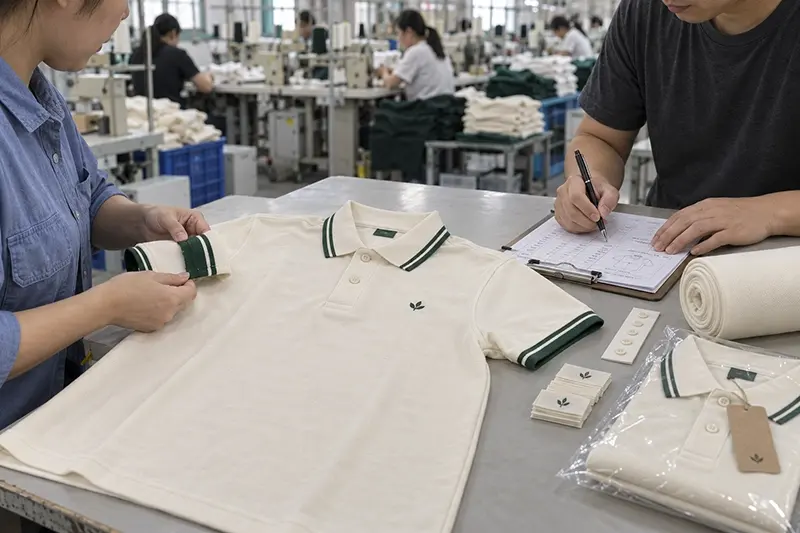
After you approve a polo sample, the manufacturer confirms the final specifications, quantity, size breakdown, colors, branding, and packaging before preparing materials for bulk production. The approved sample becomes the main quality reference for cutting, sewing, logo application, and inspection. At Mingxingpolo, bulk production normally takes 25–30 working days after the sample and all production details are approved.
Does Sample Approval Mean Production Starts Immediately?
Not always. Approving the physical sample is an important milestone, but several commercial and technical details must also be confirmed before the factory can begin bulk production.
The manufacturer normally checks whether it has received approval for:
- Final sample appearance
- Finished garment measurements
- Fabric composition and GSM
- Fabric and trim colors
- Collar and cuff construction
- Logo size, color and position
- Labels and packaging
- Order quantity
- Size and color breakdown
- Delivery requirements
- Payment and production authorization
If any of these details remain open, production may be placed on hold. This prevents the factory from ordering incorrect materials or producing garments based on incomplete instructions.
1. Your Sample Feedback Is Recorded
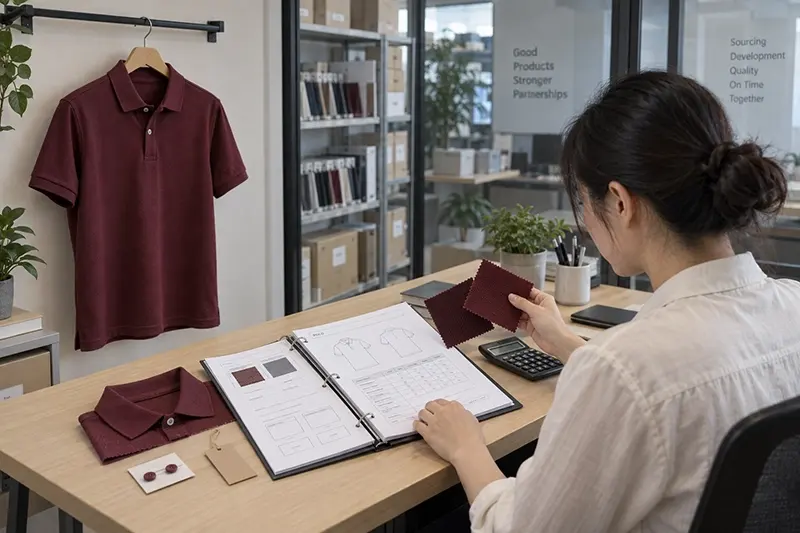
Sample approval should be provided in writing. Avoid confirming the sample only during a phone or video call because the production team needs a clear record.
A useful approval message should state:
- Sample style number
- Sample version or revision number
- Approval date
- Approved fabric and color
- Approved measurements
- Approved logo
- Any final corrections
- Whether another sample is required
If you approve the overall sample but request a small change, explain whether the manufacturer can make that correction directly in production or whether you need to see a revised sample.
For example, changing a care-label position may not require another complete sample. Changing the collar shape, fit, or fabric could affect the entire product and should normally be checked again.
2. The Final Specifications Are Locked
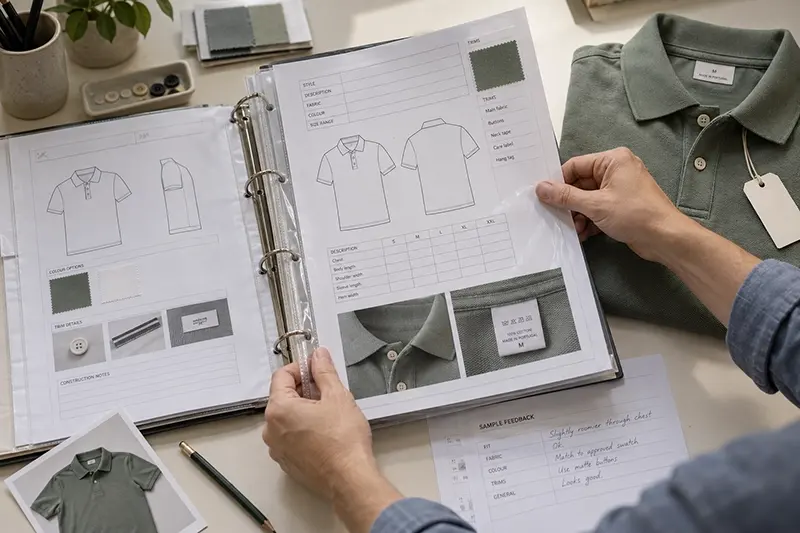
The manufacturer converts all approved decisions into a final production specification. This document gives the purchasing, pattern, cutting, sewing, decoration, and quality-control teams the same instructions.
The confirmed specification should include:
- Style drawing or reference images
- Final garment measurements
- Measurement tolerances
- Fabric composition, construction and GSM
- Approved Pantone or fabric color
- Collar, cuff and placket details
- Button and thread specifications
- Logo artwork and placement
- Label artwork and placement
- Packaging instructions
- Carton requirements
Once these specifications are locked, changes become more difficult. Some adjustments can affect fabric consumption, pattern layout, material orders, or production scheduling.
Review the final specification carefully, even if the physical sample looks correct. A written error can still be repeated throughout the bulk order.
3. The Order Breakdown Is Confirmed
The factory needs a final quantity for every size and color before production planning and fabric cutting.
A confirmed breakdown might look like this:
| Color | S | M | L | XL | Total |
|---|---|---|---|---|---|
| Navy | 10 | 20 | 20 | 10 | 60 |
| White | 5 | 15 | 15 | 5 | 40 |
| Total | 15 | 35 | 35 | 15 | 100 |
Mingxingpolo’s standard MOQ is 100 pieces per design per color, with size mixing allowed within that color quantity.
Check that the total quantity on the size breakdown matches the purchase order. If the order includes men’s, women’s, and unisex fits, give each version a separate style number to reduce the risk of mixing patterns or labels.
4. Bulk Fabric and Trims Are Prepared
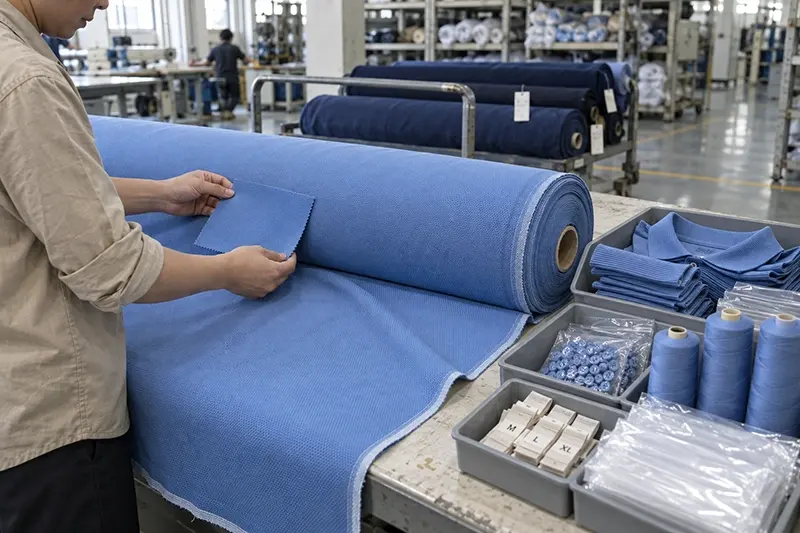
After the order is confirmed, the factory purchases or prepares the required fabric, collars, cuffs, buttons, thread, labels, and packaging materials.
Available fabrics and standard trims can usually move into production faster. Custom-dyed fabric, jacquard ribs, specially colored buttons, or branded packaging may require additional preparation.
Before cutting, the factory should check important material points such as:
- Fabric width and usable quantity
- GSM and composition
- Color shade
- Shrinkage
- Colorfastness
- Surface defects
- Collar and cuff color matching
- Button and thread consistency
For custom colors, the approved lab dip or fabric swatch should remain the reference. Slight differences can occur between a small sample cutting and a bulk dye lot, so color should be evaluated under consistent lighting.
5. Patterns and Size Grading Are Finalized
The approved sample is normally made in one base size. Before bulk cutting, the pattern must be graded into the remaining sizes.
Grading is not simply enlarging every measurement by the same amount. Chest, shoulder, length, sleeve opening, and collar measurements may follow different grading rules.
The production team should confirm:
- Base-size pattern
- Size increments
- Finished garment measurements
- Measurement tolerances
- Shrinkage allowance
- Men’s, women’s or unisex grading
- Extended-size requirements
If your order covers a wide range such as XS to 5XL, it may be useful to inspect a larger graded sample. This is especially important for fitted polos, polo dresses, and performance styles.
Brands reviewing different Custom Polo Shirts should make sure each fit uses its own approved measurement chart instead of applying one chart to every product category.
6. A Pre-Production Meeting Is Held
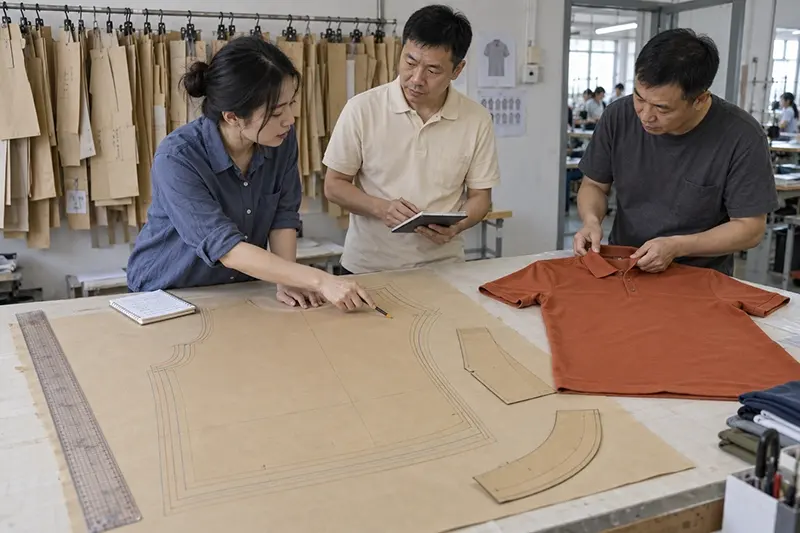
Before bulk cutting, the factory team reviews the approved sample and production documents. This is often called a pre-production meeting.
The merchandising, pattern, cutting, sewing, decoration, and quality-control teams may review:
- Key construction points
- Difficult sewing operations
- Logo position and alignment
- Measurement tolerances
- Fabric handling requirements
- Color and shade controls
- Label placement
- Folding and packaging
- Inspection standards
This meeting is particularly important when the polo includes contrast panels, custom collars, several logo positions, or unusual construction.
The goal is to identify production risks before hundreds of garments are cut or sewn.
7. Fabric Cutting Begins
After material inspection and production approval, the factory prepares the cutting marker and lays the fabric for cutting.
The cutting team must control:
- Fabric direction
- Shade grouping
- Pattern alignment
- Collar and placket components
- Size identification
- Cutting accuracy
- Defective fabric areas
Pieces from noticeably different shade groups should not be mixed in one garment. Cut components are normally bundled by size, color, and production order before being sent to the sewing line.
Once bulk fabric has been cut, major fit or measurement changes are usually no longer practical. This is why all dimensions must be confirmed before this stage.
8. Sewing and Inline Quality Control Start
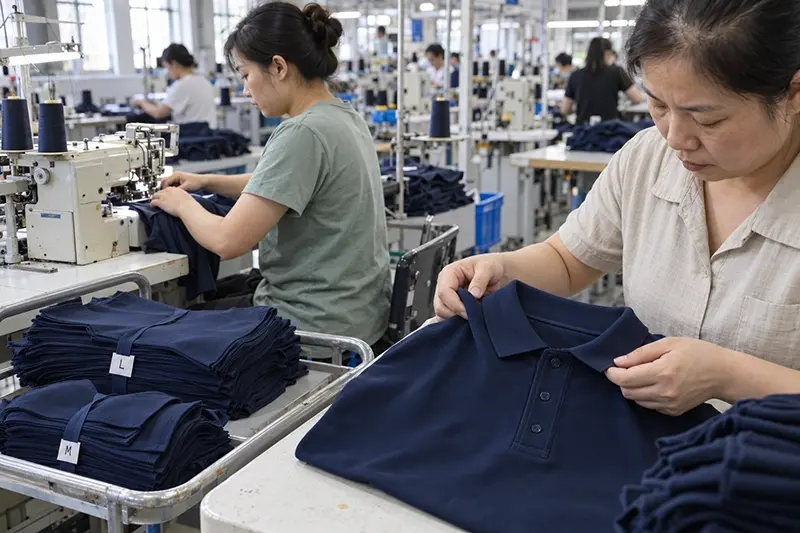
The polo components then move through the sewing line. Depending on the design, operations can include shoulder joining, collar attachment, placket construction, sleeve setting, side seams, cuffs, side slits, and hemming.
Inline quality control helps identify repeated problems while production is still running. Inspectors may check:
- Collar shape and symmetry
- Centered placket position
- Shoulder and sleeve balance
- Stitch density
- Seam strength
- Side-slit alignment
- Garment measurements
- Fabric damage or stains
Correcting an issue during the first part of production is more efficient than discovering it during final inspection. If a problem affects many garments, production may need to pause while the sewing method or machine setting is adjusted.
9. Embroidery or Printing Is Applied
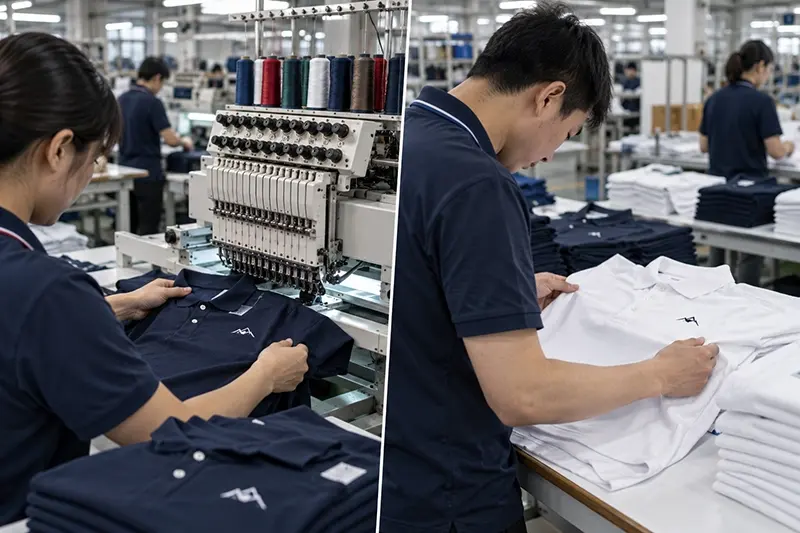
Logo application may happen before or after certain sewing operations depending on its position and decoration method.
For embroidery, the factory checks thread colors, backing, stitch density, artwork size, and fabric distortion. A heavy logo on a lightweight polo can cause puckering, so the embroidery must be tested on the actual production fabric.
For printing, the team checks color, opacity, position, hand feel, and adhesion. Performance polyester may also require testing for dye migration.
The approved logo sample and placement measurements should be available to the decoration team. Verbal instructions such as “small logo on the chest” are not precise enough for bulk production.
10. Finished Garments Are Inspected
After sewing and decoration, the garments are trimmed, cleaned, pressed, and inspected.
Final quality control generally covers:
- Garment appearance
- Measurements and tolerances
- Collar and placket alignment
- Logo quality and position
- Stitching and seam security
- Fabric shade and defects
- Correct labels
- Size identification
- Quantity
- Packaging
A sample of the production quantity may also undergo wash testing to evaluate shrinkage, colorfastness, collar recovery, and logo durability.
At Polo Production, the approved sample and final specifications should remain the standard used to judge acceptable bulk quality.
11. Packing and Shipping Are Arranged
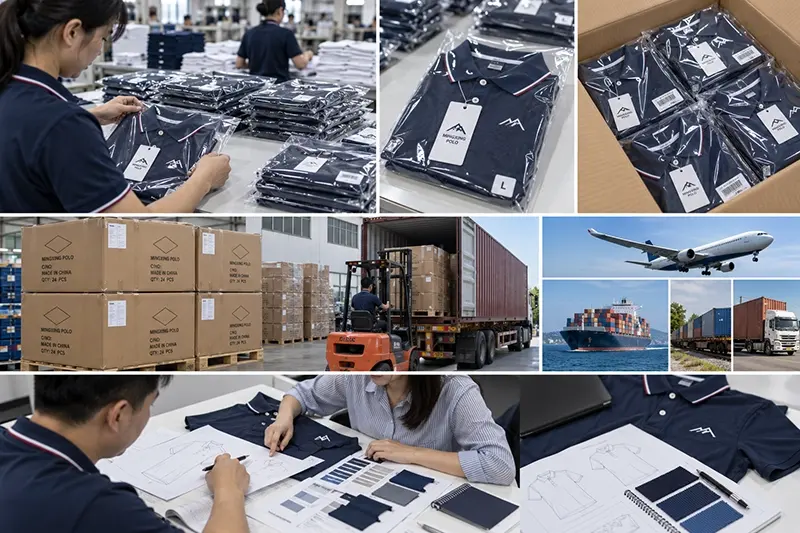
Once the goods pass inspection, they are folded and packed according to the approved instructions.
Packing can include:
- Individual polybags
- Size stickers
- Barcode labels
- Hang tags
- Branded packaging
- Department or team sorting
- Carton marks
- Packing lists
The factory then confirms carton dimensions, carton weight, total shipment volume, and collection date. The goods can be shipped by courier, air, rail, or sea depending on the order size, destination, and required delivery date.
Remember that the 25–30 working day bulk production period does not normally include international transportation time unless this is clearly stated in the quotation.
Can You Change the Design After Sample Approval?
Changes may still be possible before materials are ordered or fabric is cut, but they can affect cost and delivery time.
A change to the body measurements may require new patterns and fabric calculations. A new custom color may restart material development. A larger logo can change embroidery costs and fabric stability. New packaging may have its own MOQ and lead time.
Send any requested change in writing and wait for confirmation before assuming it has been accepted. The manufacturer should explain whether the change requires:
- An updated quotation
- A revised specification
- A new sample
- Additional development time
- A new production schedule
Frequent changes after approval increase the risk of mixed instructions. If the design direction has changed significantly, producing a revised sample is safer than relying on production notes alone.
Final Thoughts
Approving a polo sample moves the project from development into production preparation. The factory must still lock the specifications, confirm quantities, inspect materials, grade patterns, and brief the production team before cutting begins.
Mingxingpolo uses the approved sample as the reference for bulk manufacturing and quality control. To review your polo project, timeline, or production requirements, contact us with your design, quantity, size breakdown, and destination country.
FAQs
Can bulk production begin as soon as I approve the sample?
Only when the final quantity, size breakdown, fabric, logo, labels, packaging, payment, and production specifications are also confirmed. Missing information can delay material purchasing and production scheduling.
What is the difference between a fit sample and a pre-production sample?
A fit sample mainly checks measurements and garment balance. A pre-production sample should represent the approved bulk fabric, colors, trims, logo, and construction as closely as possible.
How long does bulk polo production take after approval?
Mingxingpolo’s standard bulk production time is 25–30 working days after sample approval and confirmation of all production details. Complex materials or decoration can require additional time.
Should I keep an approved sample?
Yes. Keep one approved sample as your reference for measurements, fabric, color, construction, and logo quality. The factory should also retain its approved production reference.
Will bulk polos be identical to the sample?
Bulk garments should follow the approved specifications, but manufacturing uses agreed measurement and appearance tolerances. Minor variation can occur. Clear standards and inline quality control keep these differences within an acceptable range.
Share With
Related Articles


Hot Products