Cotton Piqué vs Polyester Piqué: Which Is Better?
Table of Contents
Cotton piqué is generally better for brands that prioritize a natural hand feel, classic appearance, and everyday comfort. Polyester piqué is more suitable when quick drying, moisture management, shape retention, and frequent washing are the main requirements.
Neither fabric is better for every polo shirt. At Mingxingpolo, we select cotton or polyester piqué according to the target market, climate, wearing environment, branding method, and expected price. This comparison will help you decide which option fits your project.
What Is Cotton Piqué?
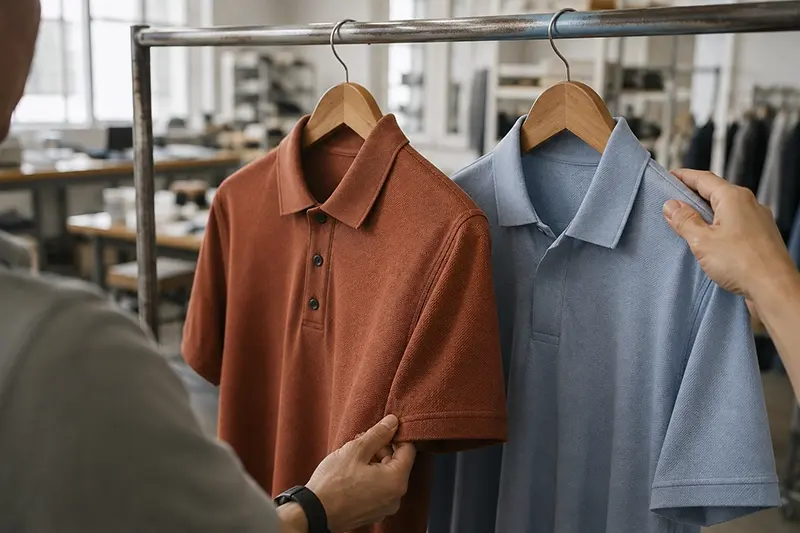
Cotton piqué is a knitted fabric made primarily or entirely from cotton fibers. Its raised texture gives polo shirts their familiar structured appearance while allowing more airflow than many smooth, tightly knitted fabrics.
It is commonly used for:
- Classic polo shirts
- Fashion and lifestyle collections
- Premium casualwear
- Corporate office uniforms
- Hospitality clothing
- School and club polos
The fabric feels natural against the skin and generally has a soft, matte surface. Combed cotton piqué offers a cleaner and more consistent appearance because shorter fibers and impurities are removed during yarn preparation.
Cotton piqué can also be mercerized to produce a smoother surface, improved color depth, and a more refined appearance for premium collections.
What Is Polyester Piqué?
Polyester piqué uses synthetic polyester fibers knitted into a textured structure. It retains the recognizable appearance of piqué while providing practical benefits for active use and frequent washing.
It is commonly selected for:
- Sports and golf polos
- Outdoor uniforms
- Event teams
- Delivery and logistics staff
- Warm-climate workwear
- Promotional programs
Polyester absorbs very little water. Instead, performance versions are designed to move moisture across the fabric surface, allowing it to evaporate more quickly.
The quality of polyester piqué varies. Basic versions may feel rough or appear overly shiny, while higher-quality fabrics can have a soft hand feel, controlled sheen, stable texture, and effective moisture management.
Comfort and Hand Feel
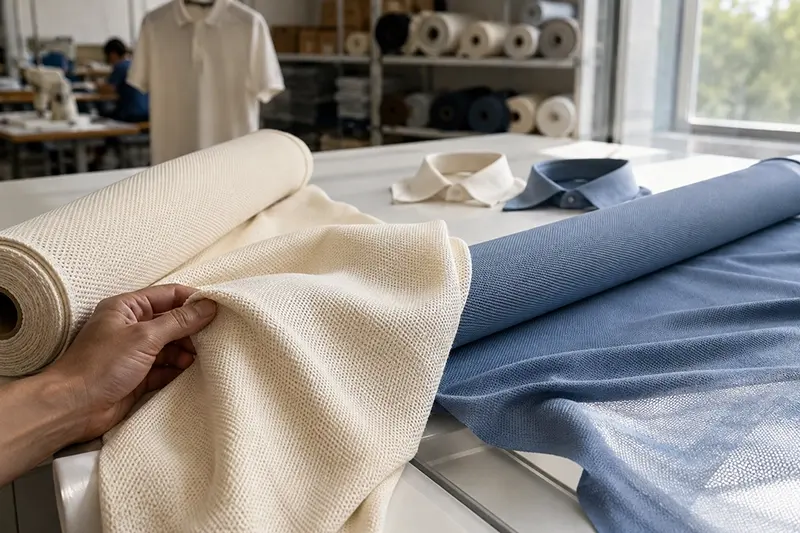
Cotton piqué usually provides the more natural and familiar wearing experience. It feels soft against the skin and is often preferred for everyday retail, office uniforms, and premium casual polos.
Its breathable texture helps prevent the fabric from clinging too closely to the body. This makes cotton comfortable in indoor and moderate-temperature environments.
Polyester piqué can feel lighter and smoother, but comfort depends heavily on fabric quality and finishing. A poorly developed polyester fabric may trap heat or feel less natural against the skin. A quality performance piqué can be soft, flexible, and comfortable for long working hours.
Choose cotton when natural comfort and hand feel are central to the product. Choose polyester when lightweight performance and moisture control are more important.
Breathability and Moisture Management
Both fabrics can be breathable because the piqué structure creates small spaces for airflow. However, they handle perspiration differently.
Cotton absorbs moisture into the fiber. This can feel comfortable at first, but the fabric becomes heavier when wet and takes longer to dry. It may not be ideal for intense activity or long periods in hot, humid conditions.
Polyester absorbs less moisture. Performance polyester moves perspiration across a larger surface so it can evaporate faster. This makes it useful for outdoor work, sports, golf, travel, and active corporate programs.
Polyester is usually the better choice when employees or customers will:
- Work in warm conditions
- Exercise or move frequently
- Spend long periods outdoors
- Need a quick-drying garment
- Wash and reuse polos frequently
For air-conditioned offices, shops, restaurants, and casual retail use, cotton piqué normally provides sufficient comfort.

Appearance and Brand Positioning
Cotton piqué has a matte, natural surface that supports a classic and premium appearance. It is strongly associated with traditional polo styling and works well with structured collars, ribbed cuffs, clean plackets, and subtle embroidery.
A custom classic polo shirt made from quality cotton piqué can suit heritage, lifestyle, casual, and premium retail brands.
Polyester piqué usually has a cleaner and more technical appearance. Some fabrics have a slight sheen, while others are finished to look more matte. It is suitable for sportswear, golf, outdoor, event, and practical uniform programs.
Polyester does not have to look inexpensive. Fabric texture, yarn quality, color, fit, collar construction, and finishing all influence the final presentation. A compact polyester piqué with a structured collar can still produce a professional corporate polo.
Durability and Washing Performance
Polyester piqué generally offers better dimensional stability. It resists shrinking, dries quickly, and usually maintains its shape through frequent washing.
These advantages make it practical for:
- Employee uniforms
- School clothing
- Event garments
- Sports teams
- Rental or service programs
- Frequently replaced staff apparel
Cotton piqué can also be durable, but it requires better shrinkage and washing control. High heat may reduce garment measurements or affect the collar and placket. Dark cotton colors may also require careful color-fastness testing.
For uniforms washed several times each week, polyester may provide easier maintenance. For retail collections where natural feel and appearance matter more than rapid drying, cotton may provide greater perceived value.
Fit, Drape, and Shape Retention
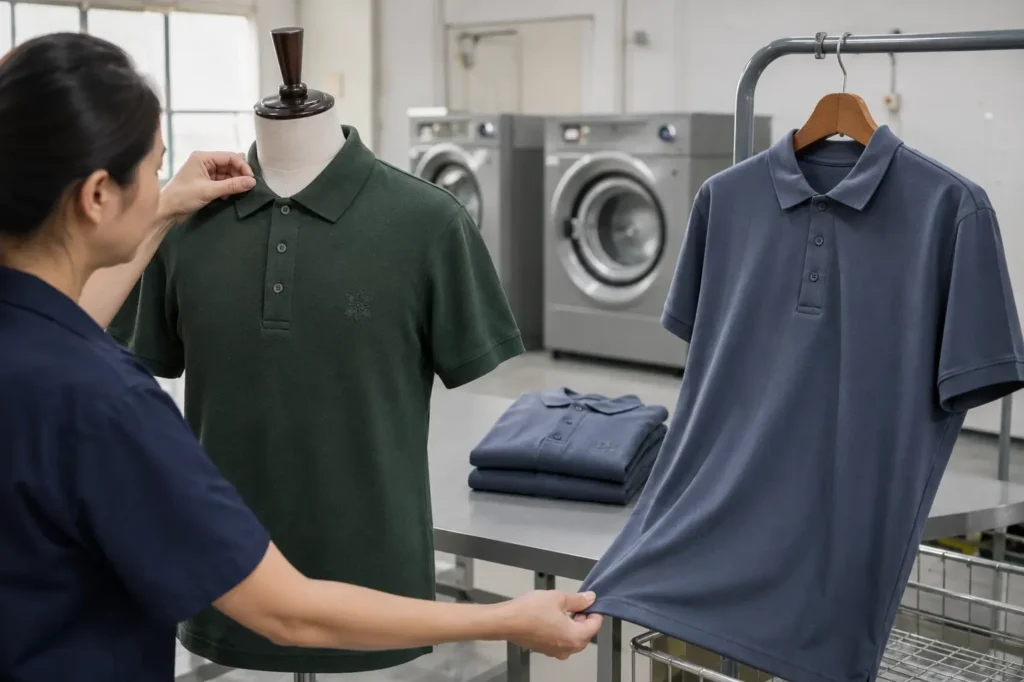
Cotton piqué usually has a structured yet natural drape. It works well for regular, slim, and relaxed polo fits, depending on the fabric weight and knit density.
Cotton may relax slightly during wear and can shrink after washing. The pattern should therefore be developed according to the actual fabric rather than a generic size chart.
Polyester piqué usually maintains its measurements and shape more consistently. Lightweight polyester may drape closer to the body, while compact or heavier versions create more structure.
For uniforms covering a wide size range, polyester’s dimensional stability can help maintain fit consistency. A custom corporate polo shirt can use polyester piqué for active teams or cotton piqué for office and customer-facing staff, while keeping the same logo and general design direction.
Color and Dyeing Differences
Cotton and polyester require different dyeing processes, so the same color reference may not appear identical on both materials.
Cotton can produce rich, natural-looking colors, but dark shades may fade gradually after repeated washing. Correct dyeing and color-fastness control reduce this risk.
Polyester generally offers strong color retention and is suitable for bright, saturated shades. It can also support sublimation printing, which allows detailed graphics, gradients, sponsor designs, and all-over patterns on compatible white or light-colored fabrics.
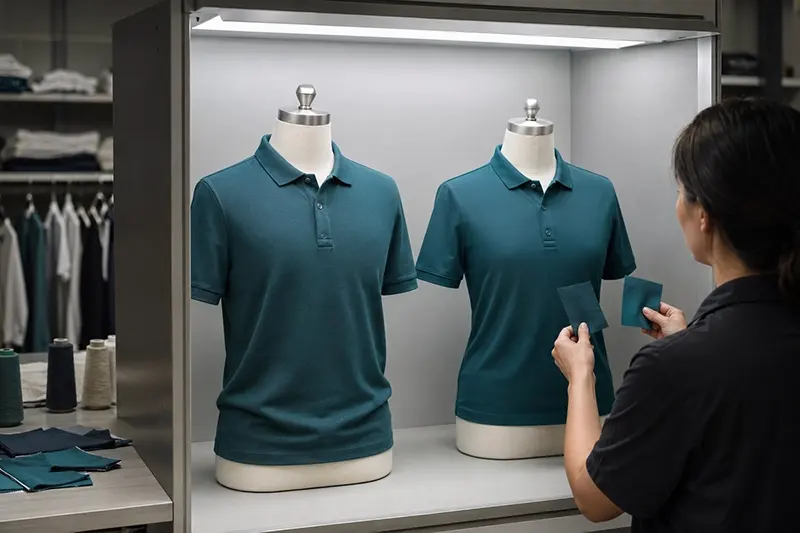
If one uniform program uses both cotton and polyester polos, physical color approvals are important. The two fabrics may appear slightly different under natural and indoor lighting even when they are matched to the same Pantone reference.
Embroidery and Printing Compatibility
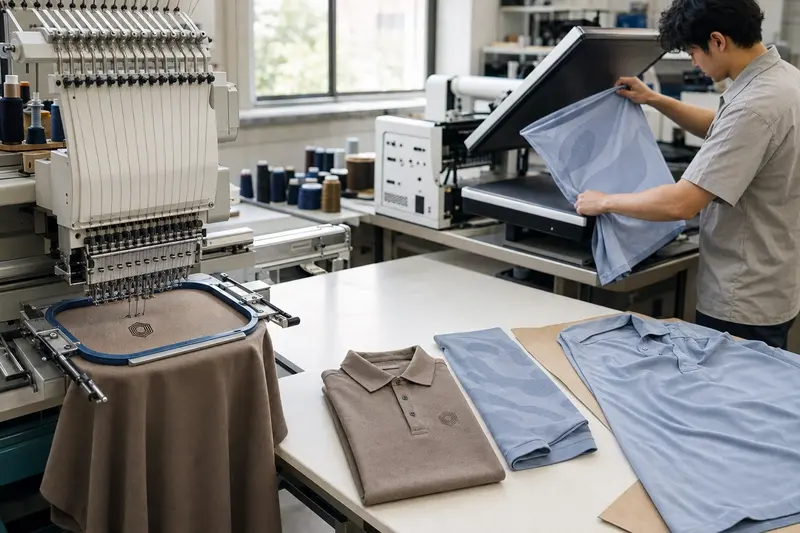
Cotton piqué provides a stable surface for flat embroidery, small chest logos, club crests, and corporate branding. Its structured knit can support moderate stitch density without excessive distortion.
Polyester piqué can also be embroidered, but lightweight versions require more careful control. A dense logo may pull the fabric, create puckering, or feel stiff against the body.
Polyester provides additional printing options. Sublimation is particularly suitable for sports, golf, and team polos because the design becomes part of the fabric instead of creating a heavy layer on the surface.
Both materials may also support:
- Screen printing
- DTF printing
- Heat transfer
- Silicone logos
- Patches
- Appliqué
Through embroidery and printing development, the logo should be tested on the selected fabric before bulk production. This confirms the artwork scale, position, color, backing, and final surface quality.
Shrinkage and Shape Changes
Cotton piqué is more likely to shrink than polyester. The amount depends on yarn, knitting, finishing, washing temperature, and drying method.
Shrinkage can affect:
- Chest and body width
- Garment length
- Sleeve length
- Collar shape
- Placket alignment
- Logo position
The fabric should be relaxed before cutting, and an approved sample can be washed and measured before production.
Polyester piqué normally has lower shrinkage, but excessive heat can still affect the fabric, printing, or garment shape. Care labels should provide instructions suitable for the material and decoration.
When measurement consistency is critical, the manufacturer should confirm tolerances and inspect garments during production rather than waiting until the order is complete.
Which Fabric Is Better for Corporate Uniforms?
Cotton piqué works well for indoor staff, reception teams, premium hospitality, retail stores, and businesses that want a natural, professional appearance.
Polyester piqué is often better for outdoor employees, active service roles, logistics teams, events, and warm climates. It dries quickly and can tolerate frequent washing more easily.
Some companies use cotton-polyester blended piqué as a middle option. It provides more natural comfort than 100% polyester while improving durability and shape retention compared with 100% cotton.
The best corporate fabric should reflect the real working environment instead of being selected only by appearance.
Which Fabric Is Better for Retail Brands?
Cotton piqué is usually the stronger option for classic, lifestyle, heritage, and premium casual collections. Its natural surface and hand feel can support a higher perceived value.
Polyester piqué is more suitable for sportswear, golf, travel, resort, and active-lifestyle collections. Its performance properties can become part of the product’s selling point.
Retail buyers should consider:
- Target customer
- Retail price
- Wearing season
- Climate
- Required performance
- Brand positioning
- Care expectations
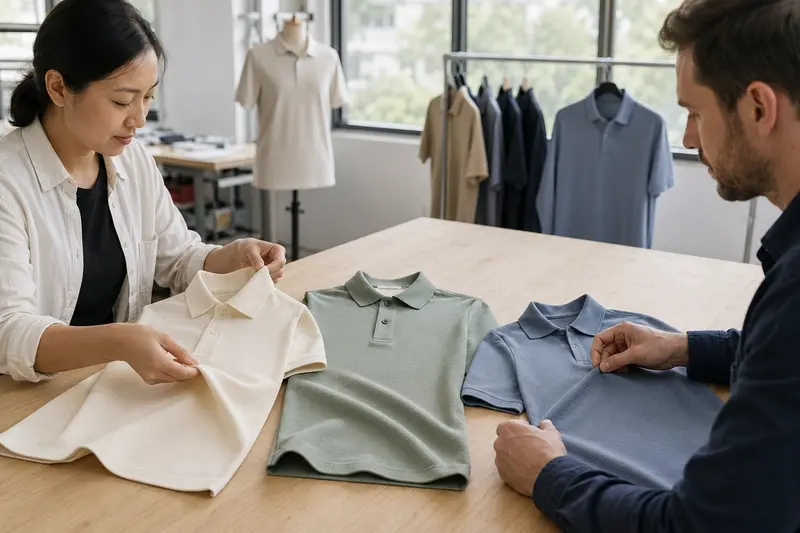
When deciding between options through polo fabric selection, compare physical swatches rather than relying only on composition and GSM. Texture, softness, opacity, stretch, and surface appearance all affect the finished product.
Is Polyester Piqué Cheaper Than Cotton Piqué?
Polyester piqué is often cost-effective, but it is not always cheaper. Price depends on yarn quality, fabric weight, knitting structure, performance finishing, color, order quantity, and supplier.
A basic polyester piqué may cost less than combed or mercerized cotton. However, premium moisture-wicking polyester, stretch fibers, special textures, or advanced finishes can increase the price.
Cotton prices also vary according to fiber quality. Standard cotton piqué, combed cotton, long-staple cotton, mercerized cotton, and premium cotton fabrics belong to different price levels.
Buyers should compare the complete garment specification rather than the fiber price alone. Collar construction, logos, labels, buttons, sewing details, and packaging also affect the final quotation.
What Should You Confirm Before Ordering?
Before selecting cotton or polyester piqué, provide the manufacturer with:
- Intended market and use
- Wearing environment
- Preferred composition
- Target GSM
- Required colors
- Fit and size range
- Logo method and placement
- Order quantity
- Labels and packaging
- Target delivery date
Our standard MOQ is 100 pieces per design per color, with mixed sizes available. Sample development normally takes 10–15 working days. Bulk production generally takes around 25–30 working days after the sample and order details are approved.
Cotton or Polyester Piqué: Which Should You Choose?
Choose cotton piqué for natural comfort, classic styling, and premium everyday polos. Choose polyester piqué for quick drying, active use, frequent washing, and improved shape retention. A cotton-polyester blend offers a balanced option for many uniform programs.
Your final choice should match the customer, climate, price level, and care requirements. To compare fabric options or request a sample quotation, contact us with your composition, GSM, color, quantity, and product references.
FAQs
Is cotton piqué cooler than polyester piqué?
Cotton feels natural and breathable, but it absorbs moisture and dries slowly. Lightweight performance polyester may feel more comfortable during active use because it moves moisture and dries faster.
Which fabric is better for embroidered logos?
Both can support embroidery. Cotton piqué is generally more stable, while lightweight polyester may require lower stitch density, suitable backing, and a smaller logo.
Does polyester piqué look cheap?
Not necessarily. High-quality polyester piqué can have a soft hand feel, controlled sheen, stable texture, and professional appearance. Fabric quality and finishing determine the result.
Which piqué fabric shrinks less?
Polyester piqué generally has lower shrinkage and better dimensional stability. Cotton piqué requires proper fabric preparation, washing tests, and clear care instructions.
Can cotton and polyester polos use the same company color?
Yes, but physical color approval is necessary because cotton and polyester use different dyeing processes and may show slight differences under different lighting.
Share With
Related Articles




Hot Products