Air vs Sea Freight for Custom Polo Orders
Table of Contents
Air freight is usually better for urgent, smaller, or higher-value custom polo orders, while sea freight is generally more economical for larger shipments with flexible delivery dates. The right choice depends on carton volume, shipment weight, deadline, destination, and inventory risk. Mingxingpolo recommends comparing the total delivered cost and realistic arrival date rather than choosing a method based only on the freight rate.
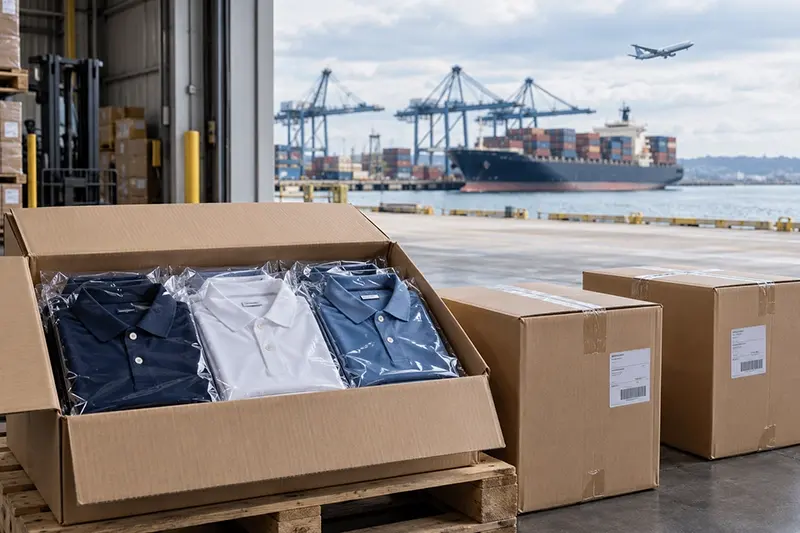
Air Freight vs Sea Freight at a Glance
| Factor | Air Freight | Sea Freight |
|---|---|---|
| Transit Speed | Faster | Slower |
| Best Order Type | Samples and urgent orders | Larger planned orders |
| Main Cost Basis | Chargeable weight | Volume or container space |
| Cost per Unit | Usually higher | Usually lower at larger volumes |
| Schedule Flexibility | Better for short deadlines | Requires earlier planning |
| Shipment Handling | Fewer long transit stages | More port and container handling |
| Common Use | Launches, events and replenishment | Seasonal and wholesale orders |
| Main Risk | High freight cost | Delay and inventory planning risk |
Swipe left or right to view the complete table on mobile.
These are general differences. The actual shipping method should be selected after the order is packed and the final carton dimensions and gross weight are available.
When Should You Choose Air Freight?
Air freight is suitable when delivery speed has more value than the lowest shipping cost. It is often used for samples, urgent launches, event uniforms, replacement stock, and smaller production orders.
Air shipping may be the better choice when:
- The delivery date is close
- The shipment is relatively small
- Products are needed for a fixed event
- A retail launch cannot be postponed
- Stock has sold faster than expected
- The order has a high value relative to its weight
- Delayed delivery would cause a larger business loss
For example, a company ordering polos for a scheduled conference may prefer air freight even if the freight cost is higher. Missing the event would make the entire order less useful.
Air freight can also help brands test a new product. A limited opening quantity can be delivered quickly, allowing the buyer to evaluate sales before committing to a larger sea shipment.
Express Courier vs Standard Air Freight
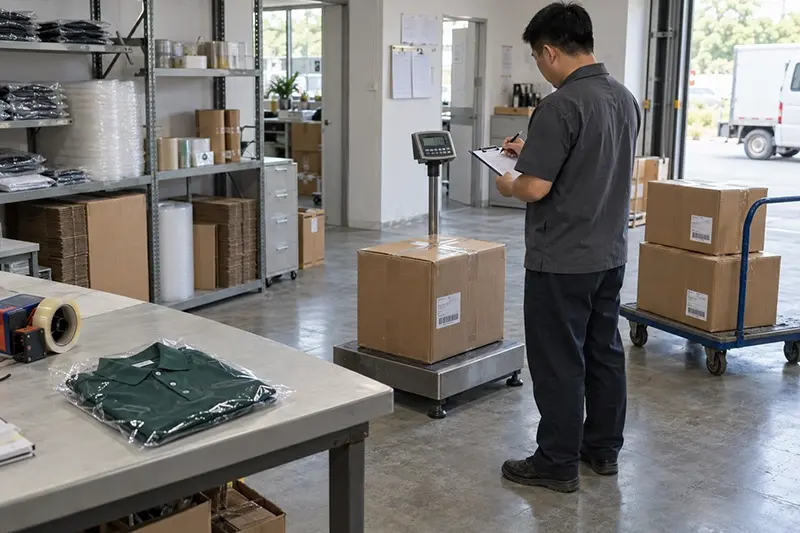
Express courier and standard air cargo are both transported by air, but they operate differently.
Express courier services usually provide door-to-door delivery with integrated tracking and customs support. They are often practical for samples, small cartons, and time-sensitive packages.
Standard air freight may be more economical for larger air shipments. However, the quotation may cover only airport-to-airport transportation or require separate customs clearance and local delivery.
Before comparing prices, confirm whether the air quotation includes:
- Pickup from the factory
- Export customs declaration
- Airport handling
- Fuel and security surcharges
- Import customs clearance
- Duties and taxes
- Delivery to the final address
A low airport-to-airport rate may not be cheaper after destination charges are added.
How Is Air Freight Charged?
Air freight is generally calculated using chargeable weight. The carrier compares the shipment’s actual weight with its volumetric weight and normally charges whichever is higher.
Polo shirts are not extremely heavy, but loose or oversized packaging can increase volumetric weight. Carton dimensions therefore influence the quotation as much as the number of garments.
Vacuum packing may reduce volume for suitable products, but it is not always appropriate. Excessive compression can affect collar shape, create deep creases, or reduce retail presentation.
When reviewing Custom Polo Shirts, discuss the expected packing method early if the order will travel by air. A slightly smaller carton can reduce shipping costs, but the garments must still arrive in acceptable condition.
When Should You Choose Sea Freight?
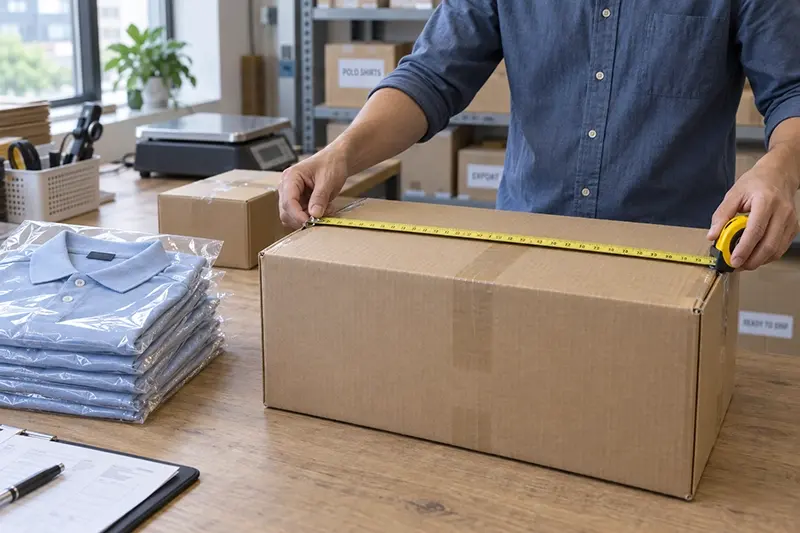
Sea freight is normally more suitable for larger orders that have been planned well in advance. Its longer transit time is balanced by a lower shipping cost per garment when the shipment volume becomes large enough.
Sea freight may be appropriate when:
- The order contains many cartons
- The delivery date is flexible
- The buyer maintains planned inventory
- The products are for a future season
- Freight cost per unit is a priority
- The order includes several styles or colors
- The shipment is not tied to an immediate event
Wholesalers, uniform distributors, and established apparel brands often use sea freight for regular replenishment. The production and shipping schedule can be planned around their expected stock levels.
Sea freight requires a larger timing buffer. Port congestion, vessel schedule changes, customs procedures, and final delivery can affect the arrival date. Buyers should avoid planning a launch immediately after the estimated arrival day.
LCL vs FCL Sea Freight
Sea shipments can move as less than container load or full container load.
LCL means your cartons share container space with cargo from other shippers. It can work for orders that are too large for economical air freight but do not fill an entire container.
FCL means one shipper books a complete container. It is usually considered for larger shipment volumes and can reduce how often cartons are consolidated with other cargo.
LCL does not automatically mean a lower total cost. It may include consolidation, warehouse, documentation, and destination handling charges. Ask for the complete cost before comparing it with air freight or FCL.
For either method, use strong export cartons and suitable moisture protection. Apparel can remain in transportation environments for several weeks, so carton strength and internal packing matter.
What Information Is Needed for a Freight Quote?
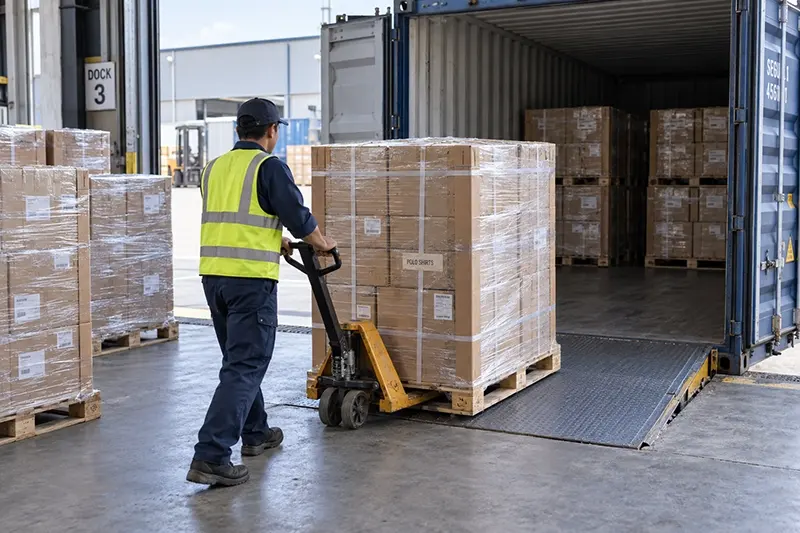
An accurate freight quotation normally requires the packed shipment details rather than only the number of polo shirts.
Provide:
- Number of cartons
- Carton dimensions
- Gross weight per carton
- Total gross weight
- Total shipment volume
- Pickup location
- Destination country and postal code
- Required delivery date
- Shipping term
- Product value
- Whether duties and taxes should be included
Before production is finished, the manufacturer can provide an estimated carton plan. The final freight price should be checked again after packing because the actual dimensions and weight may differ.
Shipping quotations also have limited validity. Fuel prices, available capacity, route conditions, and carrier surcharges can change, so an old quotation should not be used as a guaranteed final rate.
How Do Shipping Terms Affect the Comparison?
Air and sea quotations cannot be compared fairly unless they use the same shipping term.
Common terms include:
- EXW: The buyer collects the goods from the factory and handles transportation.
- FOB: The supplier handles the goods to the agreed port under the stated terms, while the buyer controls the main freight.
- CIF: The supplier arranges cost, insurance, and freight to the named destination port, but destination services may remain separate.
- DDP: The shipment is arranged to the named destination with duties and delivery responsibilities defined in the quotation.
Always confirm exactly what is included. A sea freight quotation to the port is different from a door-to-door air quotation. Destination port fees, customs clearance, duties, and inland delivery can materially change the total landed cost.
Which Method Is Cheaper for Custom Polo Shirts?
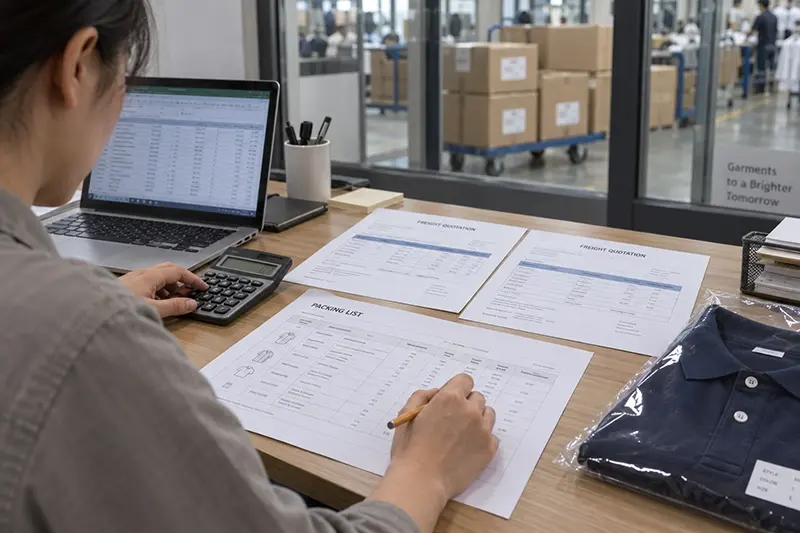
Sea freight is usually cheaper per garment for larger volumes, but there is no universal quantity where sea automatically becomes the better option.
The result depends on:
- Carton volume and weight
- Destination and delivery postcode
- Air and ocean capacity
- LCL handling charges
- Local delivery costs
- Import duties and taxes
- Storage and inventory costs
- The financial impact of delay
A cheaper freight rate can still create a higher business cost if stock arrives too late for the selling season. On the other hand, using air freight for a large non-urgent order can unnecessarily reduce the product margin.
Ask the forwarder to show the total charge and estimated door-to-door time for both options.
Can You Split One Polo Order Between Air and Sea?
Yes. A split shipment can balance delivery speed and freight cost.
A buyer may ship a smaller quantity by air for:
- Product photography
- Sales samples
- Initial online orders
- A scheduled event
- Urgent customer deliveries
- Retail launch stock
The remaining quantity can travel by sea for normal inventory.
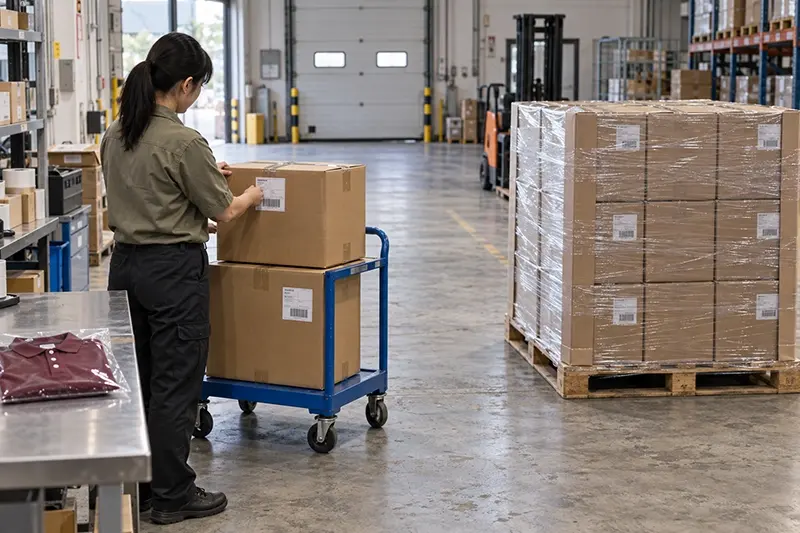
Before using this method, confirm how the factory will divide cartons, prepare packing lists, and mark each shipment. Separate customs documents and local delivery charges may apply, so splitting is not automatically cheaper.
It works best when the early air shipment creates clear commercial value.
How Should You Plan Production and Shipping Together?
Shipping time should be added after product development and manufacturing rather than treated as part of the factory’s production lead time.
Mingxingpolo’s standard schedule is:
- Sample development: 10–15 working days
- Bulk production: 25–30 working days after sample approval
The overall schedule should also allow time for sample delivery, buyer feedback, material preparation, final inspection, export handling, customs, and delivery from the destination port or airport.
If the polos are needed for a fixed date, work backward from the required arrival date. Add a reasonable buffer instead of planning around the fastest possible timeline.
Through Global Shipping, the final method can be reviewed after the carton quantity, dimensions, weight, and destination are confirmed.
How Can Buyers Reduce Polo Shipping Costs?
Several practical decisions can control freight costs without reducing garment quality:
- Confirm quantities and colors before production
- Avoid unnecessary oversized packaging
- Use suitable carton dimensions
- Consolidate compatible styles
- Plan seasonal orders earlier
- Compare total door-to-door charges
- Avoid last-minute air shipment when possible
- Use split shipping only when commercially useful
- Confirm carton weight and dimensions before booking
Do not remove essential moisture protection or use weak cartons simply to reduce cost. Damaged, wet, or crushed products can cost more to replace than the original freight saving.

Final Thoughts
Choose air freight when speed protects a launch, event or customer commitment. Choose sea freight when the order is larger, the schedule is flexible, and reducing the landed cost per polo is more important.
The final decision should be based on packed carton data, total door-to-door cost, and a realistic delivery schedule. To compare shipping options for your order, contact us with your quantity, destination, required delivery date, and preferred shipping terms.
FAQs
Is air freight always faster than sea freight?
Air freight is generally faster, but customs clearance, flight availability, and local delivery still affect the total time. Compare door-to-door schedules rather than airport or port transit alone.
Is sea freight suitable for a small polo order?
It can be, but LCL handling and destination charges may reduce the savings. Small or urgent shipments should be compared with courier and standard air freight before booking.
Can polo samples be shipped by sea?
Technically yes, but it is rarely practical because samples are normally needed quickly for approval. Express courier is generally more suitable for sample delivery.
Does a DDP quotation include every shipping charge?
It should clearly state the services, duties, and taxes included, but coverage can vary by quotation. Confirm the destination address, excluded charges, and importer responsibilities in writing.
When should I choose split shipping?
Choose split shipping when a small early quantity creates enough value to justify air freight while the remaining stock can arrive later by sea. Confirm separate packing, documentation, and destination costs first.
Share With
Related Articles





Hot Products