How Big Should an Embroidered Polo Logo Be?
Table of Contents
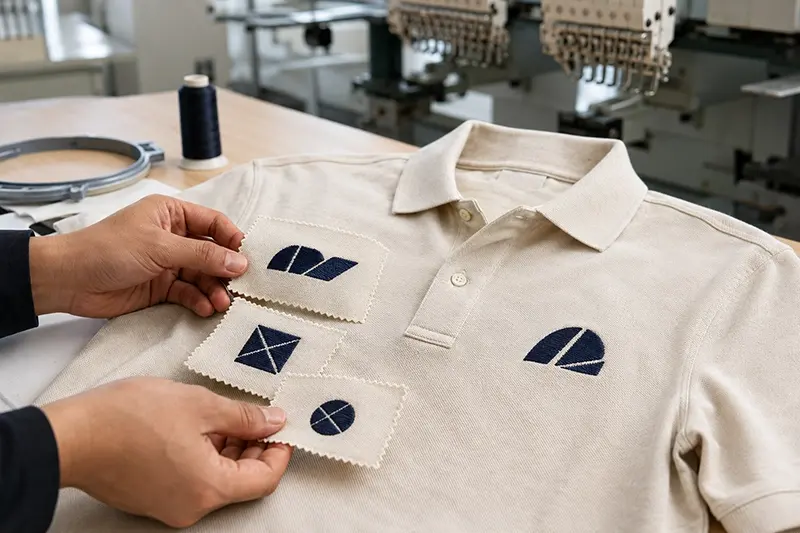
For most polo shirts, a left-chest embroidered logo should be approximately 7–10 cm wide, or 2.75–4 inches. A width of around 8–9 cm works well for many company logos because it remains visible without overpowering the garment.
However, there is no single size that works for every design. The ideal dimensions depend on the logo shape, lettering, placement, fabric weight, stitch count, and polo size. At Mingxingpolo, we review these elements together before creating the embroidery sample.
Recommended Logo Sizes by Placement
The following measurements are practical starting points rather than fixed production rules:
- Left or right chest: 7–10 cm wide
- Sleeve: 5–8 cm wide
- Back neck: 5–9 cm wide
- Collar point: 2–5 cm wide
- Above a chest pocket: 6–9 cm wide
- Large upper back: 18–28 cm wide
The final dimensions should follow the proportions of the artwork. A wide wordmark may need more width but less height, while a square badge can look balanced at a smaller width.
Always state both the width and height when approving embroidery. Asking for a “small chest logo” leaves too much room for interpretation.
What Is the Best Size for a Left-Chest Logo?
A width of 8–9 cm, or approximately 3–3.5 inches, is a reliable starting point for most left-chest logos.
This range is common because it provides enough space for recognisable lettering and details while maintaining the clean appearance expected from a polo shirt. It is suitable for corporate uniforms, golf clubs, schools, hospitality businesses, and retail brands.
Smaller logos between 6 and 7 cm can create a more subtle premium look. They work best for simple symbols, initials, or short brand names.
Larger chest logos between 9 and 11 cm provide greater visibility but must be positioned carefully. If the logo is both wide and tall, it may sit too close to the placket or armhole.
For Custom Corporate Polo Shirts, readability and consistency are usually more important than making the logo as large as possible.
Logo Shape Changes the Recommended Size
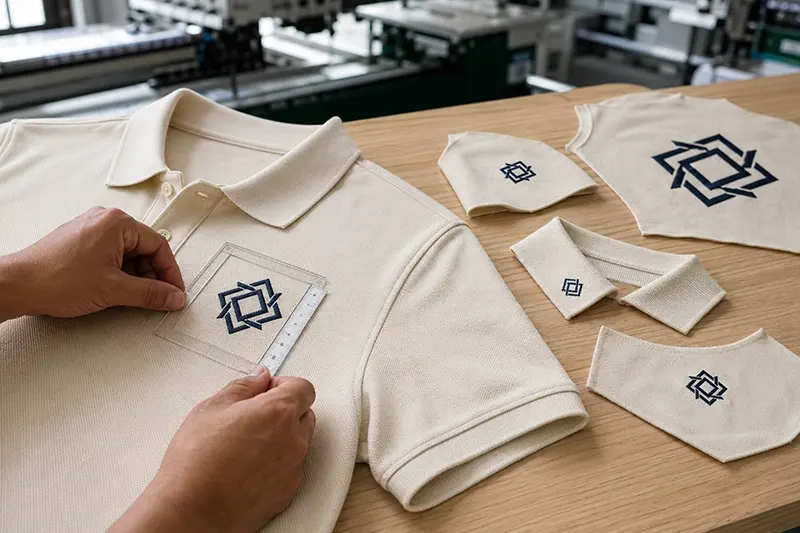
Logo width alone does not tell the full story. The shape of the design determines how large it appears on the garment.
A horizontal wordmark may measure 9 cm wide but only 2 cm high. It can still look discreet. A circular badge with the same width occupies more visual space because its height is also close to 9 cm.
Common logo shapes require different treatment:
- Horizontal wordmarks may need additional width.
- Square and circular logos usually need less width.
- Tall emblems require more space below the shoulder.
- Shield-shaped badges should be judged by total area.
- Designs with surrounding text may need enlargement for readability.
Instead of copying the dimensions from another brand, place your artwork at actual size on a polo mock-up. A printed paper template can also help you judge scale before embroidery begins.
How Small Can an Embroidered Logo Be?
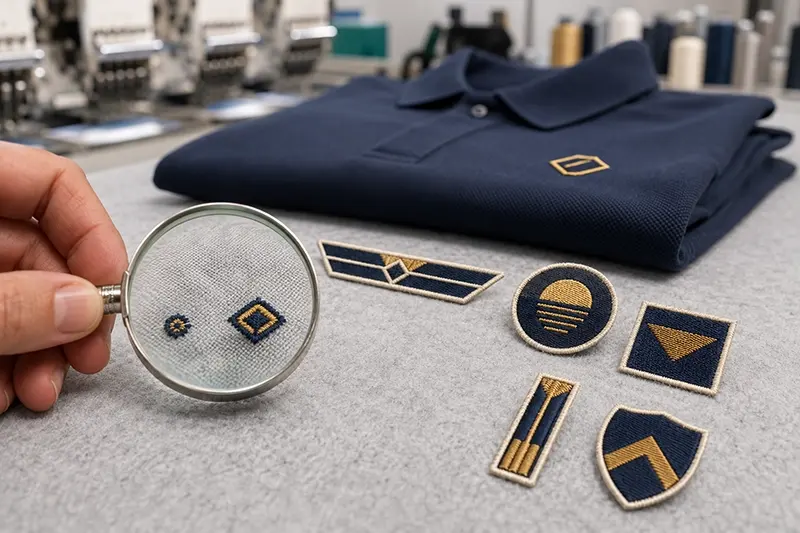
An embroidered logo can be small, but the detail cannot be reduced indefinitely. Thread has physical thickness, and each letter or line must contain enough stitches to remain clear.
Very small artwork may create several problems:
- Letters can close during stitching.
- Thin lines may disappear.
- Spaces inside letters may become filled.
- Separate colours may overlap.
- Small details can merge into one shape.
As a general development approach, small uppercase lettering is easier to embroider when it is at least around 5–6 mm high. Lowercase letters and decorative fonts often require more height because their shapes are more complex.
These are not universal limits. The result depends on the font, thread, needle, fabric, digitising, and machine settings. A sample is the only reliable way to confirm whether small text will remain readable.
If the original logo contains fine details, simplifying the embroidery version is often better than making the entire chest logo excessively large.
Does a Larger Logo Mean Better Visibility?
A larger logo is easier to notice, but it does not always look better.
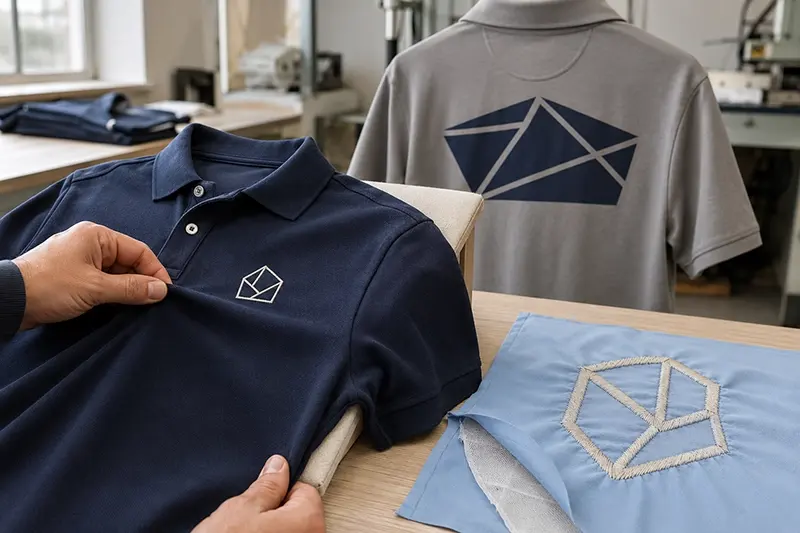
Oversized chest embroidery can make a polo look more like promotional merchandise than a premium branded garment. It may also feel stiff because a larger area requires more thread and backing.
For uniforms, the logo only needs to be recognisable during normal face-to-face interaction. An 8–9 cm chest logo is usually sufficient.
If the logo needs to be read from a greater distance, such as on event staff or service teams, consider placing a larger printed design on the back instead of enlarging the chest embroidery.
A balanced combination could use a small embroidered company logo on the front and a larger printed name or message on the back.
How Fabric Affects Embroidery Size
The fabric must support the weight and density of the embroidery.
Midweight cotton piqué and cotton-polyester piqué generally provide a stable surface for standard chest logos. Lightweight polyester, mesh, and stretch fabrics require more care because a large or dense design can pull the material out of shape.
Heavy embroidery on thin fabric may cause:
- Puckering around the logo
- Uneven fabric tension
- A stiff area on the chest
- Visible backing
- Distortion after washing
Correct stabilising materials can reduce these problems, but they cannot make every design suitable for every fabric. The artwork may still need fewer stitches, less fill, or a smaller overall area.
For lightweight golf polos, a simple logo with controlled stitch density is usually more comfortable than a large, filled design.
How Stitch Count Affects Size and Cost
Embroidery cost is influenced more by stitch count than by physical dimensions alone.
A 9 cm outline logo may use fewer stitches than a 7 cm badge filled with several solid colours. More stitches require additional machine time and thread, increasing both cost and garment weight.
Stitch count is affected by:
- Logo dimensions
- Filled colour areas
- Number of details
- Lettering
- Underlay stitches
- Stitch density
- Fabric stability
Making a logo smaller does not always reduce its cost effectively. If the design becomes too compact, the digitiser may need dense stitching to retain its shape, increasing the risk of puckering.
A good Embroidery & Printing supplier should balance clarity, stitch count, fabric stability, and cost instead of simply enlarging or shrinking the artwork.
What Size Should a Sleeve Logo Be?
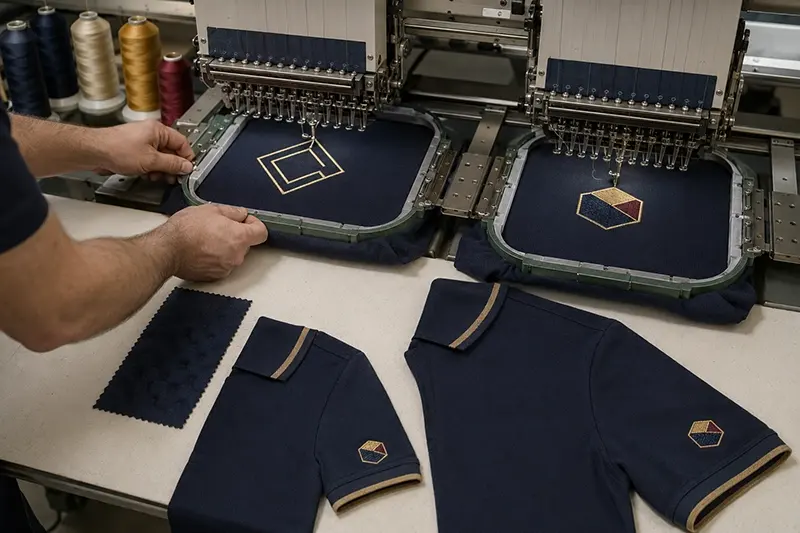
Most sleeve logos work well at approximately 5–8 cm wide. They are usually smaller than the main chest logo because the available decoration area is limited.
A simple symbol may only need 4–5 cm. A sponsor name or horizontal wordmark may require 7–9 cm, depending on the sleeve length and artwork proportions.
The logo should fit comfortably between the armhole and sleeve hem. It must also remain suitable for the smallest size in the order.
If the same sleeve embroidery is used from XS to 3XL, check whether the logo appears too large on XS or too small on 3XL. In some orders, separate placement measurements may be required even if the logo dimensions remain unchanged.
What Size Works for the Collar or Back Neck?
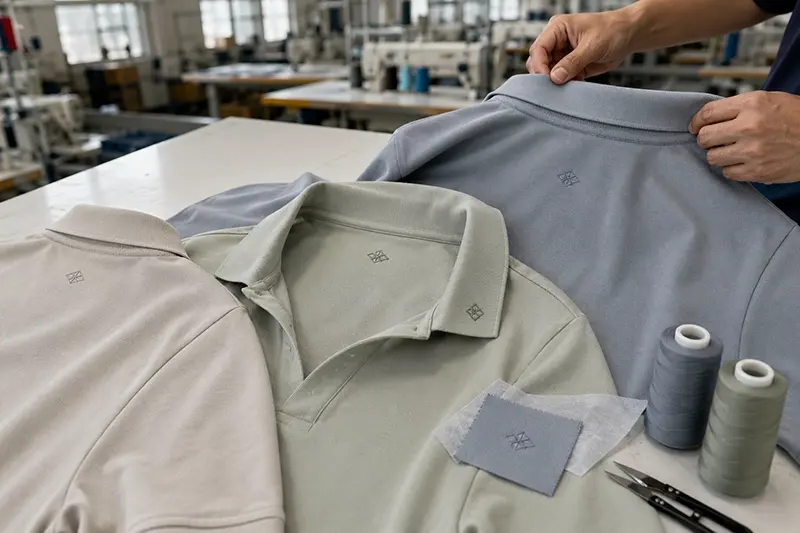
Collar embroidery should remain small and lightweight. A width of around 2–5 cm is suitable for a simple icon, initials, or short wordmark on a collar point.
Large or dense collar embroidery can make the collar stiff and prevent it from lying flat. Detailed artwork may be better produced as jacquard knitting or placed elsewhere.
For the back neck, approximately 5–9 cm wide works for many logos. The design should be centred below the collar with enough separation from the collar seam.
Because the backing may touch the wearer’s neck, comfort is particularly important. A lighter design, soft backing, or printed alternative may be preferable for sensitive or lightweight garments.
Should Logo Size Change Across Garment Sizes?
Most bulk orders use one embroidery size across the complete size range. This simplifies production and maintains consistent brand standards.
However, one size may not look equally proportioned on XS and 4XL garments. Brands with a wide size range can consider using two logo sizes, such as:
- One size for XS–L
- One larger size for XL–4XL
This adds development and production complexity, so it is not always necessary. For most standard size ranges, keeping the logo size unchanged and adjusting its position slightly is sufficient.
The logo should be checked on at least one central approval size, normally M or L, and reviewed against the smallest and largest patterns before bulk production.
How to Approve the Correct Logo Size
Provide an editable vector file such as AI, EPS, SVG, or PDF. The manufacturer can then scale the artwork without losing quality.
Before sampling, confirm:
- Exact width and height
- Embroidery position
- Thread colours
- Polo fabric and GSM
- Garment colour
- Approval sample size
- Any simplified artwork details
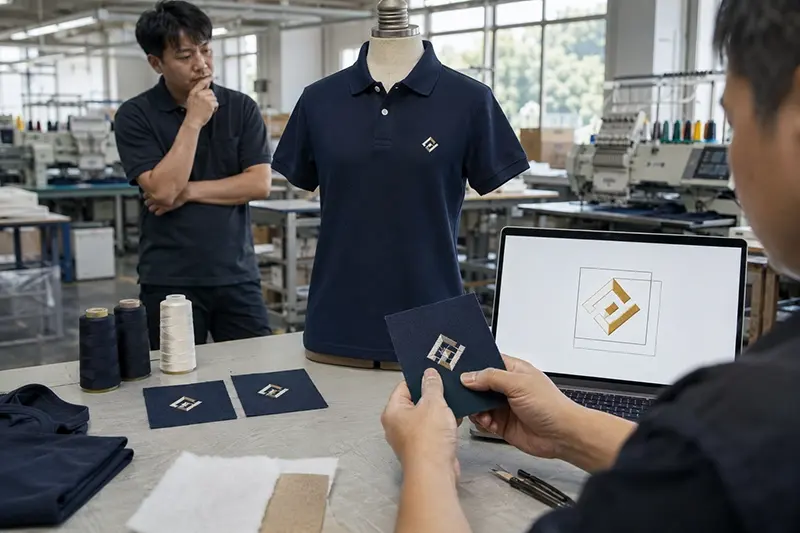
A digital mock-up helps confirm the general direction, but it cannot show thread texture, stiffness, puckering, or actual readability. The Development & Sampling stage should therefore include a physical embroidery strike-off or finished polo sample.
Review the sample from both close range and normal viewing distance. Check the garment while worn rather than only when it is laid flat.
Final Thoughts
For most polo shirts, an embroidered chest logo between 7 and 10 cm wide provides the best balance of visibility and professional appearance. The final size should follow the artwork shape, fabric, stitch count, placement, and garment size range.
To confirm the right dimensions for your design before production, contact us with your logo file, required placement, fabric preference, and order quantity.
FAQs
What is the standard size for a polo shirt chest logo?
Most left-chest polo logos are approximately 7–10 cm wide, or 2.75–4 inches. Around 8–9 cm is a practical starting point for many company logos.
Can an embroidered logo be too large?
Yes. A large, dense logo can look unbalanced, feel stiff, increase cost, and cause lightweight polo fabric to pucker.
What is the minimum size for embroidered lettering?
It depends on the font and fabric, but uppercase letters generally need to be around 5–6 mm high for reliable readability. Complex fonts may require a larger size.
Does embroidery size affect the price?
Yes. Larger and more detailed designs normally use more stitches and machine time. Filled areas can increase the cost even when the overall logo is relatively small.
Should I approve an embroidery sample first?
Yes. A physical sample allows you to confirm the logo’s actual size, colour, readability, position, stitch quality, and effect on the selected polo fabric.
Share With
Related Articles


Hot Products