Polo Shirt GSM Guide: 180 vs 200 vs 220 vs 240 GSM
Table of Contents
Choose 180 GSM for lightweight summer or active polos, 200 GSM for versatile retail and corporate use, 220 GSM for better structure and a more substantial feel, and 240 GSM for premium polos that need stronger shape and coverage.
However, GSM does not measure quality by itself. Fiber composition, yarn, knit density, finishing, and fabric structure also affect the result. At Mingxingpolo, we compare all these factors before recommending a polo fabric for a brand, uniform, golf, or wholesale program.
What Does GSM Mean in Polo Shirts?
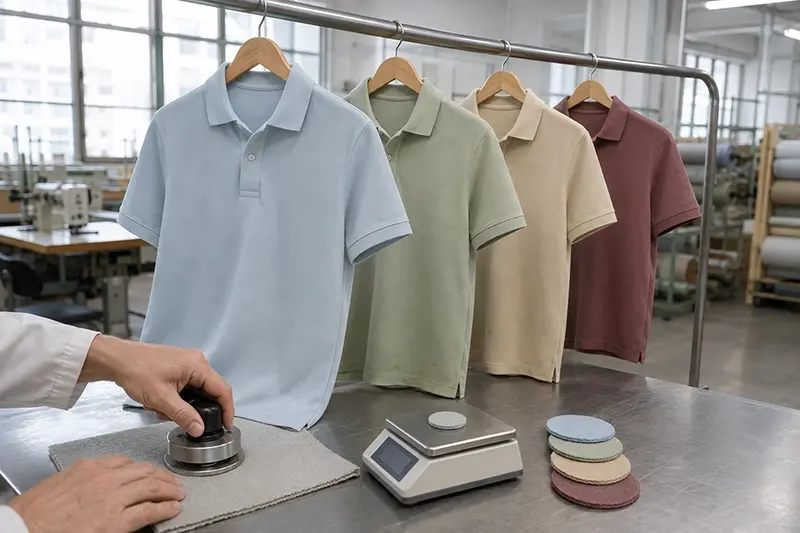
GSM means grams per square meter. It measures how much one square meter of fabric weighs.
A higher GSM normally means more fabric material per square meter, but it does not always mean that the fabric is physically thicker. A dense, compact fabric may feel thinner and heavier, while a loosely knitted fabric can feel thicker but weigh less.
GSM can influence:
- Garment weight
- Fabric structure
- Coverage and opacity
- Breathability
- Drape
- Seasonal suitability
- Embroidery stability
- Perceived product value
Most polo shirt fabrics fall within approximately 180–260 GSM. The best weight depends on the fiber, knit structure, target market, climate, and intended use.
Is Higher GSM Always Better?
No. A higher GSM may provide more structure and coverage, but it can also feel warmer and less suitable for active use or hot climates.
A well-developed 180 GSM performance piqué may be more suitable for an outdoor team than a 240 GSM cotton fabric. In contrast, a premium retail brand may prefer 220 or 240 GSM because the additional weight creates a more substantial hand feel.
Quality depends on more than weight. Buyers should also evaluate:
- Fiber and yarn quality
- Knit consistency
- Surface texture
- Shrinkage
- Color fastness
- Pilling resistance
- Stretch and recovery
- Fabric finishing
The right question is not “Which GSM is the highest?” It is “Which GSM works best for the intended customer and environment?”
180 GSM Polo Shirts
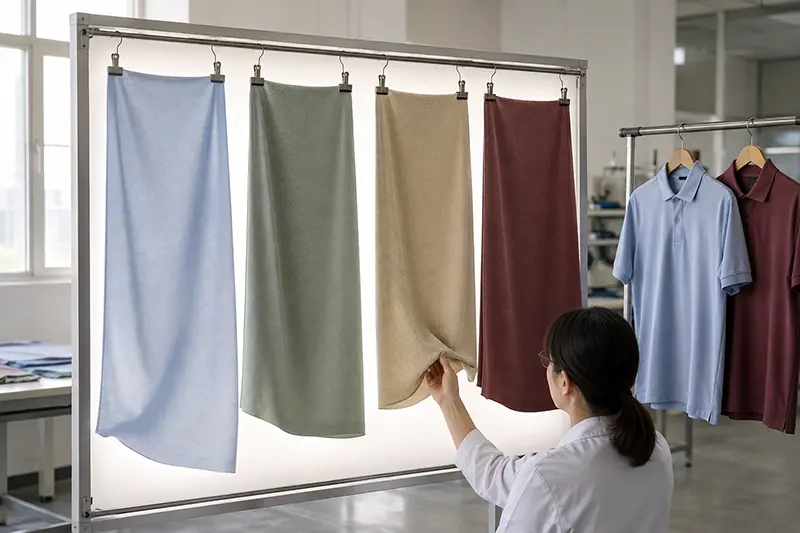
A 180 GSM polo is lightweight and suitable for warm weather, outdoor use, active teams, and summer collections. It allows the garment to feel less restrictive during long periods of wear.
Common applications include:
- Golf and sports polos
- Outdoor staff uniforms
- Summer promotional clothing
- Event teams
- Resort uniforms
- Warm-climate collections
Polyester and polyester-blend piqué are common at this weight because they can offer moisture management and quick drying. Lightweight cotton piqué is also available when a natural hand feel is preferred.
The main concern is coverage. Light colors, especially white, may become slightly transparent if the knitting is too open. Lightweight fabric can also show the wearer’s body shape more clearly.
Embroidery needs careful control. Large or dense logos can pull the fabric and cause puckering. Smaller artwork, appropriate backing, and controlled stitch density usually produce a better result.
Choose 180 GSM when breathability, low garment weight, and warm-weather comfort are more important than a heavy or highly structured appearance.
200 GSM Polo Shirts
A 200 GSM polo offers a practical balance between comfort, breathability, and structure. It is one of the most versatile weights for general retail, corporate uniforms, hospitality, clubs, and wholesale programs.
It is suitable for:
- Everyday fashion polos
- Office and retail uniforms
- Hospitality teams
- Schools and clubs
- Promotional programs
- Spring and summer collections
At 200 GSM, cotton piqué usually has enough body to maintain a recognizable polo silhouette without feeling excessively heavy. Cotton-polyester blends can add durability and improve shape retention for frequently washed uniforms.
This weight also works with many logo methods. Standard chest embroidery, screen printing, DTF, heat transfer, and patches can all be considered after testing the selected fabric.
A custom classic polo shirt in 200 GSM is a safe starting point for brands that want a product with broad market appeal. It can be developed in regular, slim, women’s, or unisex fits and adapted through custom collars, cuffs, buttons, labels, and colors.
Choose 200 GSM when you need one fabric weight to serve several everyday markets.
220 GSM Polo Shirts
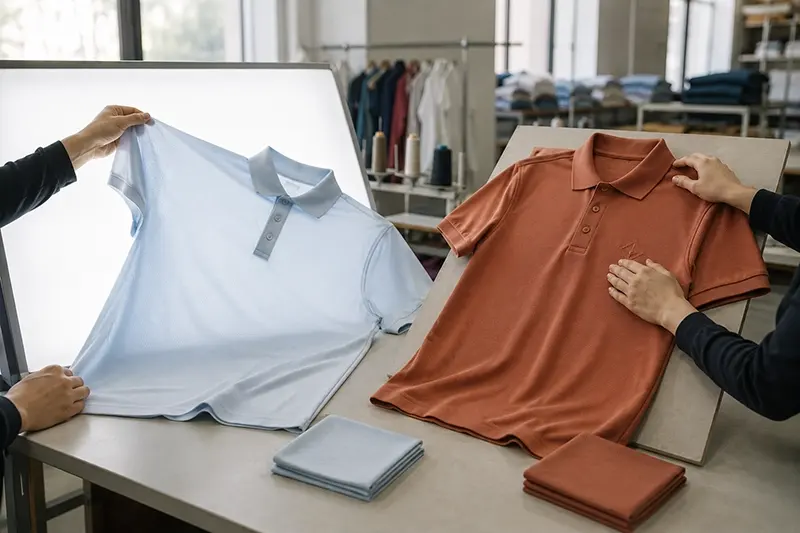
A 220 GSM polo feels more substantial and generally provides better structure than 180 or 200 GSM fabrics. It can create a cleaner silhouette while offering improved opacity and stability.
This weight is suitable for:
- Premium casual collections
- Corporate uniforms with a structured appearance
- Lifestyle brands
- Golf club apparel
- Hospitality and resort programs
- Transitional-season products
Cotton piqué at 220 GSM can provide a fuller hand feel without becoming excessively heavy. Cotton-stretch fabric can also support tailored or slim fits while retaining flexibility.
The additional structure makes 220 GSM useful for embroidery. The fabric can generally support moderate stitch density better than lightweight alternatives, although the artwork and backing should still be tested.
Buyers should consider the climate. A 220 GSM cotton polo may feel comfortable in moderate temperatures but too warm for employees working outdoors in tropical conditions.
Choose 220 GSM when appearance, coverage, and product substance are more important than creating the lightest possible garment.
240 GSM Polo Shirts
A 240 GSM polo has a heavier, more structured feel. It is often selected for premium collections, cooler environments, luxury uniform programs, and brands that want a more substantial product.
Common applications include:
- Premium retail polos
- Luxury casualwear
- Executive corporate programs
- Private clubs
- High-end hospitality
- Autumn or mild-weather collections
The additional weight can improve opacity and help the body maintain a defined shape. It also provides a stable base for embroidery, custom collars, substantial plackets, and premium trims.
A custom premium polo shirt in 240 GSM may use combed cotton, mercerized cotton, cotton stretch, or another refined material. Fabric quality and finishing remain important because a heavy fabric with rough yarn or poor knitting will not feel premium.
This weight is less suitable for intense activity or very hot environments. Buyers should also consider the total garment weight when adding heavy collars, large embroidery, multiple logos, or reinforced construction.
Choose 240 GSM when structure, coverage, and a substantial hand feel support the product’s positioning.
180 vs 200 vs 220 vs 240 GSM at a Glance
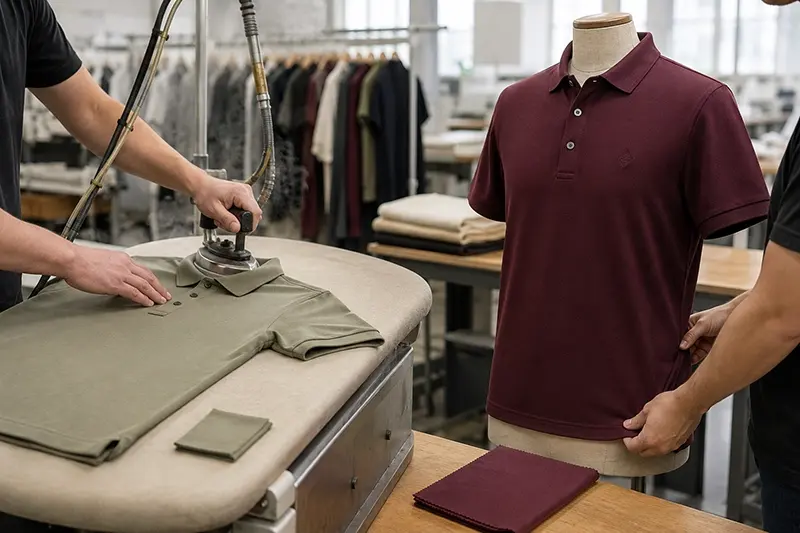
Each fabric weight serves a different purpose:
- 180 GSM: Lightweight, breathable, and suited to active or warm-weather use
- 200 GSM: Balanced and versatile for retail, uniforms, and everyday wear
- 220 GSM: More structured with better coverage and a premium feel
- 240 GSM: Substantial and stable for premium or cooler-weather polos
If you are unsure, 200 GSM is usually the most versatile starting point. For more premium positioning, 220 GSM provides additional substance without becoming as heavy as 240 GSM.
How Fiber Composition Changes the Result
The same GSM can feel different depending on fiber composition.
A 200 GSM cotton piqué may feel soft, natural, and structured. A 200 GSM polyester piqué may feel lighter in wear, dry faster, and have a smoother surface. A cotton-polyester blend can combine natural comfort with easier care.
Stretch content also changes the garment’s behavior. Cotton-spandex or polyester-spandex piqué provides greater flexibility and may drape closer to the body.
This means a buyer should not approve a fabric based only on “200 GSM.” The complete specification should identify:
- Fiber composition
- Knit structure
- Weight
- Stretch
- Surface texture
- Finishing
- Required performance
Physical swatches provide a more accurate comparison than specification sheets alone.
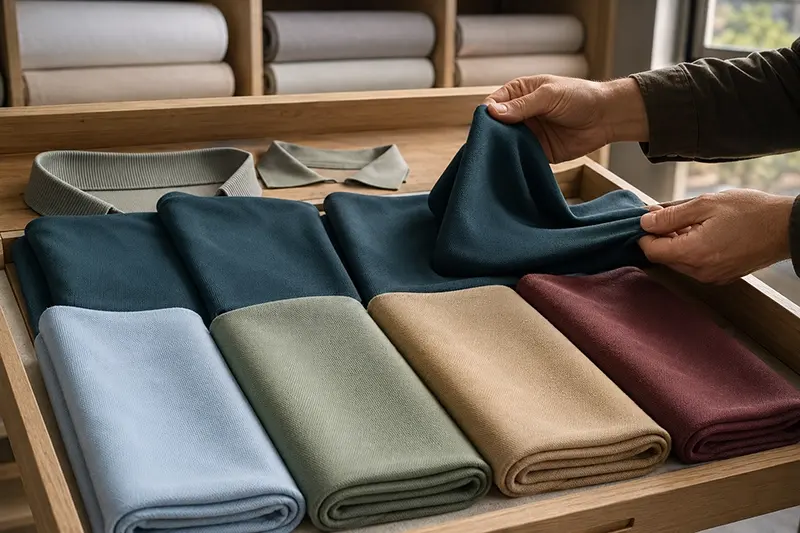
GSM and Climate
Climate is one of the most important factors when selecting fabric weight.
For hot or humid markets, 180–200 GSM usually provides better comfort. Polyester performance piqué can also help move moisture and dry more quickly.
For moderate climates and indoor use, 200–220 GSM offers a good balance between comfort and structure. These weights are suitable for many corporate, hospitality, and retail programs.
For mild or cooler conditions, 220–240 GSM can provide a more substantial feel. However, polo shirts are generally worn as light layers, so excessively heavy material may reduce versatility.
The working environment matters as much as the weather. An employee in an air-conditioned office may wear a heavier polo comfortably, while an active employee in the same city may need a lighter fabric.
GSM and Corporate Uniforms
Corporate buyers should choose GSM according to employee roles rather than using one weight automatically across the entire company.
A custom corporate polo shirt may use:
- 180 GSM polyester for outdoor or active staff
- 200 GSM blended piqué for general teams
- 220 GSM cotton piqué for customer-facing employees
- 240 GSM premium cotton for executive or luxury programs
If different fabrics are used across departments, colors and logo placements should be coordinated. Cotton and polyester may show the same Pantone color slightly differently, so physical approvals are important.
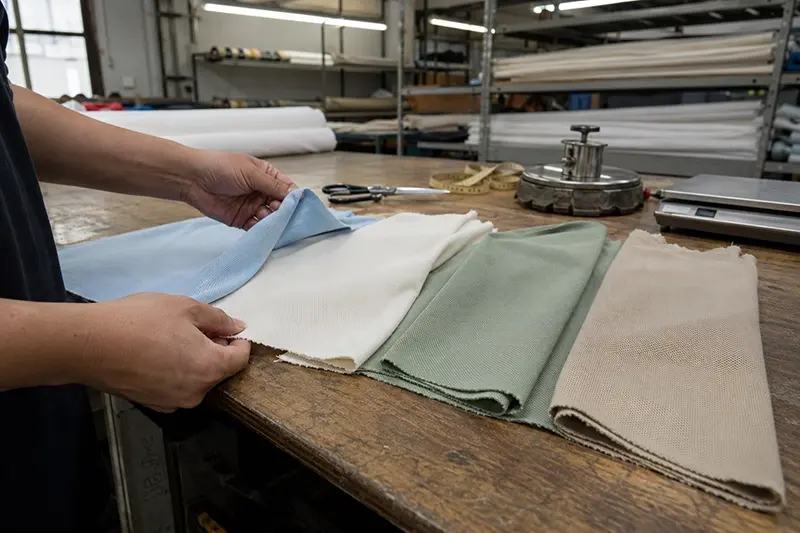
Uniform buyers should also consider repeated washing. A suitable fabric must maintain its measurements, color, collar shape, and logo quality throughout the expected wearing cycle.
GSM and Logo Application
Fabric weight affects how well a polo supports embroidery and printing.
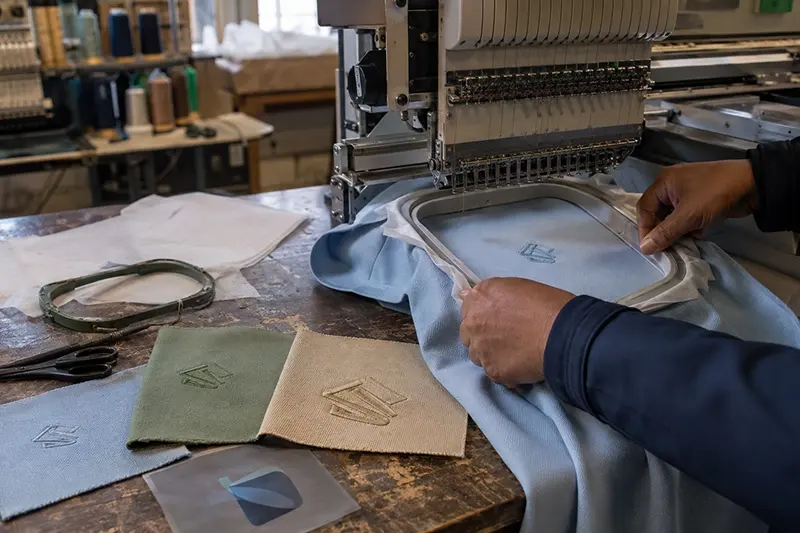
Lightweight 180 GSM fabric can work with embroidery, but the logo should not be excessively large or dense. Suitable backing and controlled thread tension help reduce puckering.
Medium-weight 200–220 GSM piqué supports many standard chest logos and provides a good balance between comfort and stability.
A 240 GSM fabric can support more substantial embroidery, patches, and construction. However, a heavy logo may still feel uncomfortable if placed in an area that moves frequently.
Printing methods such as DTF, screen printing, heat transfer, and silicone logos must also suit the fabric surface. Through embroidery and printing development, the decoration can be tested on the actual material before bulk production.
What Else Should You Check Besides GSM?
Before approving a polo fabric, check:
- Hand feel
- Opacity
- Knit consistency
- Stretch and recovery
- Shrinkage
- Color fastness
- Pilling resistance
- Snag resistance
- Logo compatibility
- Washing performance
Fabric weight is only one part of the decision. A physical sample shows how the material works with the pattern, collar, placket, sleeves, logo, and finishing.
Through polo fabric selection, buyers can compare several fabrics within a similar GSM range before choosing the final option.
Which GSM Should You Choose?
Choose 180 GSM for lightweight and active applications, 200 GSM for versatile everyday use, 220 GSM for improved structure and premium positioning, and 240 GSM for a substantial high-end polo.
Your final decision should consider composition, climate, fit, branding, washing frequency, and target price. To compare polo fabric weights or request a sample quotation, contact us with your preferred GSM, composition, color, quantity, and product references.
FAQs
What is the most common GSM for polo shirts?
Around 200–220 GSM is common because it provides a practical balance of comfort, structure, coverage, and durability for retail and uniform programs.
Is 180 GSM too thin for a polo?
Not necessarily. It works well for summer, sports, and outdoor polos, but light colors should be checked for opacity and embroidery stability.
Is 240 GSM suitable for hot weather?
It may feel too warm for active use in hot climates. A lighter 180–200 GSM fabric is generally more comfortable in these conditions.
Does higher GSM mean better quality?
No. Quality also depends on fiber, yarn, knitting, finishing, shrinkage, color fastness, and surface consistency.
Can different GSM fabrics use the same polo pattern?
Not always. Fabric weight, stretch, and drape affect fit, so pattern or measurement adjustments may be required.
Share With
Related Articles



Hot Products