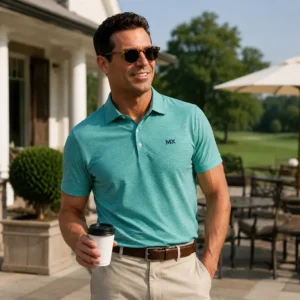
Golf Polo vs Regular Polo: What’s the Difference?
Table of Contents
The main difference between a golf polo and a regular polo is performance. Golf polos normally use lightweight, breathable, moisture-wicking fabrics with stretch, while regular polos focus more on a classic appearance, everyday comfort, and broad versatility.
Choose a golf polo for sports, outdoor activities, resorts, and active corporate events. Choose a regular polo for retail collections, staff uniforms, clubs, schools, and daily casual wear. At Mingxingpolo, both types can be customized according to your market, branding, fit, and performance requirements.

What Is a Golf Polo?
A golf polo is designed to support movement and comfort during sports or outdoor activities. It maintains the recognizable polo appearance but usually includes more performance-focused fabrics and construction details.
Golf polos are commonly worn by:
- Golf players and club members
- Tournament staff
- Resort employees
- Outdoor corporate teams
- Sports and lifestyle customers
- Event participants
- Brand ambassadors
Most golf polos use polyester, polyester-spandex, or lightweight performance blends. These fabrics can improve moisture management, flexibility, and drying speed. Some traditional golf collections also use cotton-spandex piqué when the brand wants a more natural hand feel.
A golf polo should allow the shoulders and arms to move freely during a swing. The fabric, armhole shape, sleeve construction, shoulder width, and side vents all contribute to this movement.
What Is a Regular Polo?
A regular polo, also called a classic polo, is designed for everyday wear rather than a specific sport. It normally has a structured collar, a two- or three-button placket, short sleeves, and a regular or slightly tailored fit.
Common materials include cotton piqué, cotton-polyester piqué, and other knitted blends. These fabrics give the shirt its familiar textured appearance and help it maintain a clean silhouette.
Regular polos are suitable for:
- Fashion and lifestyle collections
- Corporate uniforms
- Hospitality teams
- School and club programs
- Promotional clothing
- Wholesale markets
- Everyday casual wear
A custom classic polo shirt provides a flexible base for different markets. Brands can adjust the fabric, fit, collar, placket, cuffs, colors, embroidery, labels, and packaging without changing the familiar polo identity.

Fabric Is the Most Important Difference
Fabric is usually the clearest difference when comparing a golf polo with a regular polo.
Golf polos commonly use:
- Polyester performance knit
- Polyester-spandex fabric
- Lightweight technical piqué
- Moisture-wicking mesh
- Cotton-spandex blends
These fabrics are selected for breathability, stretch, quick drying, and ease of movement. Polyester fabrics also work well with sublimation printing when a design requires large graphics, gradients, or all-over patterns.
Regular polos commonly use:
- Cotton piqué
- Combed cotton piqué
- Cotton-polyester piqué
- Stretch cotton piqué
- Jersey or interlock fabric
Cotton piqué has a recognizable textured surface and a natural hand feel. Cotton-polyester blends can improve durability, color retention, and drying speed, making them suitable for uniforms and frequent washing.
Neither fabric category is automatically better. The correct choice depends on the climate, wearing environment, care requirements, target price, and product positioning.
Breathability and Moisture Management
Golf polos are generally better at handling heat and perspiration. Their fabrics are often designed to move moisture away from the skin and allow it to evaporate more efficiently.
This is useful when the wearer is:
- Playing outdoors for several hours
- Working in warm weather
- Attending a summer event
- Moving frequently
- Wearing the polo under direct sunlight
However, “moisture-wicking” should not be the only standard used to evaluate a golf polo. Fabric weight, airflow, surface structure, stretch, and drying speed also affect comfort. A poorly selected polyester fabric may feel sticky or trap heat even when described as functional.
Regular cotton polos can still be breathable and comfortable for everyday use. Cotton absorbs moisture well, but it usually dries more slowly than performance polyester. For offices, indoor retail, hospitality, and casual environments, this may not be a significant disadvantage.

Fit and Freedom of Movement
Golf polos often have an athletic or performance-oriented fit. This does not always mean they are tight. A well-developed golf fit provides enough room through the shoulders, chest, and upper back while maintaining a clean silhouette.
Important golf fit considerations include:
- Comfortable shoulder width
- Flexible armhole construction
- Suitable sleeve opening
- Enough room across the upper back
- Side vents for easier movement
- A body length that stays in place
The fit must support rotation without causing the shirt to pull across the chest or rise excessively at the waist.
Regular polos generally use regular, slim, relaxed, or unisex fits. They are developed around everyday standing, sitting, walking, and working rather than a full golf swing.
For corporate or uniform orders, a regular fit often works better because it accommodates a broader range of body types. For fashion collections, the fit can be adjusted according to the brand’s target customer and visual direction.
Collar and Placket Construction
Golf polo collars are often designed to remain lightweight and comfortable. They may use knitted rib, self-fabric, bonded, or low-profile collar constructions. Some modern performance polos use softer collars to reduce bulk during movement.
Regular polos commonly feature a more structured ribbed collar. This supports the traditional polo appearance and can help the garment look professional in retail, office, or uniform settings.
Both types can use:
- Two- or three-button plackets
- Concealed plackets
- Contrast placket details
- Custom buttons
- Zipper plackets
- Branded neck tape
The right construction depends on the design direction. A lightweight bonded collar may work well for a modern golf polo but look too technical for a traditional corporate uniform. A thick ribbed collar may create a classic appearance but feel too heavy for high-temperature outdoor use.
Sleeve and Cuff Differences
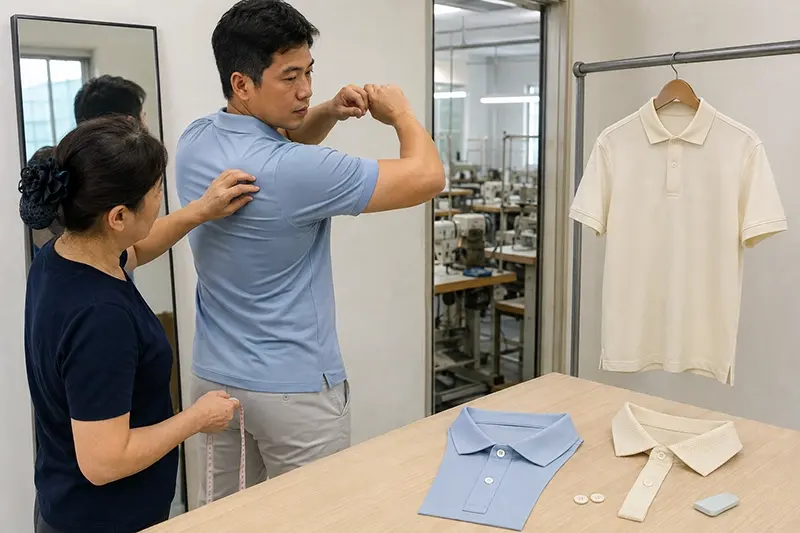
Golf polo sleeves must support unrestricted arm movement. They may have open hems, lightweight cuffs, stretch construction, or performance panels. The sleeve length and opening should not restrict the upper arm during a swing.
Regular polo shirts often use ribbed cuffs, which create a more structured and recognizable look. Open-hem sleeves are also available when a softer or more relaxed appearance is required.
A brand should consider both appearance and comfort. A narrow ribbed cuff may look clean on a retail polo but feel restrictive during sports. On the other hand, a very loose open sleeve may not provide the professional appearance required by a corporate buyer.
Sleeve construction should therefore be reviewed together with the fit and fabric rather than treated as an isolated design detail.
Weight and Seasonal Use
Golf polos are usually lighter than traditional regular polos, although exact fabric weights vary by material and construction.
A lightweight golf polo is suitable for:
- Spring and summer collections
- Tropical or warm climates
- Outdoor events
- Sports and active programs
- Resort and travel apparel
Regular polos often use medium-weight piqué that provides more structure and coverage. They are suitable for year-round indoor use, transitional seasons, retail collections, and professional uniforms.
Polo shirt fabrics commonly range from approximately 180 to 260 GSM. However, buyers should not select material based on GSM alone. Two fabrics with the same weight can have different thicknesses, textures, airflow, stretch, and drape.
Through professional polo fabric selection, buyers can compare physical swatches before choosing a fabric for sampling.

Branding Options for Golf and Regular Polos
Both polo types can be customized with embroidery, printing, patches, silicone logos, and private labels. However, fabric characteristics affect which method produces the best result.
Embroidery is common for golf clubs, tournament logos, corporate sponsors, and premium retail branding. It provides a durable, professional appearance and works well for chest, sleeve, and back-neck logos.
A lightweight golf fabric requires careful control of embroidery stitch density and backing. A large or heavy embroidered logo may pull the fabric and cause puckering. Smaller, lighter embroidery is often more suitable.
Regular cotton piqué is generally stable enough for standard embroidery, although artwork size and stitch density should still be tested. Screen printing, DTF, and heat transfer can also be used for larger or more detailed graphics.
Sublimation is primarily suited to compatible polyester fabrics. It is a strong option for modern custom golf polo shirts with all-over prints, gradients, sponsor graphics, or colorful team designs.
Completing an embroidery and printing sample helps confirm the logo scale, color, position, and surface quality before bulk production.

Which Polo Is Better for Corporate Uniforms?
A regular polo is usually the better choice for general corporate uniforms. Its structured collar, familiar fit, and cotton or cotton-blend fabric create a professional appearance suitable for offices, stores, hospitality teams, and customer-facing staff.
Regular polos are also easier to use across different departments and body types. Cotton-polyester piqué can provide a useful balance between comfort, durability, color stability, and easy care.
A golf polo may be better when corporate clothing will be worn:
- At outdoor events
- In warm climates
- During golf tournaments
- By active sales or service teams
- For company sports programs
- During travel or team-building activities
Some buyers choose a hybrid design: a performance fabric combined with a structured collar and restrained corporate branding. This creates a professional appearance while improving breathability and quick-drying performance.
Which Polo Is Better for a Retail Brand?
The answer depends on the brand’s target customer.
A regular polo is suitable for brands focused on classic menswear, casual fashion, uniforms, heritage styling, or versatile everyday products. Cotton piqué provides a familiar texture and can support different fits, collar designs, colors, and embroidery details.
A golf polo is more suitable for sportswear, athleisure, resort, outdoor, and active lifestyle brands. Performance materials and technical construction help communicate functionality and movement.
Retail buyers should also consider how the product will be presented and priced. Premium cotton, mercerized finishes, special collars, branded buttons, and refined packaging can raise the positioning of a regular polo. Technical fabrics, laser-cut ventilation, bonded details, and advanced prints can differentiate a golf polo.
The better option is the one that aligns with the customer’s lifestyle and the value the brand wants to communicate.

Durability and Washing Requirements
Regular and golf polos can both be durable when the fabric and construction suit the intended use.
Corporate regular polos may require frequent washing, so color fastness, shrinkage, collar recovery, seam strength, and logo durability should be checked. Cotton-polyester blends often provide better shape retention and faster drying than 100% cotton.
Golf polos also need reliable performance after washing. Buyers should check whether moisture-management properties, stretch recovery, print quality, and fabric surface remain stable. Some lightweight performance fabrics may be more vulnerable to snagging, especially in outdoor or work environments.
Testing requirements may include:
- Fabric shrinkage
- Color fastness
- Pilling resistance
- Stretch and recovery
- Logo adhesion
- Collar and cuff recovery
- Measurement stability
The testing level should match the order size, market requirements, and intended wearing conditions.
Cost Differences
Golf polos are not always more expensive than regular polos. Cost depends on the selected fabric, construction, trims, branding, order quantity, and packaging.
A basic polyester golf polo may cost less than a premium cotton regular polo. However, performance finishes, added stretch, custom mesh panels, sublimation, laser-cut ventilation, or bonded details can increase the cost of a golf design.
A regular polo can also move into a higher price range when it uses mercerized cotton, premium yarns, custom-developed collars, branded buttons, complex embroidery, or luxury packaging.
Buyers should compare complete product specifications rather than assuming that one category is automatically cheaper. Sharing a target price range can help the manufacturer recommend suitable fabrics and construction without weakening the intended product positioning.

What Information Should You Send to the Manufacturer?
A clear product brief helps the manufacturer understand whether your project needs a golf polo, a regular polo, or a combination of both.
Include the following information:
- Intended market and wearing environment
- Preferred polo style
- Order quantity and size distribution
- Fabric or performance requirements
- Target fabric weight
- Fit reference or size chart
- Colors and Pantone references
- Logo artwork and placement
- Labels and packaging
- Required delivery date
- Destination country
A tech pack is useful, but reference photographs, an existing polo, sketches, measurements, and logo files can also support the first discussion.
Our standard MOQ is 100 pieces per design per color, with mixed sizes available. Sampling normally takes 10–15 working days, while bulk production generally takes 25–30 working days after the sample and order details are approved.
Golf Polo or Regular Polo: Which Should You Choose?
Choose a golf polo when breathability, stretch, quick drying, and active movement are the main priorities. Choose a regular polo when you need a classic appearance, broad size suitability, and versatility across retail, corporate, uniform, or casual markets.
If you are still deciding between the two, share your intended use, target customer, quantity, and reference images. To discuss your requirements or request a quotation, contact us with your product details.
FAQs
Can a golf polo be used as a corporate uniform?
Yes. Golf polos work well for outdoor teams, warm climates, corporate sports events, resorts, and active employees. A structured collar and subtle logo can maintain a professional appearance.
Are all golf polos made from polyester?
No. Polyester and polyester-spandex are common, but golf polos can also use cotton-spandex piqué or other blends when a more natural hand feel is required.
Is a regular polo hotter than a golf polo?
A medium-weight cotton polo may retain more moisture and dry more slowly than a lightweight performance polo. However, comfort also depends on fabric structure, weight, fit, and climate.
Can embroidery be used on lightweight golf fabric?
Yes, but the artwork, stitch density, backing, and logo size must suit the fabric. A test sample can help prevent puckering or excessive stiffness.
Can I combine golf polo features with a classic appearance?
Yes. Performance fabric can be combined with a structured collar, regular fit, restrained colors, and corporate embroidery to create a hybrid design.
Share With
Related Articles

Hot Products