Embroidery vs Printing for Polo Shirts: Which Is Better?
Table of Contents
Embroidery is usually better for small logos, premium uniforms, and polo shirts that will be washed frequently. Printing is better for large artwork, complex colors, lightweight sportswear, and designs that require a smooth surface.
Neither method is right for every order. The final choice should depend on the logo, fabric, garment use, order quantity, and target price. At Mingxingpolo, we review these details before sampling so brands can avoid heavy embroidery, unclear printing, fabric puckering, and incorrect logo placement.
Embroidery and Printing at a Glance
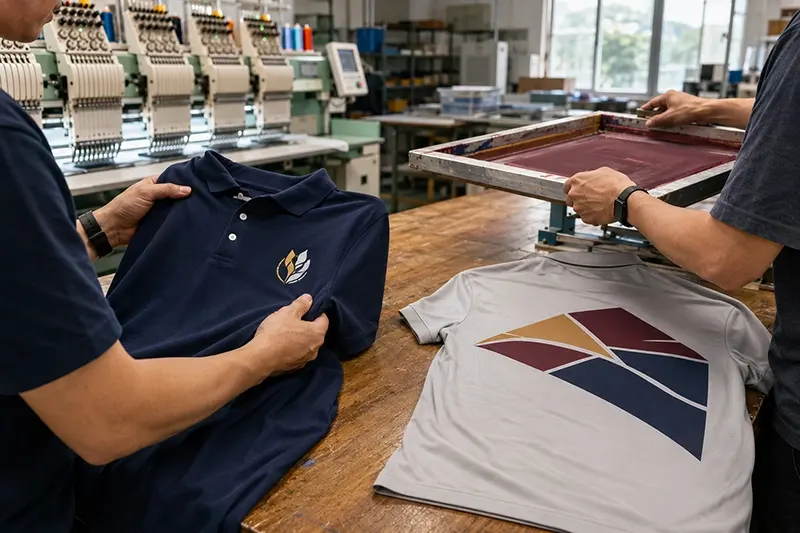
Embroidery uses thread to stitch a logo directly into the garment. It creates a raised, textured finish and is commonly used for left-chest, sleeve, and back-neck branding.
Printing applies ink or a transfer material to the surface of the fabric. Common options for polo shirts include screen printing, DTF, heat transfer, and sublimation.
The practical difference is simple:
- Choose embroidery for a small, professional logo.
- Choose screen printing for simple artwork in larger quantities.
- Choose DTF for detailed, multicolor designs.
- Choose sublimation for all-over designs on light-colored polyester.
- Choose heat transfer for names, numbers, and selected small-batch applications.
Which Method Looks More Premium?
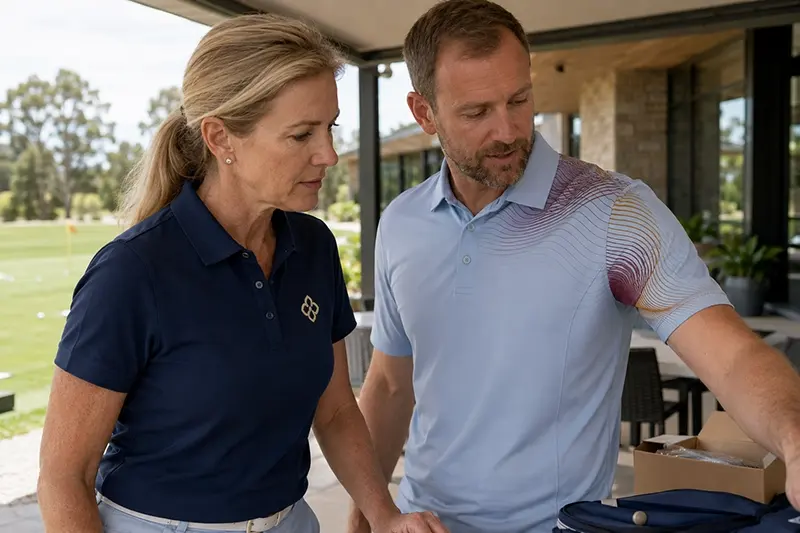
Embroidery usually has the more traditional and premium appearance. Its thread texture adds depth to a logo and works naturally with the structured look of a polo shirt.
This is why embroidery is frequently used for:
- Corporate uniforms
- Golf club apparel
- Hospitality uniforms
- School and team clothing
- Premium retail collections
A small embroidered logo on the left chest can make a simple polo feel more established. Tonal embroidery creates a quiet, refined result, while contrasting thread gives the brand more visibility.
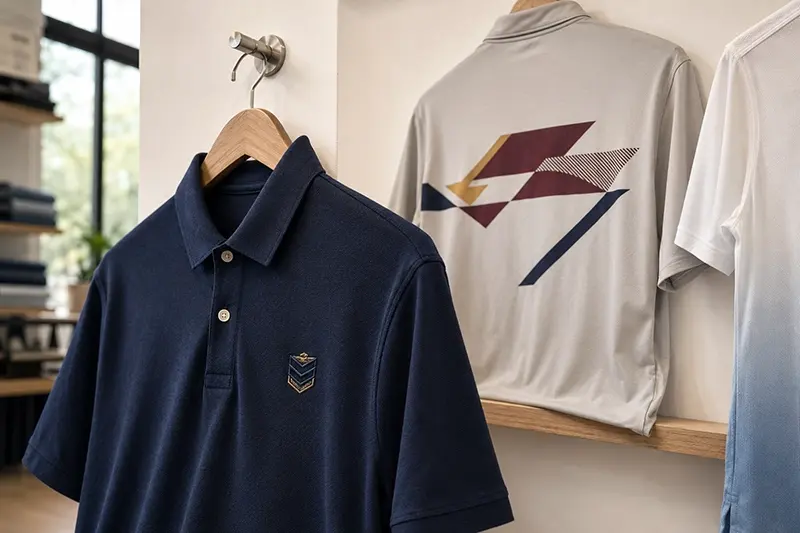
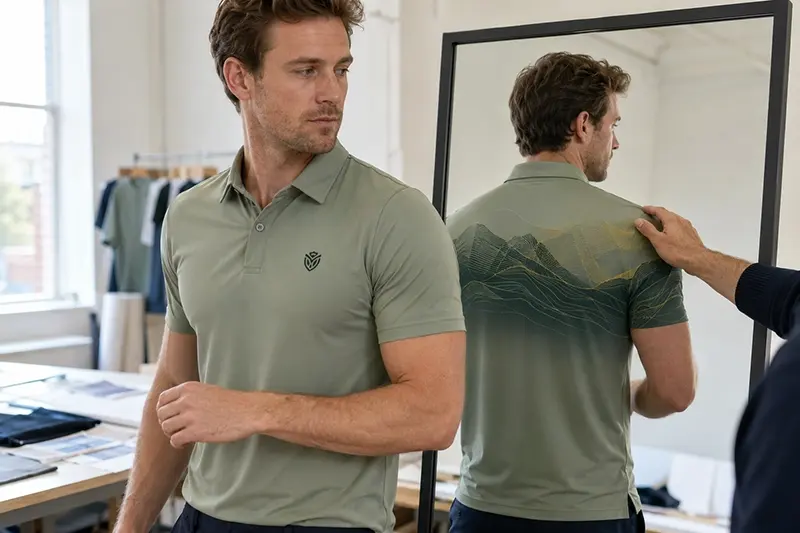
Printing has a flatter and more modern appearance. It is better when the artwork itself is an important part of the design. A printed back graphic, sleeve design, or all-over pattern can achieve visual effects that would be too stiff or expensive to produce with embroidery.
For a classic uniform, embroidery normally looks more appropriate. For a sports, promotional, or fashion-led polo, printing may offer greater creative freedom.
Which Method Handles Detailed Logos Better?
Printing handles fine details, small lines, gradients, and multiple colors better than embroidery.
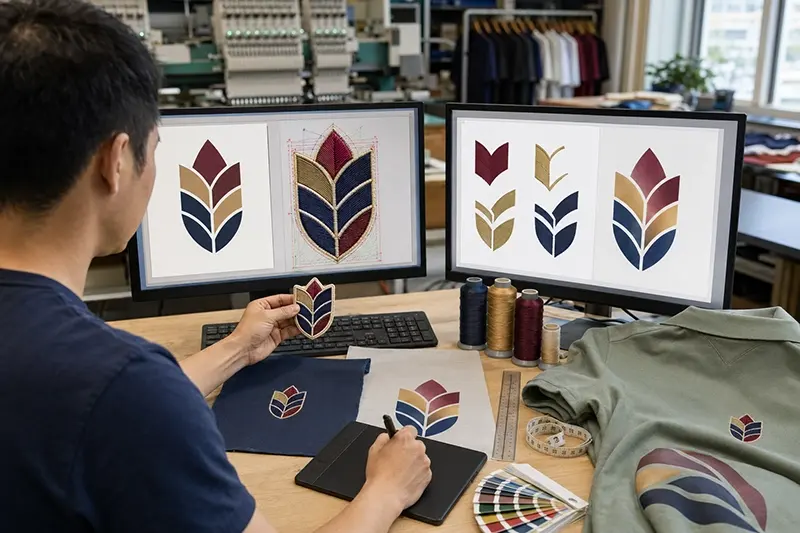
An embroidery machine creates the logo with individual stitches. If the lettering is too small or the lines are too thin, the design can lose clarity. Small spaces may close, and detailed elements can merge after stitching.
A logo intended for embroidery may need:
- Thicker lettering
- Fewer small details
- Clearer spacing
- Simplified color areas
- A slightly larger finished size
Printing can reproduce more complex artwork without converting every detail into stitches. DTF is useful for colorful logos and gradients, while screen printing is effective for bold designs with fewer solid colors.
If maintaining the exact appearance of detailed artwork is the priority, printing is often the safer choice.
Which One Is More Durable?
Good-quality embroidery is highly durable because the thread is stitched into the garment. It does not normally crack or peel, making it suitable for uniforms that receive frequent washing.
However, embroidered logos are not damage-proof. Loose threads can snag, and poor digitizing may cause gaps, distortion, or thread breaks. The result depends on correct thread, backing, stitch density, and machine settings.
Screen printing can also be durable when the ink, curing temperature, and fabric are correctly matched. DTF and heat-transfer designs may eventually show wear around the edges if they are repeatedly washed or exposed to excessive heat.
Sublimation provides excellent durability on suitable polyester because the color bonds with the fibers. It does not create a layer that can peel from the surface.
For long-term custom corporate polo shirts, embroidery is often the preferred option. For polyester sports polos with large graphics, sublimation can be equally practical and may feel more comfortable.
How Does the Polo Fabric Affect the Choice?
Polo shirts use knitted fabrics, so decoration should be selected with fabric stretch, surface texture, and weight in mind.
Cotton piqué supports small and medium embroidery well, especially in midweight constructions. However, its textured surface may reduce the sharpness of very fine printed details.
Polyester piqué can be embroidered or printed, but heat and color migration must be controlled. On dark polyester, dye from the fabric may move into a light-colored print if the wrong materials or temperatures are used.
Lightweight stretch fabric requires extra care. A dense embroidered logo may pull the material, create puckering, or feel heavy against the body. Correct backing can stabilize the fabric, but the design should still use a reasonable stitch count.
For lightweight custom golf polo shirts, a small embroidery design, lightweight heat transfer, or sublimation may be more comfortable than a large, dense embroidered area.
Does Logo Size Matter?
Logo size has a major effect on cost, appearance, and comfort.
Embroidery is generally most effective for smaller placements, such as:
- Left or right chest
- Sleeve
- Back neck
- Collar
- Small front detail
Large embroidery requires more stitches and production time. It can also make the garment stiff and uncomfortable. A full-back embroidered design is possible, but it is rarely the most practical choice for a standard polo shirt.
Printing is better suited to:
- Large back graphics
- Oversized front designs
- Sponsor logos
- Player names and numbers
- Repeated patterns
- All-over artwork
If a collection needs both a premium chest logo and a large visual element, embroidery and printing can be combined on the same garment.
Which Method Is More Cost-Effective?
The cost of embroidery is mainly affected by stitch count, logo size, design complexity, placement, and quantity. More stitches mean more machine time, so a large embroidered design normally costs more than a small chest logo.
Screen-printing cost depends on the number of colors and screens required. It becomes more economical at higher quantities because the setup cost is spread across the order.
DTF can be practical for detailed, multicolor artwork because separate screens are not required for every color. However, very large transfers may create a heavier surface feel.
Sublimation is efficient for polyester sportswear and all-over patterns, but it requires suitable fabric and is normally most effective on white or light-colored polyester.
For buyers, the lowest decoration price is not always the best value. A logo should support the polo shirt’s retail position and remain presentable throughout its intended use.
Common Production Problems to Avoid
Several decoration problems appear only after a logo is applied to the actual polo fabric.
With embroidery, common issues include:
- Puckering around the logo
- Small text becoming unreadable
- Excessively dense stitching
- Visible or uncomfortable backing
- Fabric pulling out of shape
With printing, buyers should watch for:
- Color migration on polyester
- Cracking after washing
- Poor adhesion
- Heavy hand feel
- Incorrect print position
- Colors that do not match the approved artwork
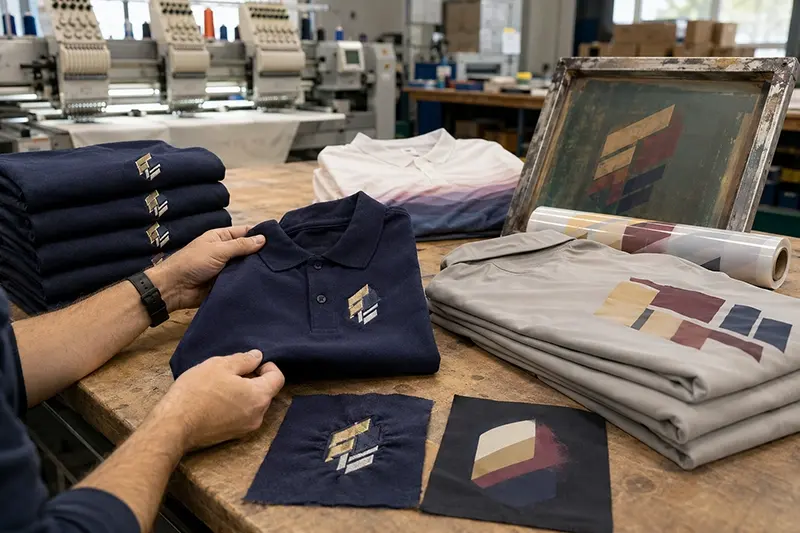
These risks are why decoration should be tested on the selected bulk fabric. A logo that looks good on a computer mock-up may behave differently on cotton piqué, polyester mesh, or stretch fabric.
Our Embroidery & Printing process checks artwork, fabric compatibility, color, dimensions, placement, and washing performance before bulk production.
How to Prepare Your Logo for Sampling
Provide a vector file such as AI, EPS, SVG, or editable PDF whenever possible. Clear artwork makes it easier to control logo dimensions and colors.
You should also provide:
- Final logo width and height
- Pantone or thread color references
- Required placement
- Garment color
- Fabric composition
- Reference images
- Expected washing conditions
For embroidery, the artwork must be converted into a stitch file. This digitizing stage determines stitch direction, density, underlay, and sewing sequence.
For printing, the artwork may require color separation or adjustments based on the chosen process. Always approve a physical decoration sample or complete garment sample before bulk production.
Embroidery or Printing: Which Should Your Brand Choose?
Choose embroidery when you need a small, durable logo with a professional appearance. It is especially suitable for corporate uniforms, hospitality clothing, classic retail polos, schools, and golf clubs.
Choose printing when the design is large, colorful, detailed, or intended for lightweight sportswear. It is also the more flexible choice for promotional graphics, sponsor branding, names, numbers, and all-over patterns.
If your design includes both types of branding, use embroidery for the main chest logo and printing for larger secondary artwork. This combination keeps the front of the polo refined while allowing greater design freedom elsewhere.
Final Thoughts
Embroidery provides a durable and premium finish, while printing offers more flexibility for detailed and larger designs. The best result comes from matching the decoration to the fabric and intended use rather than selecting it by price alone.
To compare logo methods or develop a decorated polo shirt sample, contact us with your artwork, fabric requirements, quantity, and target market.
FAQs
Is embroidery always better than printing?
No. Embroidery is better for small, premium logos, while printing is better for large or detailed artwork. The intended use, fabric, and design should determine the method.
Can polyester polo shirts be embroidered?
Yes. Polyester polos can be embroidered, but the stitch density and backing should suit the fabric. Lightweight or stretchy polyester may pucker under a heavy design.
What is the best printing method for golf polos?
Sublimation is suitable for light-colored polyester and all-over designs. DTF or lightweight heat transfer may suit smaller multicolor graphics. Small club logos can also be embroidered.
Can embroidery and printing be used together?
Yes. Many brands use embroidery for the chest logo and printing for sponsor graphics, names, numbers, or larger back designs.
Should I approve a logo sample before production?
Yes. A sample lets you check the size, color, placement, stitch quality, print feel, and fabric stability before the bulk order begins.
Share With
Related Articles

Hot Products