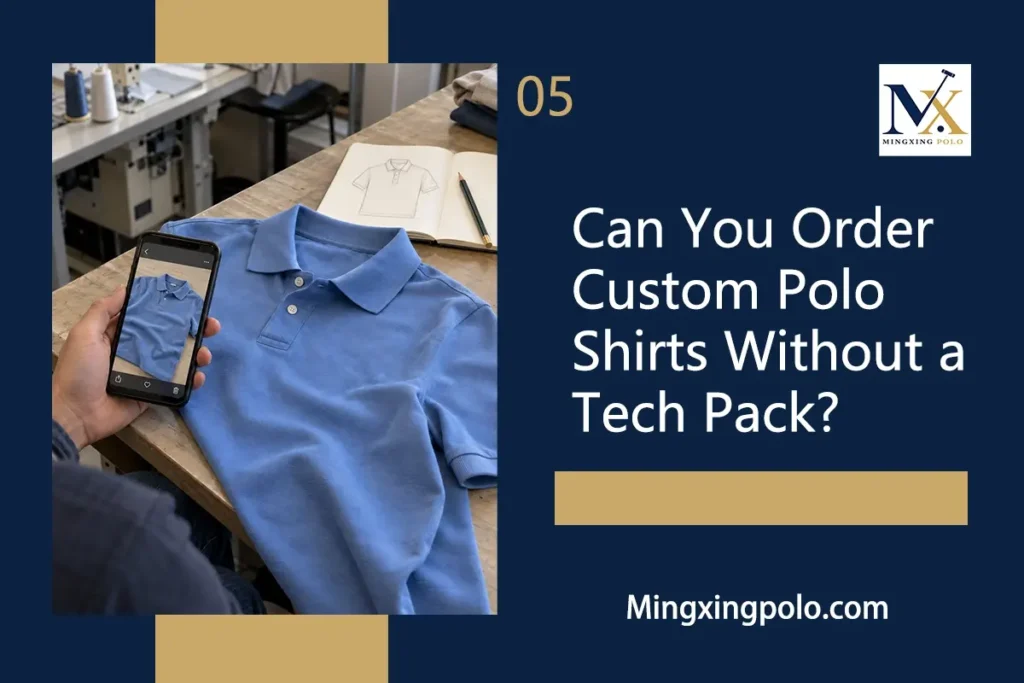
Can You Order Custom Polo Shirts Without a Tech Pack?
Table of Contents
Yes, you can order custom polo shirts without a completed tech pack. Mingxingpolo can begin with reference images, a physical sample, a sketch, or a clear description of your idea. However, the design still needs to be converted into confirmed measurements, materials, and construction details before bulk production. The more useful information you provide at the beginning, the faster and more accurate the development process will be.
What Is a Polo Shirt Tech Pack?
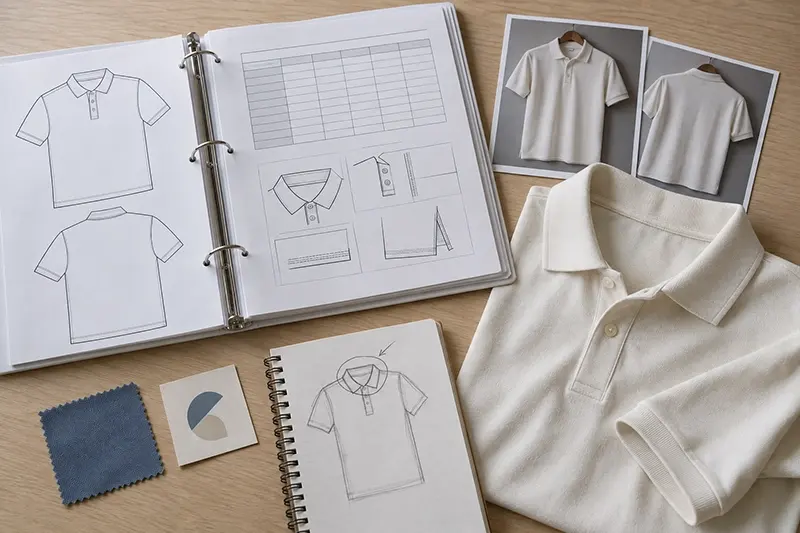
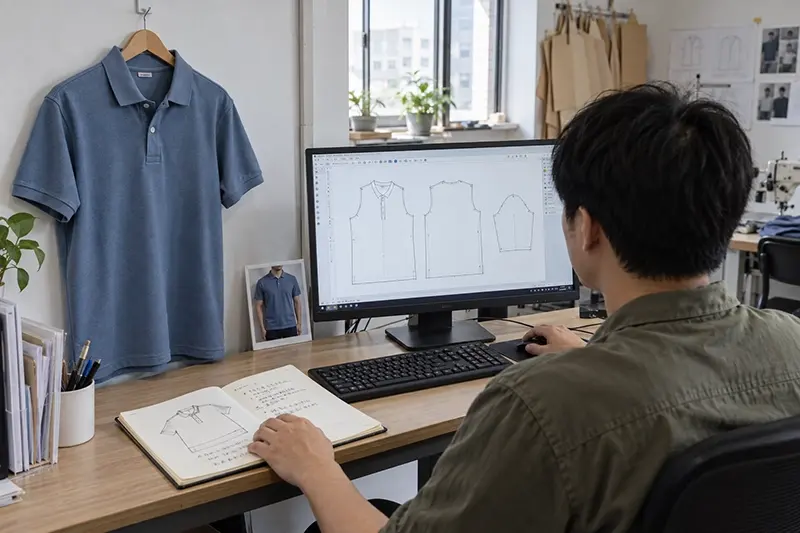
A tech pack is a technical document that explains how to make a garment. It gives the pattern maker, sample team, and production line a shared reference.
A complete polo shirt tech pack may include:
- Front and back technical drawings
- Finished garment measurements
- Fabric composition and GSM
- Collar and cuff specifications
- Placket length and button details
- Stitching and construction notes
- Logo size and placement
- Pantone color references
- Main label and care label details
- Packaging instructions
- Size grading rules
Tech packs reduce uncertainty, but they are not the only way to start a custom polo project. Many startup brands, companies, and first-time buyers begin with product photographs or an existing garment.
What Can You Provide Instead of a Tech Pack?
If you do not have a tech pack, you need to communicate the product through other references. A manufacturer can usually start with one or more of the following.
- Clear front and back photographs
- A physical reference sample
- Hand-drawn or digital sketches
- Links or screenshots showing design inspiration
- A basic measurement chart
- Fabric swatches
- Logo artwork
- Written notes describing required changes
A photograph can show the general style, but it cannot reveal every technical detail. The factory may still need to confirm fabric weight, garment measurements, collar construction, and internal finishing.
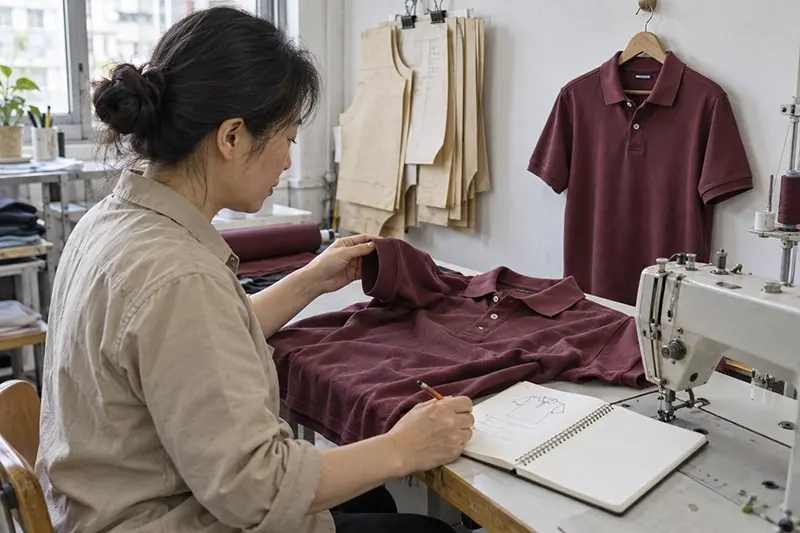
A physical sample normally provides more information because the manufacturer can inspect its measurements, sewing, fabric, and proportions. You should clearly explain which details should be copied and which should be changed.
Start With the Intended Polo Style
Tell the manufacturer what type of polo you want to develop. Different products require different patterns, fabrics, and construction.
Your project could involve:
- Classic cotton piqué polos
- Premium mercerized cotton polos
- Corporate uniform polos
- Golf polo shirts
- Performance polos
- Team polo shirts
- Fashion polos
- Polo dresses
If you are still comparing options, review the available Custom Polo Shirts to identify a suitable product direction. This is the product detail page link you can add yourself.
Avoid sending ten unrelated reference images without instructions. Mark the collar you prefer, the desired body shape, the sleeve style, and any details you want to remove. This gives the development team a clearer starting point.
Explain the Changes You Want
A common mistake is sending a reference image and writing only “make this.” The factory cannot know whether you want an exact interpretation or only like one part of the garment.
Add short notes such as:
- Keep the collar shape but change the body to a relaxed fit
- Use a three-button placket instead of two buttons
- Make the sleeves slightly longer
- Add contrast tipping to the collar and cuffs
- Remove the chest pocket
- Add a side slit
- Place the embroidered logo on the left chest
- Use a heavier fabric with a more structured feel
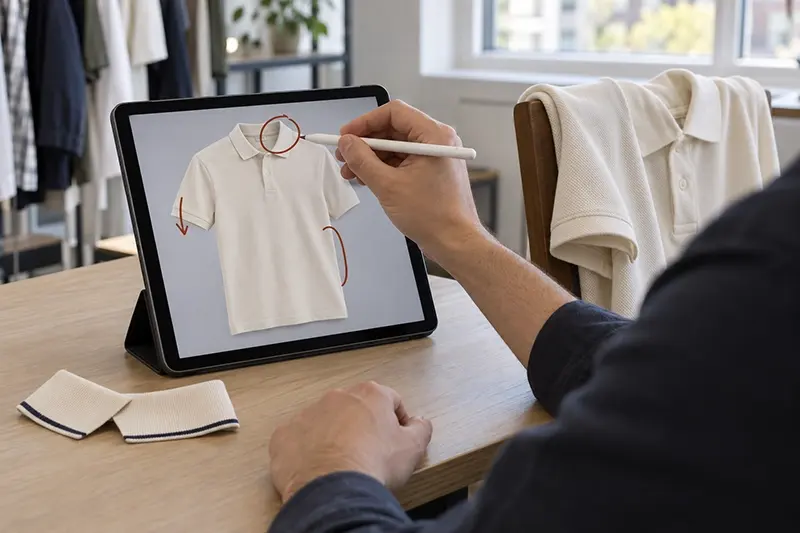
Simple annotations on an image can be enough for the first discussion. Measurements and construction details can then be developed during sampling.
Provide an Estimated Quantity and Color Plan
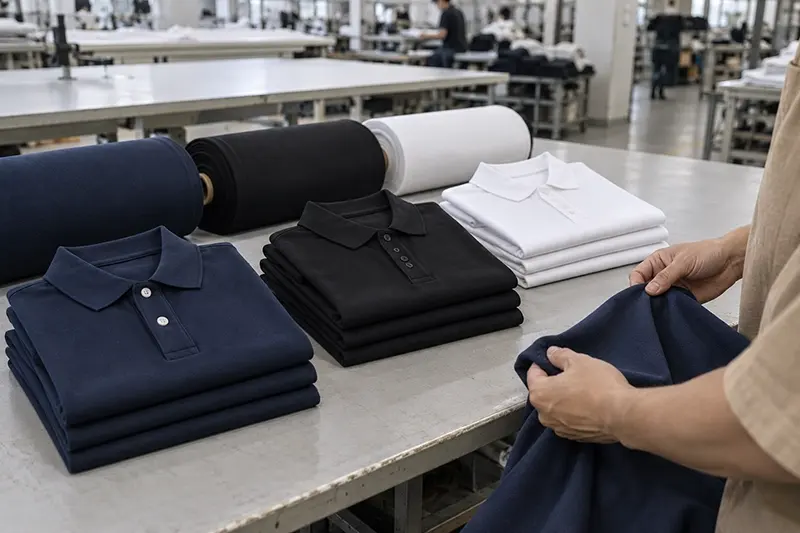
The factory needs an estimated order quantity before recommending fabrics and customization options. Mingxingpolo’s standard MOQ is 100 pieces per design per color, with size mixing permitted within that color quantity.
Instead of stating only “I need 300 polos,” explain the expected breakdown:
- Navy: 100 pieces
- Black: 100 pieces
- White: 100 pieces
- Sizes: S–XXL
The final size allocation can be confirmed later, but the number of colors should be discussed early. Each color may require separate fabric purchasing, dyeing, cutting, and production preparation.
Low quantities may work better with available fabric colors and standard trims. Custom-dyed fabrics, jacquard collars, and specially produced buttons may require higher material minimums.
Describe the Fabric or Intended Use
You do not need to know the exact composition or GSM at the beginning. You can explain the desired result and where the polo will be worn or sold.
Useful descriptions include:
- Soft and breathable for everyday wear
- Durable and easy to wash for uniforms
- Lightweight and quick-drying for golf
- Stretchy and comfortable for active teams
- Smooth and premium for an elevated collection
- Structured and substantial for lifestyle retail
The manufacturer can then recommend cotton piqué, polyester piqué, cotton-polyester piqué, stretch piqué, performance polyester, or a more premium cotton option.
Custom polo fabrics commonly fall between 180 and 260 GSM. The final choice should reflect climate, comfort, fit, and product positioning rather than assuming that the heaviest fabric is always the best.
Send Your Logo and Branding Requirements
A clear logo file helps the manufacturer evaluate the appropriate decoration method. AI, EPS, PDF, and SVG files are preferred for accurate resizing and production.
Provide:
- Preferred logo position
- Approximate logo dimensions
- Required logo colors
- Pantone references if available
- Embroidery or printing preference
- Additional sleeve or back branding
If you are unsure whether to choose embroidery or printing, send the artwork first. Small corporate, classic, and golf logos often work well with embroidery. Detailed, multicolor or larger graphics may be better suited to screen printing, DTF, heat transfer, sublimation or silicone printing.
Private-label requirements should also be discussed. These can include woven neck labels, size labels, care labels, hang tags, barcode stickers, and branded packaging.
Confirm the Target Fit and Size Range
Without a tech pack, fit is one of the most important areas to clarify. Tell the manufacturer whether the polo is intended for men, women, or a unisex market and whether you want a slim, regular, relaxed, or oversized fit.
You should also provide:
- Target market or country
- Intended size range
- Base sample size
- Model or wearer measurements
- Any required extended sizes
- Preferred garment length
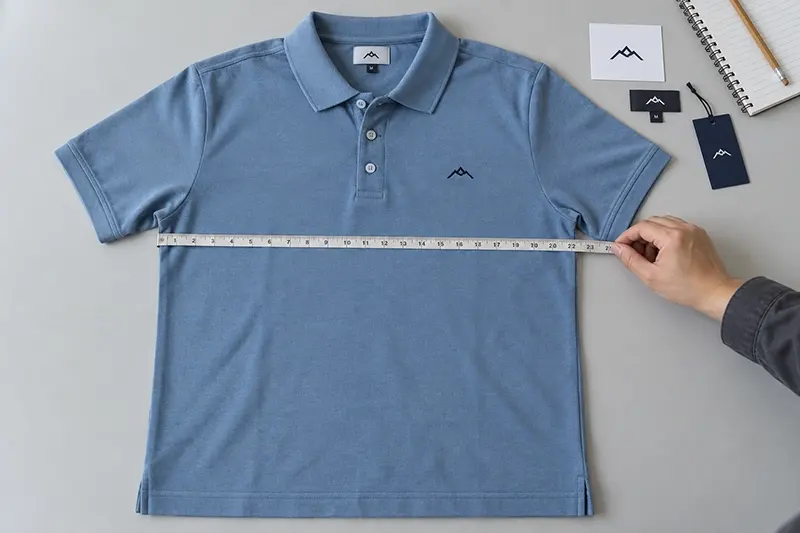
If you own a well-fitting polo, measure it flat and provide the chest width, body length, shoulder width, and sleeve length. These basic measurements give the factory a more reliable foundation than a size name alone.
A medium size from one brand can differ significantly from a medium produced for another market. Finished garment measurements should therefore be confirmed before sample making.
How Does the Manufacturer Create the Missing Specifications?
When the initial information is sufficient, the manufacturer reviews the style and identifies the specifications that are still missing. The development process usually follows these stages:
- Review the reference images, sample, or sketch
- Confirm fabric, trims, and branding direction
- Establish the base measurements and construction
- Produce the first physical sample
- Collect fit and detail corrections
- Prepare and approve the revised sample
- Confirm the final production specifications
The approved sample becomes the main visual and technical reference for bulk manufacturing. Measurements, materials, and construction details should also be recorded so that future orders can be reproduced more consistently.
This process requires clear communication from both sides. A manufacturer can help develop technical details, but it cannot decide your target fit, customer profile, or product positioning without input.
Will Ordering Without a Tech Pack Cost More?
It can. If the factory must develop measurements, construction, and patterns from limited references, additional development work may be required.
The cost can also increase when:
- Several sample revisions are needed
- The reference images conflict with each other
- Custom fabric must be developed
- Fit requirements change after sampling
- Logo artwork must be redrawn
- Special trims must be sourced
- Instructions change after materials are ordered
You can control development costs by organizing your references, writing clear comments, and combining all feedback into one revision document.
Do not approve a sample while important details remain undecided. Changes made after bulk materials are purchased can be more expensive than changes made during sample development.
What Must Be Approved Before Bulk Production?
Even without an original tech pack, the following information should be finalized before production:
- Approved physical sample
- Final measurements and tolerance
- Fabric composition, GSM, and color
- Collar, cuff and placket construction
- Button and trim specifications
- Logo size, color and placement
- Label artwork and placement
- Quantity and size breakdown
- Packaging requirements
- Bulk production schedule
Mingxingpolo’s standard sample development time is 10–15 working days. Bulk production normally takes 25–30 working days after the sample and all production details are approved.
Complex fabrics, multiple revisions, custom trims, or special decoration may require additional time.
When Is a Tech Pack Strongly Recommended?
A formal tech pack becomes more important when the design has complex paneling, unusual construction, strict fit requirements, or several coordinated styles.
It is also recommended when:
- Several factories are quoting the same product
- The design includes proprietary details
- You need consistent international sizing
- Different production teams may handle repeat orders
- Exact tolerances and testing standards are required
- You are building a long-term collection
A tech pack makes quotations easier to compare because each supplier receives the same specifications. It also creates a clearer record for repeat production.
For a simple polo, however, a clear reference sample, measurement chart, and organized branding instructions may be sufficient to begin.
Final Thoughts
You do not need a completed tech pack to start developing custom polo shirts. Strong reference images, basic measurements, quantity, fabric direction, and logo artwork can provide enough information for the first evaluation.
The technical specifications must still be confirmed through development and sampling before bulk production. To discuss a project without a tech pack, contact us with your reference images, expected quantity, size range, logo, and destination country.
FAQs
Can a manufacturer create a tech pack from my reference images?
Some manufacturers can organize the required production specifications from reference images and sample discussions. Confirm what documentation is included, because a production worksheet may not contain every element of a professional design tech pack.
Is a physical sample better than photographs?
Usually, yes. A physical sample allows the factory to inspect measurements, fabric, construction, and proportions. You must still explain which details should remain and what needs to be changed.
Can I receive a quotation without a tech pack?
Yes, but it may be a preliminary quotation. The price can change after the fabric, measurements, logo process, trims, and packaging are confirmed.
How many sample revisions are normally needed?
A straightforward polo may require one or two rounds, while a new fit, custom collar, or complex design may need more. Clear feedback and accurate measurements help reduce unnecessary revisions.
Who owns the final polo pattern?
Pattern ownership depends on the manufacturer’s policy and your agreement. If exclusive ownership or pattern files are important to your brand, confirm this in writing before paying for development.
Share With
Related Articles

Hot Products