What Information Do You Need for a Custom Polo Quote?
Table of Contents
To receive an accurate custom polo quote, you should provide the product style, order quantity, color breakdown, fabric requirements, size range, logo method, packaging needs, delivery country, and target date. If some details are undecided, Mingxingpolo can recommend practical options based on your market and budget. However, the more complete your information is, the fewer pricing changes you will face during sampling and production.
Why Does a Manufacturer Need Detailed Information?
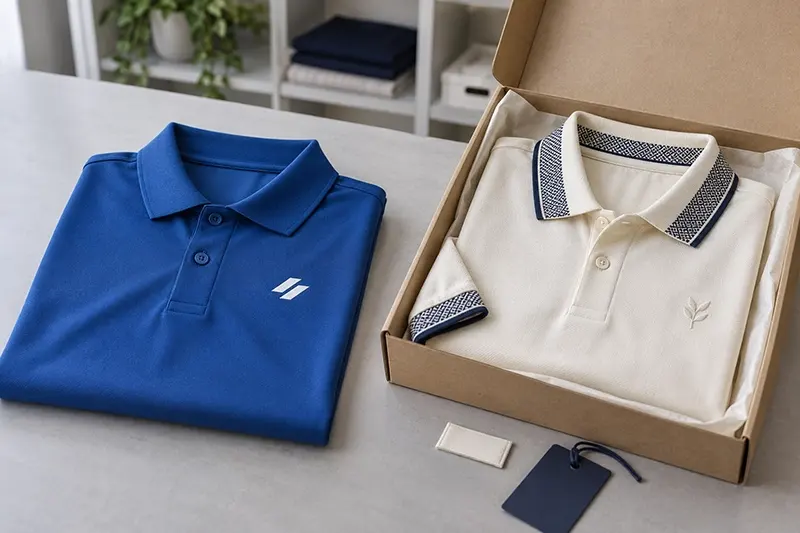
A custom polo shirt does not have one fixed price. Two polos that look similar in a photograph can have different costs because of their fabric, weight, pattern, collar construction, logo process, and packaging.
For example, a basic polyester team polo with a small chest print will not cost the same as a mercerized cotton polo with custom jacquard ribs, embroidery, and branded packaging.
A clear inquiry allows the manufacturer to calculate:
- Fabric and trim consumption
- Pattern and sample development costs
- Printing or embroidery costs
- Cutting and sewing complexity
- Label and packaging requirements
- Production schedule
- Shipping options
Without this information, the first price may only be a rough estimate rather than a reliable production quotation.
1. Polo Shirt Style or Reference
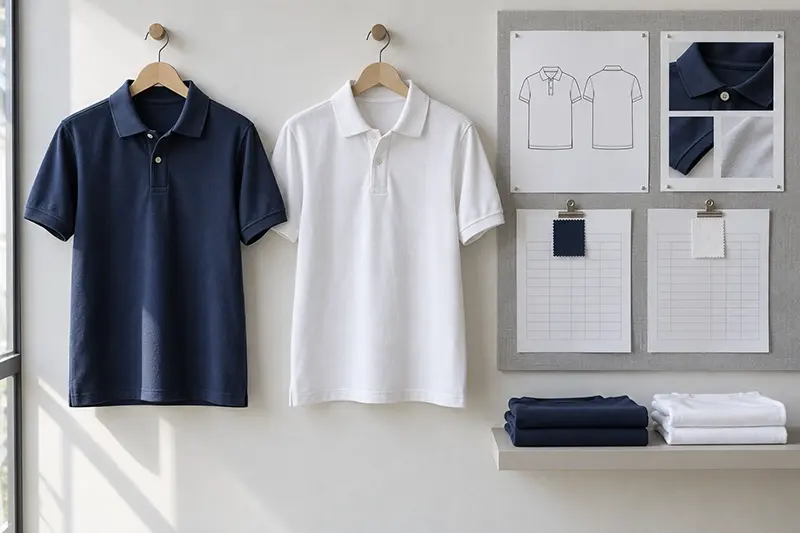
Start by explaining what type of polo shirt you want to produce. You can send a tech pack, technical drawing, physical sample, clear photographs, or a link used only as a visual reference.
Common product directions include:
- Classic cotton piqué polos
- Premium mercerized cotton polos
- Corporate uniform polos
- Performance and sports polos
- Golf polo shirts
- Team polo shirts
- Polo dresses
- Printed or embroidered fashion polos
Reference images should show the front, back, and important details whenever possible. If you want to combine elements from several products, explain which feature should be taken from each image.
A reference image communicates the general appearance, but it does not confirm measurements, construction, or materials. These details still need to be discussed during Polo Development and Sampling.
2. Order Quantity and Color Breakdown
Provide the estimated quantity per design and per color. Do not submit only the total number if the order includes several colorways.
A useful quantity breakdown could look like this:
| Color | S | M | L | XL | Total |
|---|---|---|---|---|---|
| Navy | 10 | 20 | 20 | 10 | 60 |
| White | 5 | 15 | 15 | 5 | 40 |
| Total | 15 | 35 | 35 | 15 | 100 |
Mingxingpolo’s standard MOQ is 100 pieces per design per color, with size mixing allowed within that color quantity. Fabric availability, custom dyeing, and special trims can affect the final minimum.
Even when the size breakdown is not ready, provide the expected total quantity and number of colors. The manufacturer can issue a preliminary quotation and confirm the final size allocation before bulk production.
3. Fabric Composition and GSM
Fabric is one of the largest factors affecting the price and performance of a polo shirt. If you already know what you need, provide the composition, knit construction, GSM, and required finish.
Common polo fabrics include:
- Cotton piqué for breathable, classic products
- Polyester piqué for durable and easy-care uniforms
- Cotton-polyester piqué for balanced comfort and stability
- Stretch piqué for improved movement and fitted styles
- Performance polyester for sports and golf polos
- Mercerized cotton for smoother, more premium collections
Polo fabrics commonly range from approximately 180 to 260 GSM. A higher GSM does not automatically mean better quality. The appropriate weight depends on the climate, product positioning, fit, and end use.
If you do not know the exact fabric, explain who will wear the polo, where it will be sold, and your preferred hand feel. Descriptions such as lightweight and quick-drying, soft and natural, structured and premium, or durable and easy-care give the supplier a useful starting point.
4. Garment Color Requirements
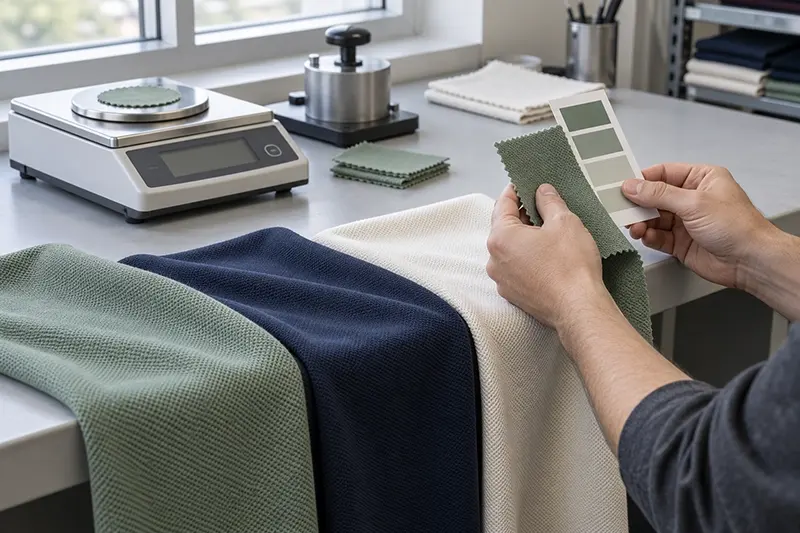
Tell the manufacturer whether you need an available fabric color or a custom-dyed color. For brand-specific colors, provide a Pantone reference rather than relying only on a screen image.
Digital colors can appear differently across phones and monitors. A Pantone number or physical color sample gives the factory a more objective standard.
Custom dyeing may increase the MOQ, development time, and cost. If your quantity is limited, selecting a close available color may be more economical. For repeat uniform programs, ask how the factory controls shade differences between production batches.
5. Size Range and Fit
Provide your intended size range, target market, and preferred fit. A polo developed for the US market may use different body measurements from one intended for Europe or Asia.
Useful fit information includes:
- Men’s, women’s or unisex sizing
- Regular, slim, relaxed or oversized fit
- Required size range
- Finished garment measurements
- Model measurements and sample size
- Special length or grading requirements
If you have an existing product that fits well, send its finished measurements or a physical reference sample. Do not provide only body measurements unless the required garment ease is also clear.
For uniforms and team orders, consider whether extended sizes are necessary. Confirming the complete size range early helps the factory evaluate fabric consumption, pattern grading, and production feasibility.
6. Logo Artwork and Decoration Method
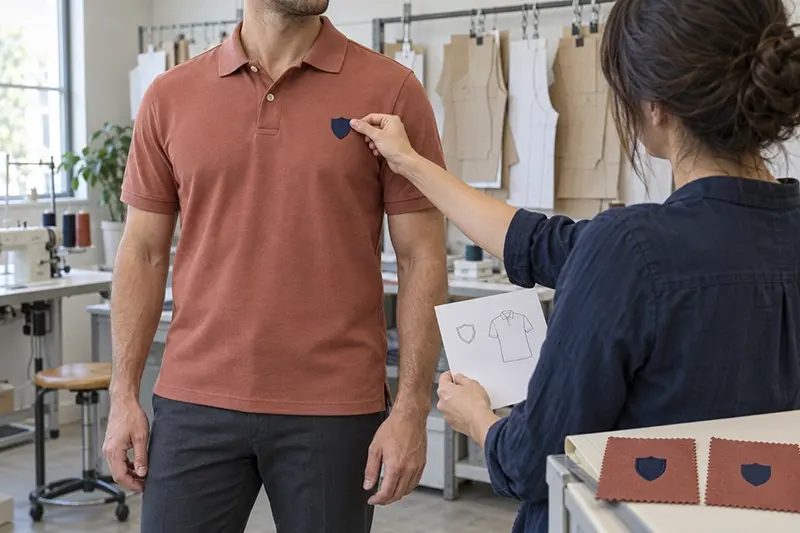
Send the logo artwork and explain where it should appear. Vector files such as AI, EPS, PDF, or SVG are preferred because they can be resized without losing quality.
Include the following information:
- Logo dimensions
- Placement on the garment
- Number of logo colors
- Pantone color references
- Embroidery or printing preference
- Special texture or finish requirements
Embroidery is commonly used for classic, corporate, golf, and premium polos. Printing may be more suitable for large graphics, detailed artwork, gradients, or performance fabrics. Available processes can include flat embroidery, 3D embroidery, screen printing, DTF, heat transfer, sublimation and silicone printing.
If you are unsure which process to use, send the artwork first. The manufacturer can evaluate its size, detail, and color count before recommending a suitable method.
7. Collar, Placket and Trim Details
The collar and placket strongly influence the appearance and cost of a polo. Specify whether you require standard rib, jacquard rib, self-fabric, flat-knit, or another collar construction.
Also confirm details such as:
- Two-button or three-button placket
- Button material and color
- Contrast tipping
- Custom collar stripes
- Sleeve cuff construction
- Side slits
- Reinforcement tape
- Spare buttons
- Custom thread colors
Custom jacquard ribs and specially dyed buttons may carry separate MOQs. Standard components are generally more suitable when the buyer wants a lower opening quantity or shorter development period.
8. Labels and Packaging
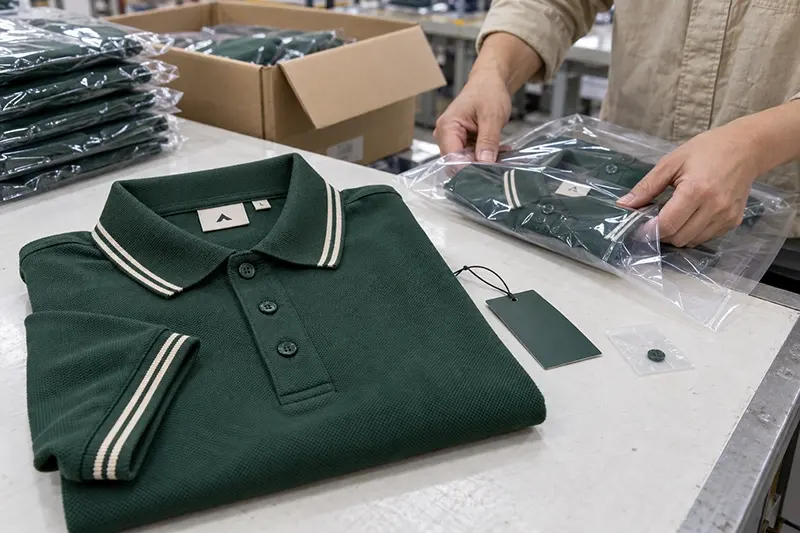
Tell the factory whether the quotation should include private-label items. These may include:
- Main neck label
- Size label
- Care and composition label
- Hang tag
- Barcode or SKU sticker
- Individual polybag
- Branded packaging
- Carton marks
Packaging requirements can affect both unit price and shipping volume. If goods must be sorted by employee, team, department, or retail location, mention this before the quotation is finalized.
For simple wholesale orders, standard individual polybags may be sufficient. Retail brands may require barcode labels, hang tags, and branded packaging that is ready for warehouse or store distribution.
9. Target Delivery Date and Shipping Country
Provide the required delivery date and destination country, not only the date you hope production will finish. The manufacturer must consider sampling, revisions, material preparation, bulk production, inspection, and transportation.
Mingxingpolo’s standard schedule is:
- Sample development: 10–15 working days
- Bulk production: 25–30 working days after sample approval
These timelines can change for custom-dyed fabric, special trims, complex decoration, or large orders. Shipping time depends on whether the goods travel by courier, air, rail, or sea.
The destination is also needed to estimate freight and determine whether the quotation should use EXW, FOB, DDP, or another shipping term.
10. Target Price or Quality Level
A target price helps the manufacturer recommend realistic materials and construction. It does not need to be an exact final price, but it should reflect the market position of the product.
If your target is lower than the cost of the original specification, the supplier may suggest:
- A different fabric composition
- An available color instead of custom dyeing
- A standard collar instead of custom jacquard rib
- Fewer logo positions
- Simpler packaging
- A larger production quantity
Price should not be reduced by removing features that are essential to the product’s fit, durability, or market positioning. A good quotation balances the desired appearance with achievable production costs.
What Can You Send If You Do Not Have a Tech Pack?
A complete tech pack is helpful but not always necessary for the first discussion. You can begin with:
- Front and back reference images
- Notes showing the features you want
- Logo artwork
- Estimated quantity
- Preferred fabric or intended use
- Size range
- Target market
- Delivery country and deadline
The factory can use this information to identify missing specifications and prepare an initial development direction. Final measurements, fabric, colors, and construction should still be confirmed before sample production.
Final Thoughts
A useful custom polo quotation should describe what is included, not just show a unit price. Before comparing suppliers, check that every quotation is based on the same fabric, quantity, branding, labels, packaging and shipping terms.
For an initial evaluation, contact us with your design or reference images, quantity, colors, size range, logo file, target delivery date, and destination country. We can then identify any missing information before preparing the quotation.
FAQs
Can I get a quote using only a reference photo?
Yes, but the first quotation will normally be an estimate. The final price can change after the fabric, measurements, construction, branding, and packaging are confirmed.
Do I need to provide the complete size breakdown immediately?
No. You can begin with the total quantity and intended size range. The final quantity for each size should be confirmed before fabric cutting and bulk production.
Why does adding more colors affect the quotation?
Every color can require separate fabric purchasing, dyeing, cutting, and production setup. MOQ is therefore commonly calculated per design and color rather than only by the total order quantity.
Can the manufacturer recommend fabric if I do not know the GSM?
Yes. Explain the product’s use, target climate, desired feel, price level, and whether it requires easy care or moisture management. The manufacturer can then recommend suitable compositions and weights for sampling.
Is shipping included in a custom polo quotation?
Only if the quotation clearly states it. EXW and FOB prices usually do not include delivery to your final address, while DDP quotations generally include more transportation and import-related services. Always confirm the shipping term and destination.
Share With
Related Articles

Hot Products