Different Types of Polo Shirt Collars Explained
Table of Contents
A ribbed flat-knit collar is the most versatile choice for classic, corporate, and retail polo shirts. Choose a self-fabric collar for a cleaner or more athletic appearance, a tipped collar for visible brand identity, and a jacquard collar when you want patterns or lettering knitted directly into the design.
At Mingxingpolo, collar selection is considered together with the body fabric, polo style, target market, and washing requirements. The right collar should complement the garment, hold its shape, and support the intended brand positioning.
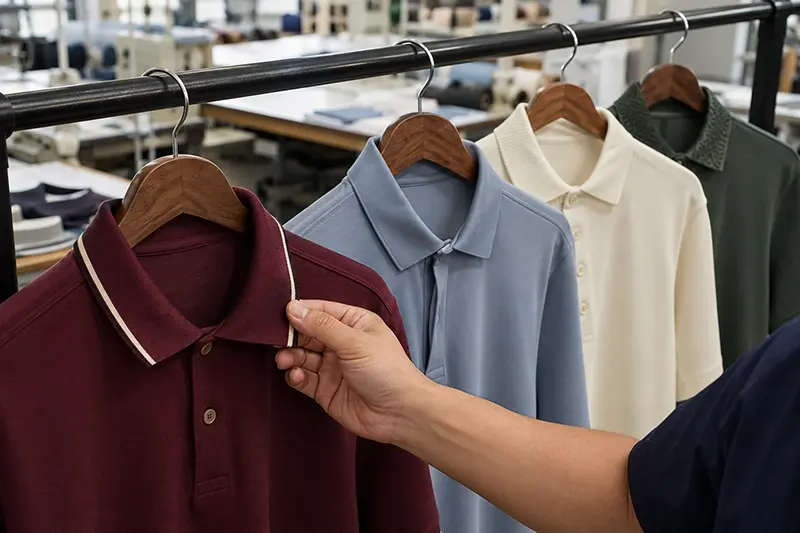
Why the Polo Collar Matters
The collar is one of the first details customers notice on a polo shirt. It frames the neckline, affects the garment’s formality, and helps distinguish a classic polo from a sports, fashion, corporate, or luxury style.
A poorly selected collar can create several problems:
- The collar may feel too heavy for the body fabric.
- The points may curl after washing.
- The neckline may become loose.
- Colors may not match the polo body.
- The collar may look too casual or too formal.
- Tipping and patterns may appear inconsistent.
- The placket may not sit correctly below the collar.
Collar development should not be separated from the rest of the garment. Its yarn, weight, shape, dimensions, stretch, and color must work with the fabric and pattern.
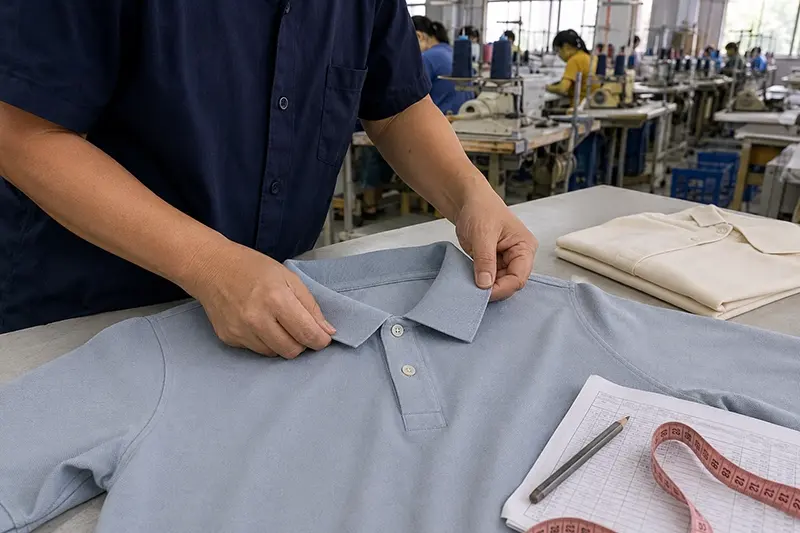
1. Ribbed Flat-Knit Collar
The ribbed flat-knit collar is the most common polo collar. It is knitted separately from the garment body and attached around the neckline during sewing.
Its rib structure provides flexibility and helps the collar recover after being stretched. It also creates the familiar structured appearance associated with traditional polo shirts.
This collar works well for:
- Classic retail polos
- Corporate uniforms
- School and club clothing
- Hospitality uniforms
- Promotional polo shirts
- Wholesale collections
A custom classic polo shirt often uses a solid flat-knit collar with matching ribbed cuffs. This creates a coordinated and recognizable polo appearance.
Buyers can customize the collar height, point length, rib structure, firmness, color, and edge shape. The collar should have enough body to sit neatly without feeling stiff or excessively heavy.
2. Self-Fabric Collar
A self-fabric collar is made from the same fabric used for the polo body. If the shirt uses polyester piqué, stretch jersey, or cotton fabric, the collar uses that material as well.
This creates a smoother and more integrated appearance. It is often seen on:
- Golf polo shirts
- Sportswear
- Lightweight uniforms
- Modern retail styles
- Women’s polo shirts
- Travel and resort clothing
Self-fabric collars can be softer and lighter than flat-knit collars. They also help avoid visible texture differences between the collar and the body.
However, they may provide less structure. Lightweight or highly flexible fabric can curl, collapse, or lose shape if the collar is not correctly reinforced.
The collar pattern, internal support, seam construction, and topstitching should be developed according to the selected fabric. A self-fabric collar that works well in compact piqué may not perform the same way in lightweight stretch jersey.
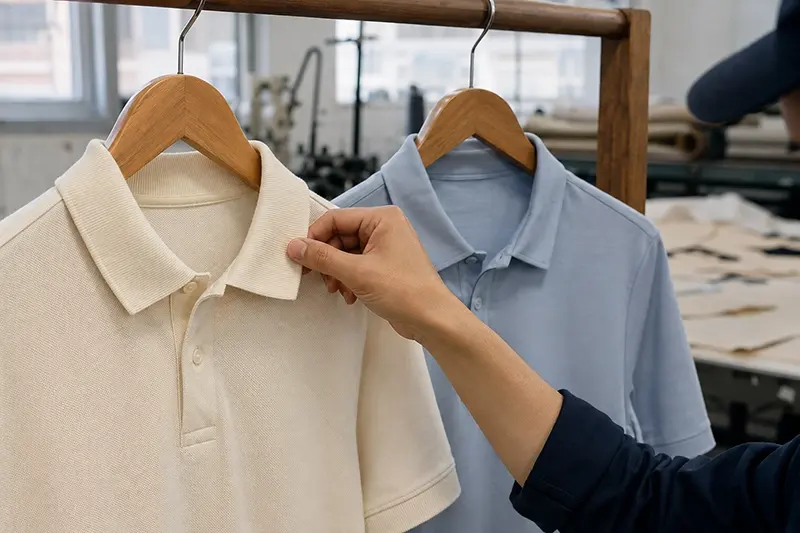
3. Tipped Polo Collar
A tipped polo collar includes one or more contrasting stripes knitted around the outer edge. This detail is often repeated on the cuffs to create a coordinated design.
Tipped collars are commonly used for:
- Fashion collections
- School uniforms
- Sports clubs
- Team polo shirts
- Corporate brand colors
- Heritage-inspired styles
Tipping adds visual identity without requiring a large print or embroidered logo. The stripe can use a brand color, team color, or subtle tonal shade.
Common designs include:
- One contrast stripe
- Two narrow stripes
- A wide stripe with a narrow accent
- Tonal tipping
- Multicolor tipping
- Matching collar and cuff stripes
The stripe width and color sequence should be confirmed clearly. A physical collar sample is useful because small differences in stripe proportion can significantly change the final appearance.
Tipped collars are suitable for both a traditional polo and a more distinctive custom corporate polo shirt when company colors need to be visible across a staff program.
4. Jacquard Polo Collar
A jacquard collar has patterns, lettering, logos, or geometric details knitted directly into the collar. Unlike printed decoration, the design is created as part of the knitted structure.
Jacquard collars can include:
- Brand names
- Repeated initials
- Geometric patterns
- Club lettering
- Tonal logos
- Contrast motifs
This option works well for fashion brands, street-inspired polos, team collections, clubs, and private-label products that need stronger visual differentiation.
The design must be suitable for knitting. Very small details, thin lines, and complex artwork may not appear clearly. The available design area is also limited by the collar dimensions and knitting gauge.
Buyers should provide clear vector artwork and color references. A knitted collar sample should be approved before garment production because the finished result may look different from a digital design.
Jacquard collars usually require more development than a standard solid collar, but they can make the polo more recognizable without adding another surface decoration.
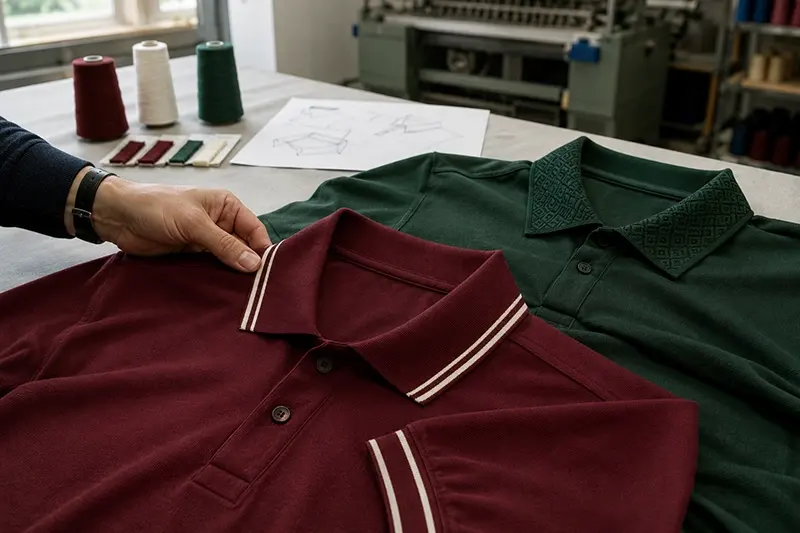
5. Contrast Polo Collar
A contrast collar uses a different color from the polo body. Unlike tipping, the entire collar is produced in a contrasting or complementary shade.
This style is suitable for:
- Corporate uniforms
- Team polo shirts
- School programs
- Fashion collections
- Promotional clothing
- Hospitality uniforms
A navy polo may use a white collar, while a neutral body may use a strong brand color. The placket interior, cuffs, or side vents can repeat the contrast color to create a more balanced design.
Contrast should be controlled carefully. Too many unrelated colors can make a corporate polo appear promotional or reduce its professional quality.
Dark and light fabric combinations also require color-fastness testing. A dark collar attached to a light body should not transfer color during washing. The collar and body materials must also have compatible shrinkage to prevent distortion.
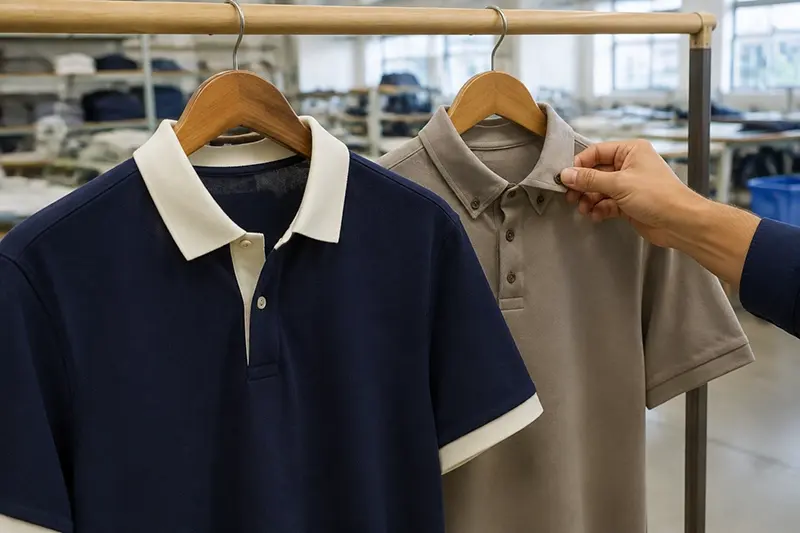
6. Button-Down Polo Collar
A button-down collar uses small buttons to secure each collar point to the garment. It combines part of the appearance of a woven business shirt with the comfort of a knitted polo.
It is commonly selected for:
- Premium corporate uniforms
- Business-casual collections
- Hospitality management
- Executive clothing
- Smart retail polos
This collar can help the points stay in place and create a neat appearance when worn under a jacket. It is less suitable for highly athletic polos because the additional buttons and structured styling may feel too formal.
Button size, position, thread color, and collar point length should be reviewed together. Poor placement can pull the collar out of shape or make the points sit unevenly.
A button-down collar can give a custom premium polo shirt a more refined business-casual direction without turning it into a formal dress shirt.
7. Johnny Collar
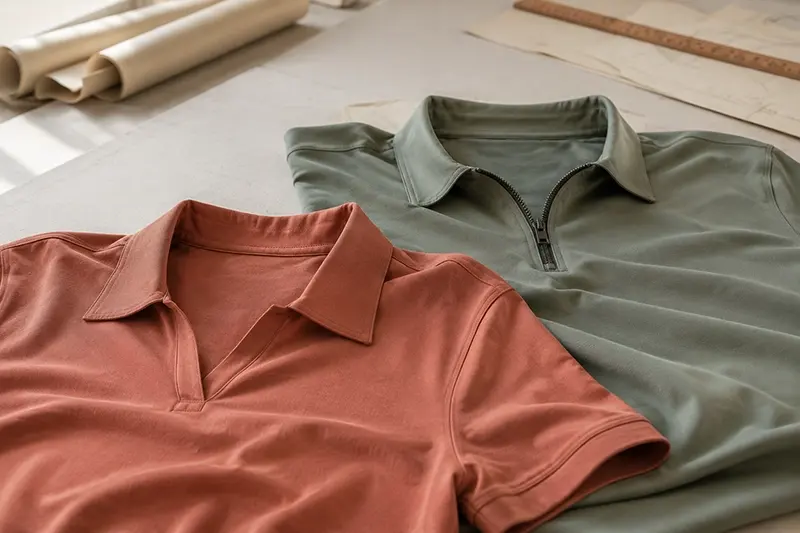
A Johnny collar has an open neckline without a traditional buttoned placket. The collar flows directly into a short V-shaped opening, creating a cleaner and more relaxed appearance.
This style is often used for:
- Women’s polo shirts
- Resort collections
- Lifestyle brands
- Golf-inspired fashion
- Premium casualwear
Johnny collars can be made from rib knit or self-fabric. The neckline depth must be balanced carefully so the garment remains suitable for its intended market.
Without a conventional placket, neckline construction becomes more important. Reinforcement may be needed to prevent the opening from stretching or becoming uneven.
This option is less common for standard corporate uniforms but works well for brands that want a modern alternative to the traditional buttoned polo.
8. Zipper Polo Collar
A zipper polo replaces the button placket with a short zipper. The collar may be ribbed, self-fabric, flat-knit, or designed with a more structured shape.
Zipper polos are suitable for:
- Contemporary fashion
- Golf collections
- Premium sportswear
- Women’s polo shirts
- Modern corporate uniforms
The zipper creates a clean, functional appearance and allows the wearer to adjust the neckline quickly.
Important development points include:
- Zipper length
- Puller design
- Metal or plastic teeth
- Zipper color
- Internal facing
- Topstitching
- Neckline stability
A zipper that is too heavy can pull down lightweight fabric. The zipper tape and garment should also have compatible flexibility to prevent waviness around the placket.
9. Performance Polo Collar
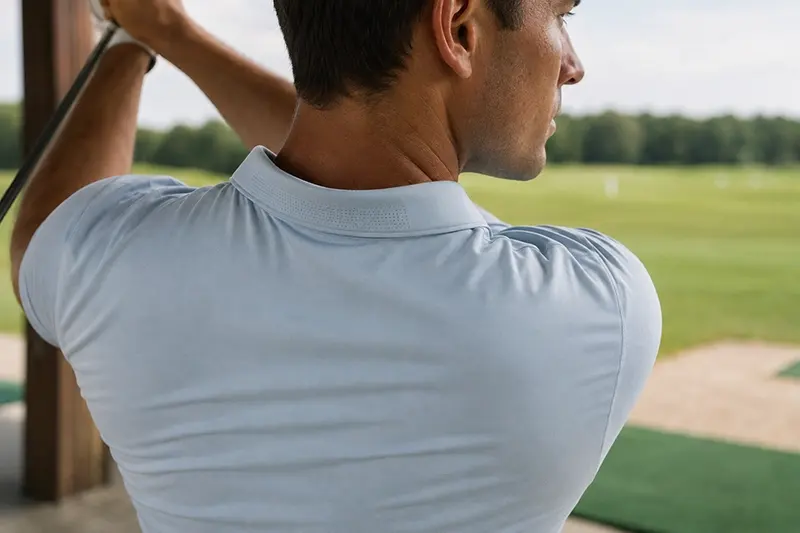
A performance collar is developed for lightweight, active, or technical polo shirts. It may use self-fabric, lightweight rib, bonded construction, or a specially knitted material.
Its main goals are to reduce weight, improve comfort, and maintain a neat appearance during movement.
Performance collar details can include:
- Lightweight construction
- Moisture-control neck tape
- Flexible material
- Bonded edges
- Ventilated structure
- Reduced seam bulk
This type works well for golf, sports, outdoor teams, and warm-weather corporate programs.
A performance collar should still maintain its shape. If it is too soft, it may collapse or curl. If it is too firm, it can feel uncomfortable during active use.
The collar should be tested with the actual body fabric rather than selected independently from a sample card.
How Collar Material Affects the Result
Polo collars may use cotton yarn, polyester yarn, blended yarn, stretch yarn, or the same fabric as the garment body.
Cotton collars offer a natural appearance but may shrink or fade if not properly controlled. Polyester collars provide good color retention and dimensional stability, making them suitable for uniforms and sports polos.
A blended collar can balance comfort and shape retention. Stretch yarn may be used when greater flexibility is required around the neckline.
The collar and body do not always need the same composition, but they should have compatible:
- Color
- Weight
- Stretch
- Shrinkage
- Surface appearance
- Washing performance
Through professional development and sampling, these details can be evaluated before the complete polo design is approved.
How to Choose the Right Collar for Your Market
Choose the collar according to the product’s intended customer and use.
For classic retail or general uniforms, a solid flat-knit collar is the safest option. For golf and active polos, a lightweight self-fabric or performance collar usually works better.
Tipped and contrast collars are useful when brand or team colors need more visibility. Jacquard collars suit fashion brands that want unique lettering or patterns. Button-down collars support premium corporate styling, while Johnny and zipper collars provide more modern alternatives.
Before deciding, consider:
- Product positioning
- Body fabric and GSM
- Required level of formality
- Brand colors
- Washing frequency
- Logo placement
- Target cost
- Reorder consistency
The collar should strengthen the design rather than compete with the logo or other decorative details.
What Should You Provide for Collar Development?
A clear development request should include:
- Collar type
- Shape and dimensions
- Color or Pantone reference
- Stripe or jacquard artwork
- Yarn composition
- Body fabric information
- Matching cuff requirements
- Reference images
- Order quantity
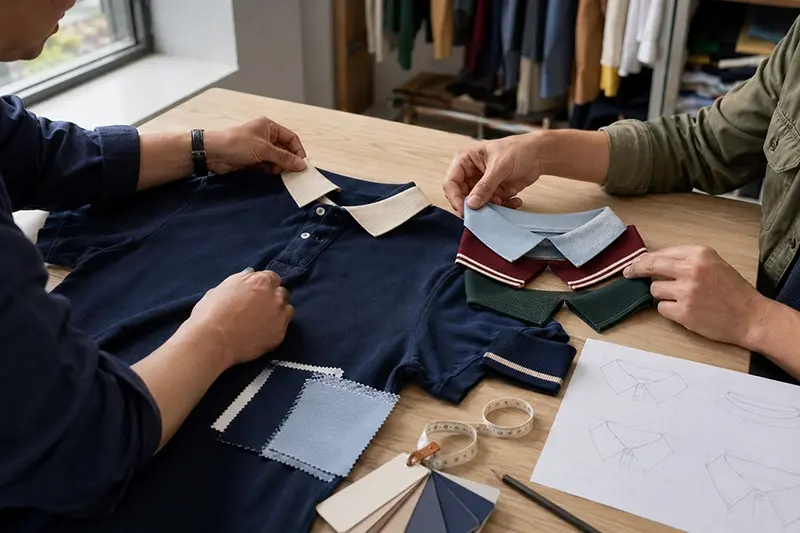
A collar sample can be produced before the complete garment sample when the design includes special tipping, jacquard lettering, or a custom shape.
Our standard MOQ is 100 pieces per design per color, with mixed sizes available. Sampling normally takes 10–15 working days, while bulk production generally takes 25–30 working days after approval.
Which Polo Collar Should You Choose?
Choose a ribbed flat-knit collar for versatility, a self-fabric collar for a clean athletic look, and a tipped or jacquard collar for stronger brand identity. Button-down, Johnny, and zipper collars are better for more specific fashion or business-casual directions.
To develop a custom collar or request a polo sample quotation, contact us with your reference images, colors, artwork, fabric requirements, and order quantity.
FAQs
What is the most common polo shirt collar?
The ribbed flat-knit collar is the most common because it provides structure, stretch, shape recovery, and a recognizable polo appearance.
What is the difference between a ribbed and self-fabric collar?
A ribbed collar is knitted separately and generally offers more structure. A self-fabric collar uses the same material as the body and creates a softer, cleaner look.
Can our logo be knitted into the collar?
Yes. A jacquard collar can include lettering, logos, or patterns, although the artwork must be suitable for the knitting gauge and available space.
How can collar curling be reduced?
The collar yarn, structure, shape, reinforcement, body fabric, shrinkage, and finishing should be tested together before bulk production.
Can the collar and cuffs use matching stripes?
Yes. The stripe colors, widths, and sequence can be coordinated across the collar and cuffs to create a consistent design.
Share With
Related Articles
Hot Products